

Table of Contents
- Why Synthetic Fabrics Fray and How to Prevent It
- How to Heat Seal Synthetic Fabric Edges
- Best Anti-Fray Spray for Fabric Applications
- Seam Finishing Techniques for Synthetic Fabrics
- Cutting Tools and Seam Allowance Management
- Eco-Friendly Alternatives to Chemical Treatments
- Troubleshooting Failed Seals and Common Mistakes
- Conclusion
Last Updated: August 30, 2026
Why Synthetic Fabrics Fray and How to Prevent It
Synthetic fabrics like polyester, nylon, and acrylic are engineered from thermoplastic fibers that behave differently than natural textiles. When you cut through synthetic material, the exposed fibers lack the structural integrity of woven natural fibers and begin to unravel. Unlike cotton or linen, which have natural fiber strength built into their weave, synthetic fibers rely on their thermoplastic properties, the ability to melt and fuse when exposed to heat. Without sealing, stitching, or treatment, individual fibers separate and fray, weakening seams, shortening garment lifespan, and creating an unpolished finish.
At New Creations Fabric & Foam Inc, we work with manufacturers and designers who need consistent, refined finishes on every piece. When scaling production, preventing fraying becomes non-negotiable for quality control. The good news is that preventing fraying on synthetic fabrics isn't complicated once you understand your options: heat sealing, mechanical stitching, and chemical treatments. The key is matching the right technique to your specific synthetic fabric and production workflow.
How to Heat Seal Synthetic Fabric Edges
Heat sealing is the most effective method for preventing fraying on synthetic fabrics because it leverages their thermoplastic properties. When you apply controlled heat to the cut edge of polyester, nylon, or acrylic, the fibers melt and fuse together, creating a sealed edge that won't unravel. The process is straightforward: run a heat source along the raw edge, and the fibers bond permanently without scorching or becoming brittle.
Fabric-Specific Heat Settings
Different synthetic fibers have different melting points. Polyester typically responds well to temperatures between 250-300°F, while nylon requires slightly lower heat, around 200-250°F (peer-reviewed research). Acrylic sits in the middle at 220-280°F (peer-reviewed research). Too hot and you'll scorch the fibers; too cool and they won't fuse properly. Synthetic blends require lower heat than pure synthetics, a polyester-cotton blend needs less heat than pure polyester because cotton will brown at temperatures that work perfectly for polyester. Delicate synthetics like organza and chiffon require the most careful control, typically around 180-200°F (peer-reviewed research).
Testing is essential before committing to production runs. Cut a test strip, apply heat at your target temperature, and examine the result. The sealed edge should be smooth and slightly stiff but not brittle. If fibers look scorched, lower the temperature. If they're still separating, increase it by 10-15°F increments until you hit the sweet spot.
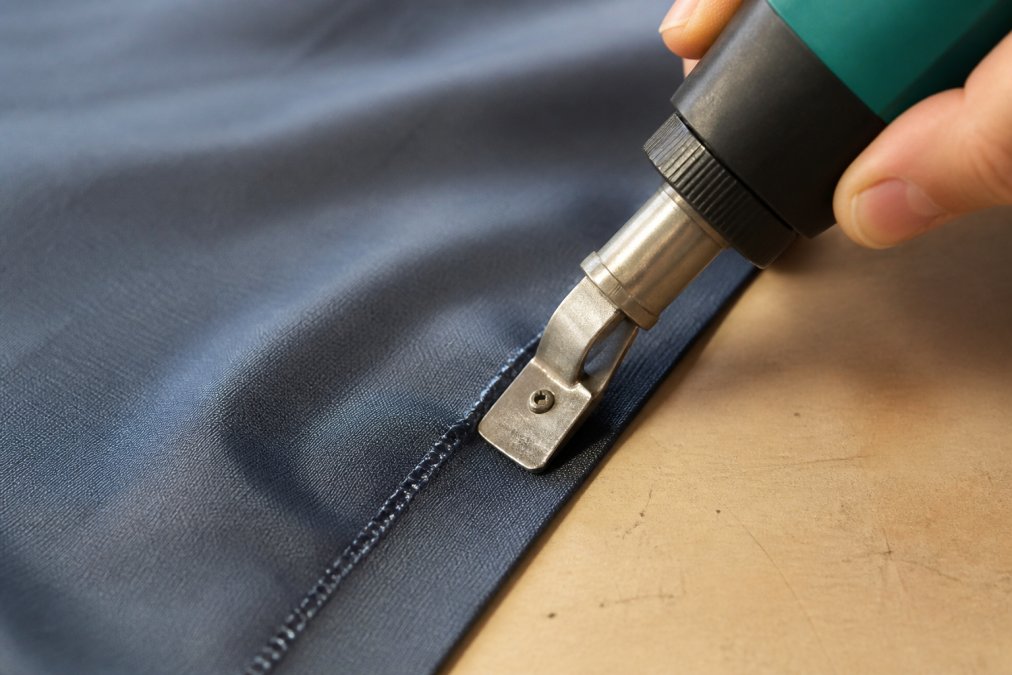
Testing for Durability After Heat Sealing
A sealed edge that looks good initially might fail after washing. Wash a sealed sample in warm water with normal detergent, dry it, and examine the edge under magnification. If the seal holds and fibers remain fused, you've found a reliable method. If the edge begins to fray, your temperature or technique needs adjustment. Durability testing also reveals whether your heat application was consistent across the entire edge. Uneven heat creates weak spots where fraying can restart after washing.
Test at least three samples per batch, especially when working with new fabric suppliers or different synthetic blends.
Best Anti-Fray Spray for Fabric Applications
Anti-fray liquid treatments offer a chemical alternative to heat sealing. These products contain a flexible resin that dries clear, creating a protective barrier around cut fibers. The advantage is simplicity, you don't need specialized equipment, just a brush or spray applicator. For synthetic fabrics, anti-fray liquids work best on tightly woven materials like polyester poplin, nylon twill, and acrylic knits.
When selecting an anti-fray product, look for formulations designed specifically for synthetic fibers. Application typically involves brushing or spraying a thin, even coat along the cut edge, then allowing it to dry completely before handling. Most products dry within 24 hours.
Seam Finishing Techniques for Synthetic Fabrics
Stitching-based methods prevent fraying by mechanically securing fibers rather than melting or chemically treating them. These techniques are essential for garments where heat sealing might compromise fabric integrity or appearance, and they provide reinforcement for high-stress areas like armholes and necklines.
Zig-Zag Stitch and Overlock Methods
The zig-zag stitch is the most accessible seam finishing technique. A standard sewing machine set to a tight zig-zag pattern (width around 2-3mm, length around 1-2mm) locks fibers in place along the raw edge with minimal bulk. An overlock stitch (serger stitch) provides more professional results and is the standard in apparel manufacturing. An overlock machine trims the raw edge and wraps thread around it in a single pass, creating a finished edge that's both functional and visually polished.
The trade-off is equipment cost and production time. A zig-zag stitch on a standard machine is affordable but slower than heat sealing. An overlock machine requires significant investment but delivers faster production and superior results. For small-scale operations, zig-zag stitching often makes sense. For manufacturers producing at volume, a serger becomes essential.
Finishing Seams Without a Serger
If you don't have a serger, start with a standard straight stitch to create your seam, then finish the raw edges using a zig-zag stitch positioned just inside the seam allowance. This creates a reinforced, finished edge without specialized equipment. Another effective method is the French seam, which completely encloses raw edges within the seam itself. This approach requires more fabric and takes longer, but it's ideal for delicate synthetics like chiffon where visible stitching would detract from the garment.
Cutting Tools and Seam Allowance Management
The quality of your cut directly impacts how much fraying prevention work you'll need later. A clean, sharp cut seals fibers more tightly together, reducing fraying significantly. Dull blades create rough, separated fibers that are much harder to seal or finish.
Rotary cutters with sharp blades are the gold standard for cutting synthetic fabrics. They create cleaner edges than scissors and work particularly well on delicate synthetics. Pinking shears, which create a zigzag cut, also help prevent fraying by making it harder for fibers to separate. For production runs, invest in high-quality rotary blades and replace them regularly, a dull blade tears rather than cuts, damaging the fiber structure.
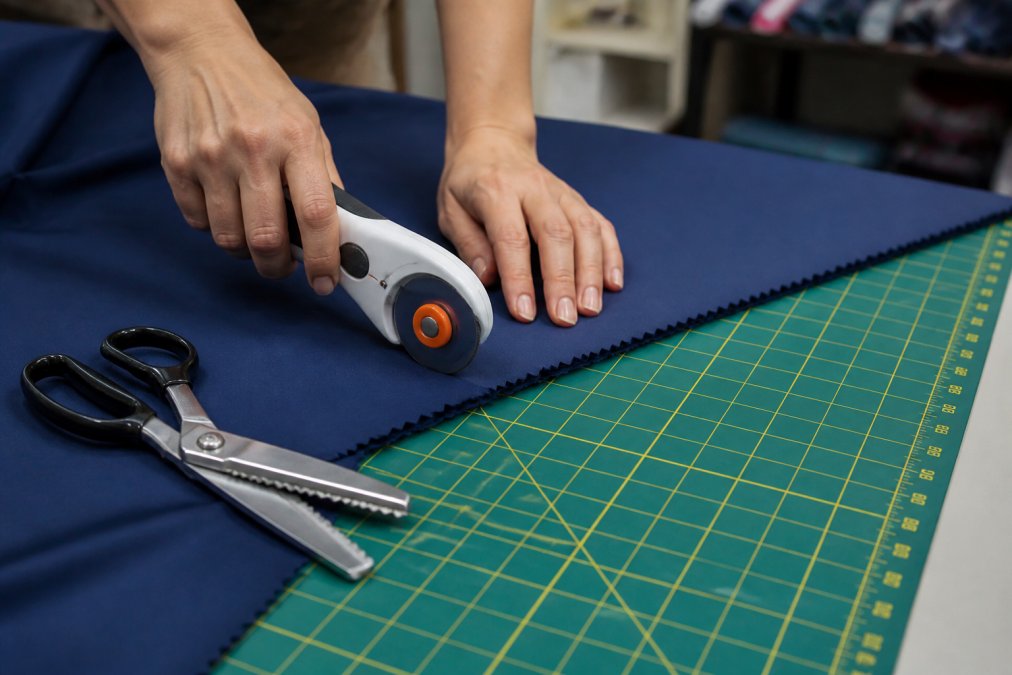
Seam allowance management matters because wider allowances give you more fabric to work with for finishing techniques. Standard seam allowances for apparel are typically 5/8 inch, but synthetic fabrics benefit from slightly wider allowances, 3/4 inch or even 1 inch, because they give you more room to apply heat sealing, stitching, or liquid treatments without affecting the garment's final dimensions. For precision cutting, use a rotary cutter with a straightedge to guide your blade. Measure twice, cut once. If you're cutting multiple pieces from the same pattern, use a template to ensure consistency across your batch.
Eco-Friendly Alternatives to Chemical Treatments
If you're concerned about the environmental impact of chemical anti-fray treatments, heat sealing requires no chemical additives, just controlled heat. Mechanical finishing methods like zig-zag stitching and overlock stitching are inherently eco-friendly because they use only thread and equipment. These methods also tend to produce more durable finishes that extend garment lifespan, reducing environmental impact over the product's lifetime.
Troubleshooting Failed Seals and Common Mistakes
The most common reason seals fail is inconsistent heat application. If your heat source isn't maintaining constant contact with the fabric edge, or if you're moving it too quickly or too slowly, you'll get uneven results. The fix is to slow down your motion, ensure consistent pressure, and verify that your heat source maintains the correct temperature throughout.
Another frequent problem is sealing at too high a temperature, which scorches fibers and creates a brittle edge that fails during washing. If you see browning or discoloration, lower your temperature and test again. Uneven sealing can also result from fabric that's not lying flat during the process. Always smooth the fabric completely before sealing.
With liquid anti-fray treatments, over-application is the biggest mistake. Apply a thin, even coat and trust the product to work. For stitching-based methods, improper tension is the leading cause of failure. Synthetic fibers can slip or bunch if tension isn't adjusted correctly. Test your stitch on scrap fabric and adjust tension until you get a clean, even stitch with no loops or puckering. Once you find the right tension for your specific synthetic fabric, write it down and use it consistently across your production run.
Preventing fraying on synthetic fabrics comes down to understanding your fabric's properties and matching your technique to those properties. Heat sealing works beautifully for most synthetics because it leverages their thermoplastic nature. Mechanical stitching methods provide durability and refinement for apparel applications. Anti-fray liquids offer a quick, equipment-free option for smaller projects.
At New Creations Fabric & Foam Inc, we provide premium synthetic fabrics, including polyester, nylon, and specialty materials like our Crinoline Horsehair Braid Trim, engineered for consistent, refined finishes in production environments. Our Crinoline Horsehair Braid Trim 1" Wide (100% polyester, 10-yard pieces) is specifically designed for applications where edge finishing is critical, from bridal gowns to theatrical costumes. When you source from us, you're starting with fabric that's already optimized for professional-quality finishing. Explore our full collection of fabrics and trims designed for manufacturers, designers, and creators who demand consistency and refinement in every project. Explore Fabrics

Frequently Asked Questions
Is there a spray to stop fabric fraying?
Yes. Anti-fray sprays and liquid sealants are effective chemical treatments for synthetic fabrics like polyester and nylon. These products work by coating raw edges to prevent individual fibers from separating. Apply the spray in a thin, even layer along the edge, allow it to dry completely, and test durability by washing a test swatch. Quality matters, choose products specifically formulated for synthetic fibers to ensure the treatment bonds properly without stiffening the fabric or affecting drape.
What liquid sealants work best for preventing fraying on polyester?
Polyester responds well to liquid fray-check products and heat-activated sealants designed for synthetic blends. Look for sealants that dry clear and flexible, maintaining the fabric's natural hand. Apply thin coats rather than one thick coat to prevent stiffness. Test on scrap fabric first, especially for delicate synthetics like organza or chiffon. Quality sealants from fabric supply retailers typically outperform generic craft products for professional-grade results.
How does heat sealing compare to chemical sealants for synthetic edges?
Heat sealing offers permanent, durable results for thermoplastic fibers like polyester and nylon, the fibers literally melt and fuse together. Chemical sealants are faster to apply and don't require special tools, but may require reapplication after multiple washes. Heat sealing works best on heavier synthetics; chemical treatments suit delicate fabrics better. For manufacturing or high-wear garments, heat sealing provides superior longevity. For one-off projects or delicate trims like crinoline horsehair braid, liquid sealants offer more control.
Can you prevent fraying without changing the hand of the fabric?
Yes, with careful method selection. Thin applications of anti-fray spray maintain fabric drape better than heavy sealant coats. Heat sealing at lower temperatures (below the fabric's melting point) prevents stiffness while still fusing fibers. Zig-zag stitching and serger finishing add minimal bulk. Test any method on scrap material first, especially with delicate synthetics. Professional seamstresses often combine methods, tight stitching plus minimal liquid sealant, to achieve durability without compromising the fabric's original hand.
This article was written using GrandRanker