

Last Updated: November 20, 2026
Quick Summary
Fabric inventory planning for sequin and lace garments means tracking usable yards, not just yards on hand, because sequin and lace behave differently from plain woven fabric. Set separate consumption rules, a wastage allowance of about 5% to 15% (higher for sequin and lace), and a reorder point that covers lead time plus safety stock.
- Treat sequin and lace as separate inventory categories, each with its own consumption rules, waste allowance and reorder point.
- Plan against usable yield, subtracting defects and unusable edges, not the yardage printed on the label.
- Hold back 2% to 5% of a delicate roll as unusable until it has been inspected.
- Use reorder point = weekly usage × lead time in weeks + safety stock, then adjust for minimum order quantities.
- Buy the full yardage for a garment in one order to avoid dye-lot mismatches.
Table of Contents
- Why Sequin and Lace Need Their Own Inventory Rules
- Setting Up a Fabric Inventory Template
- Building a Fabric Inventory Planning Spreadsheet in Excel
- Calculating Fabric Consumption for Each Garment Style
- Setting a Fabric Wastage Allowance for Garment Production
- Storing, Handling and Controlling Lot Consistency
- Setting Your First Reorder Point for Sequin and Lace Stock
- Frequently Asked Questions
Why Sequin and Lace Need Their Own Inventory Rules
Sequin and lace do not behave like plain woven cotton. A sequin mesh can stretch, snag, and shed sequins, while lace has open holes that shift when cut. Most generic inventory methods count yards and ignore these differences. That gap is where production runs go wrong.
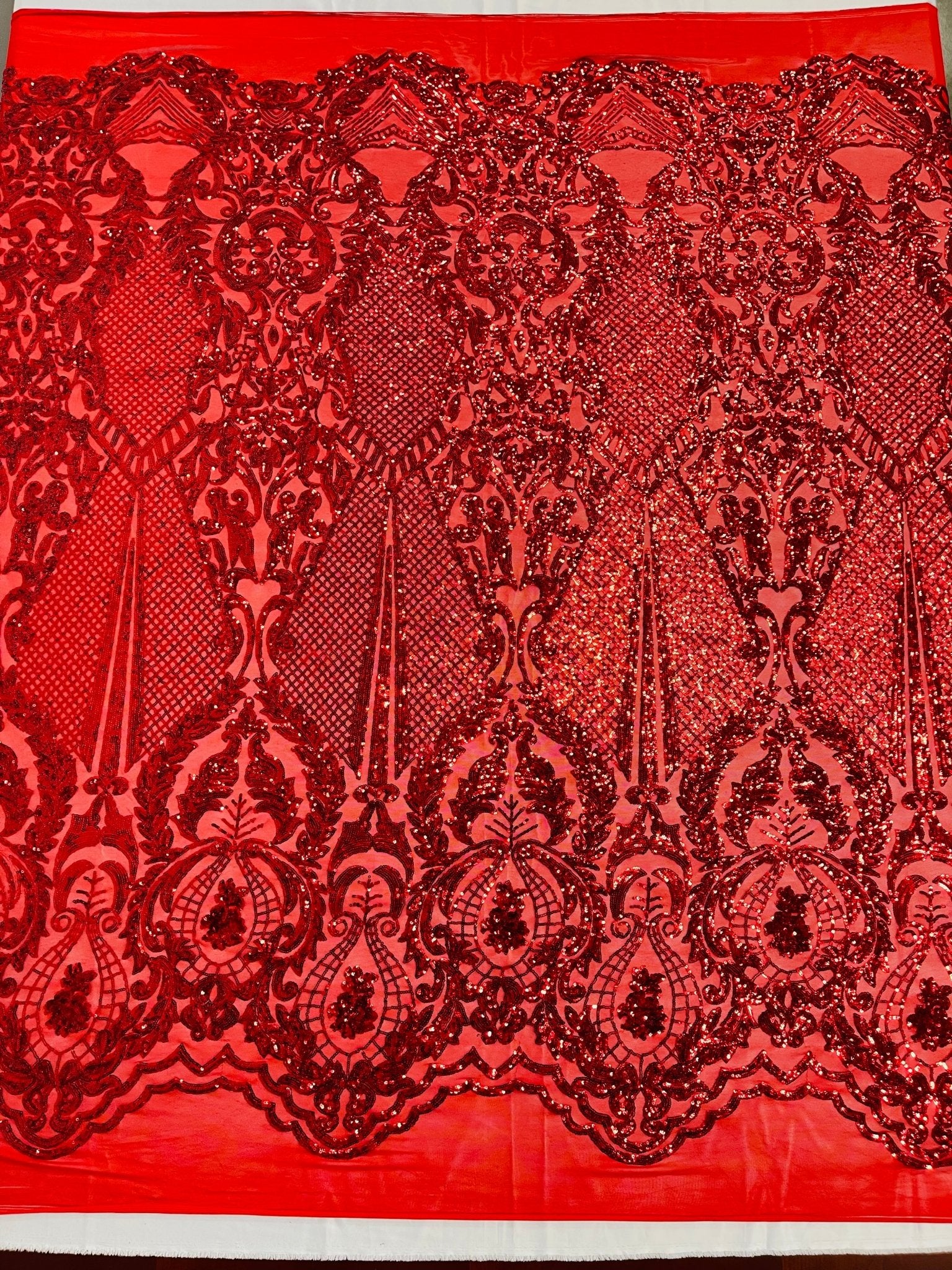
For New Creations Fabric & Foam Inc customers, the planning problem starts with how each fabric is sold and cut. Our Small Damask Pattern Sequin Fabric 54" Wide is a 4-way stretch embroidered sequin fabric, sold by the yard. That changes how you track usable stock.
Industry tracking is also moving past simple unit counts. An 2026 apparel inventory management guide notes that inventory records increasingly include sustainability, origin, and material-level data. Sheng Lu's 2026 apparel sourcing outlook reports that clothing items made with recycled textile fibers in U.S. retail rose about 24% between August-October 2024 and August-October 2025.
Treat sequin and lace as separate inventory categories from day one. Give each its own consumption rules, waste allowance, and reorder point.
Setting Up a Fabric Inventory Template
A good template starts with a few required fields. Skip the extras until the basics run smoothly.
Track these fields for every fabric:
- Fabric name and item code
- Fabric type (sequin, lace, mesh, or combined)
- Width and sale unit (yard or continuous roll)
- Lot or dye-lot number
- Yards on hand and yards reserved
- Supplier lead time and minimum order quantity
Fabric arriving from a fashion-startup supplier often comes in mixed lots. Record the lot number on arrival, not later. Our fabric inventory tips for fashion startups cover the early setup steps in more depth.
Building a Fabric Inventory Planning Spreadsheet in Excel
A simple spreadsheet works well for most small brands. Use one sheet for stock and one for planned orders.
Set up columns for each fabric, then add formulas:
- Usable yards = yards on hand minus remnants you will not cut
- Planned yards = garments planned times yards per garment
- Available after orders = usable yards minus planned yards minus reserved yards
- Reorder flag = yes when available yards fall below the reorder point
A basic fabric inventory planning template can be built in an hour. Color-code the reorder flag so it stands out at a glance.

Calculating Fabric Consumption for Each Garment Style
Yardage depends on the garment, not just the fabric. A fitted sequin dress uses far more fabric than a sequin top with a sheer back panel, and a lace-trimmed style can consume more than its pattern envelope suggests once matching and borders are counted. The goal is a style-level consumption number you can defend to a cutter, not a single blanket yards-per-garment figure.
Start with your pattern's listed yardage, then adjust for these factors:
- Stretch: stretch mesh may need less yardage for fitted styles, but sequin mesh recovers differently and can pull at seams, so confirm with a test cut before you reduce the number.
- Pattern layout: large motifs need matching space and waste more fabric. Directional sequins have a nap, the sequins lie one way, so every pattern piece must be cut in the same direction, which can raise yardage noticeably on full-skirted styles.
- Lace borders and scallops: if the design uses the scalloped edge as a hem or neckline, you cannot cut through it. Plan piece placement so the border falls where the design needs it, and count the unusable strip beyond the scallop as waste.
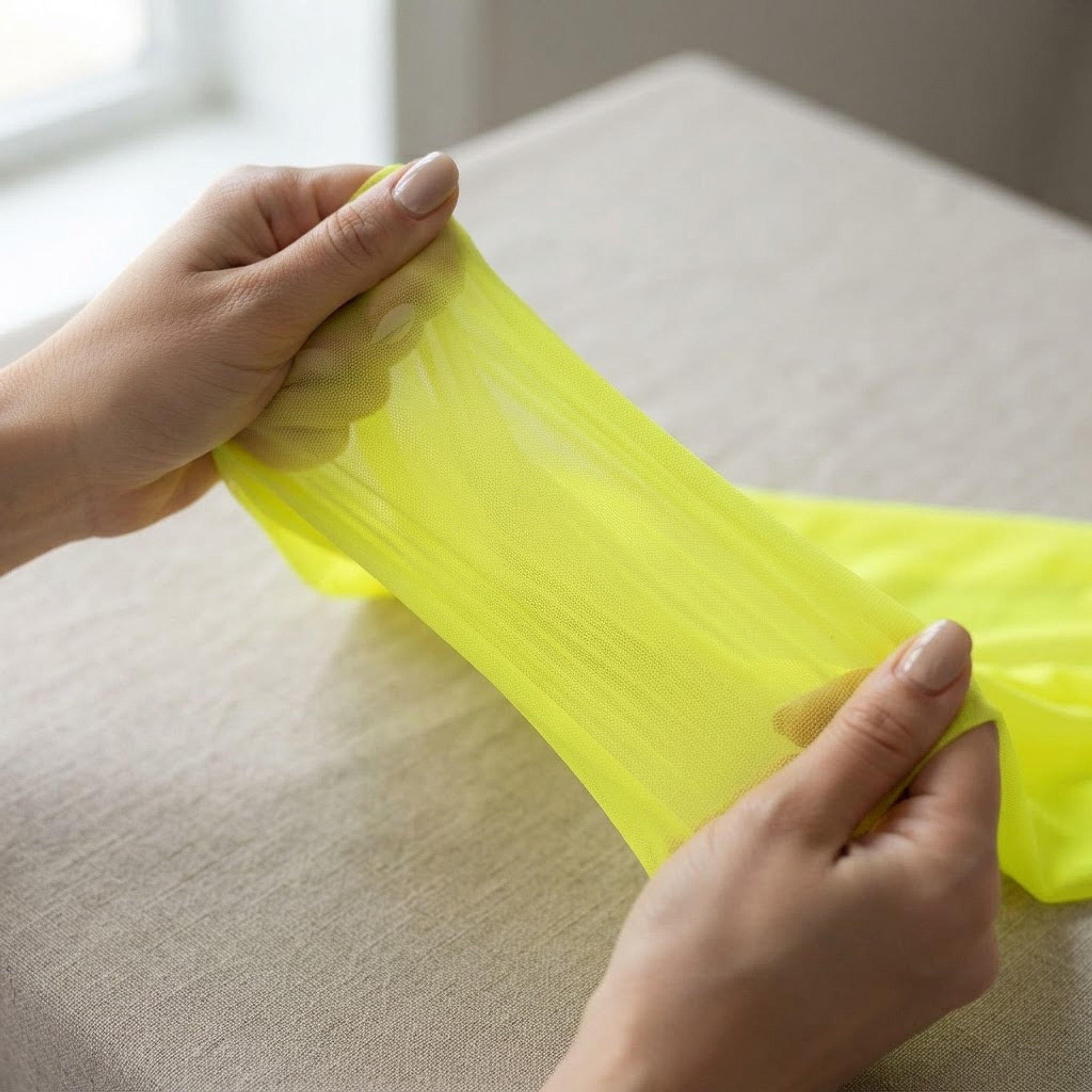
- Lining: lace and sequin often need a lining, so add its yardage. Our Solid Power Mesh 58" Wide is a 90% nylon, 10% spandex mesh with four-way stretch. Count it separately from the decorative fabric.
A worked example
Take a lined, sleeveless sequin sheath dress. The pattern envelope lists 2.25 yards for the shell at 54 inches wide. Add 0.25 yards for directional nap on a full front panel, 0.15 yards for matching the motif across the center-back seam, and 0.10 yards for the unusable end of the bolt. That puts the shell at about 2.75 yards. The lining, cut from 58-inch mesh, lists 1.75 yards; add 0.10 yards for shrinkage and you plan 1.85 yards. Total planned consumption is roughly 4.6 yards per dress. Multiply by the run quantity, then add the wastage allowance covered in the next section.
Usable yield and defect allowances
Do not plan against the yards on the label. Plan against usable yield, the yards you can actually cut after defects and unusable edges are removed. When a roll arrives, inspect it and record:
- Sequins: missing or crushed sequins, snags, and shed patches along the fold.
- Lace: holes, pulled threads, shade variation across the piece, and unusable selvage.
- Both: creases that will not press out and any lot-to-lot color shift.
Mark defective areas on the roll with tape or a tag and subtract them from available yards in your tracker. A common pattern is to hold back 2% to 5% of a delicate roll as unusable until inspection clears it. Watch out: if you book the full received yardage as available, your consumption math will look fine on paper while the cutter runs short mid-run.
Different dress fabrics call for different planning. Duolan Apparel's fabric guide for dress development notes that lace and mesh need planning for coverage, lining, and placement, while sequins need attention to garment weight and lining comfort. Build those placement and weight decisions into the consumption number before you place the fabric order, not after the first sample.
The article gives these figures for estimating yardage per garment style and handling defects.
| Factor | Guidance | Note |
|---|---|---|
| Worked example shell | 2.25 yards listed, about 2.75 planned | Adds nap, matching and bolt-end waste |
| Worked example lining | 1.75 yards listed, 1.85 planned | Adds 0.10 yards for shrinkage |
| Total per dress | About 4.6 yards | Multiply by run quantity |
| Defect holdback | 2% to 5% of a delicate roll | Hold as unusable until inspected |
| Directional sequin | Every piece cut one direction | Can raise yardage on full skirts |
| Lace scalloped edge | Cannot cut through it | Strip beyond scallop counts as waste |
Setting a Fabric Wastage Allowance for Garment Production
A wastage allowance covers cutting loss, defects, and pattern matching. Do not use one flat percentage for every fabric.
A common planning range for cutting waste is 5% to 15%. New Creations Fabric & Foam's inventory tips for fashion startups gives that range as a usual allowance. Lean toward the high end for sequin and lace, because motifs and scalloped edges leave more offcuts.
Add extra allowance when a fabric has a large repeat, sells in a continuous piece you must cut from one end, or shows defects after a shipment. Our Estrella Corded Flowers Embroidered Lace is sold by the yard, so plan its matching waste carefully before you buy.
Storing, Handling and Controlling Lot Consistency
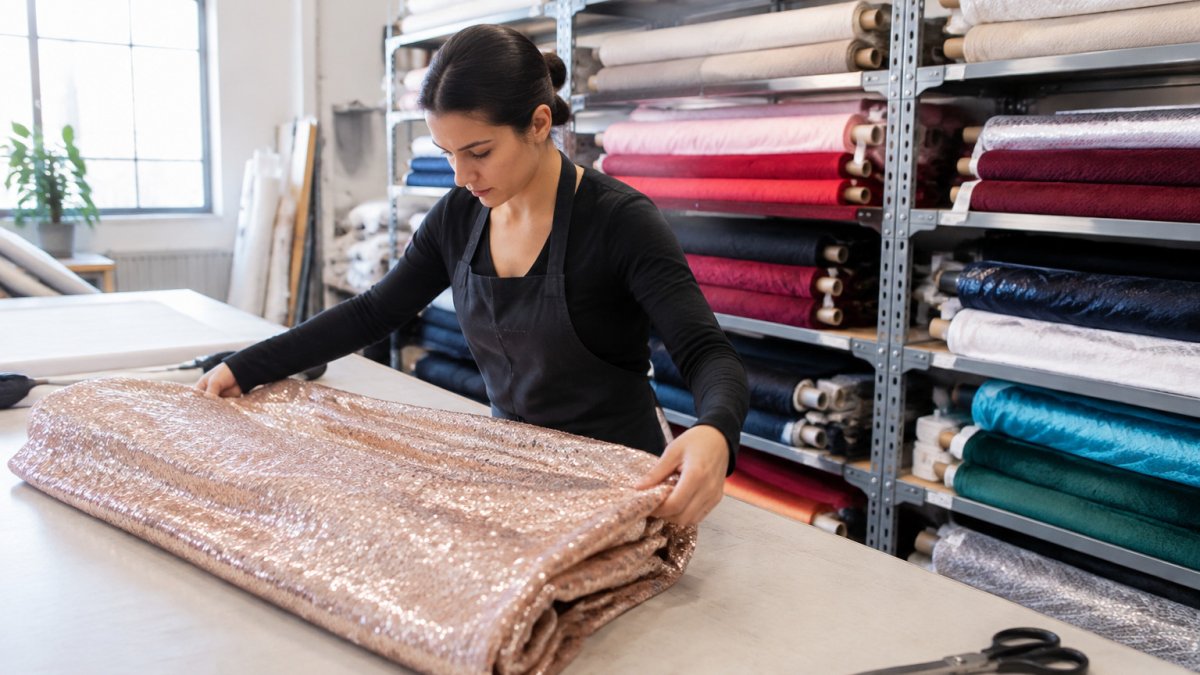
Sequin and lace can snag, crease, and shed. Store them flat or rolled on tubes, away from direct sun. Keep each lot in its own labeled bag or bin.
Dye lots can vary. Colors ordered at different times may come from different dye lots and may not match exactly. Buy the full yardage for a garment in one order whenever possible.
Setting Your First Reorder Point for Sequin and Lace Stock
A reorder point is the stock level that triggers a new order. Set it to cover your lead time plus a safety buffer, then adjust for the constraints that make sequin and lace harder to restock than plain goods: minimum order quantities, lot continuity, and supplier lead-time swings.
Use this formula: Reorder point = daily or weekly usage × lead time in days + safety stock.
For example, if you use 20 yards of sequin per week and your supplier takes three weeks to deliver, your base reorder point is 60 yards. Add 10 yards of safety stock, and reorder when available yards reach 70.
Connect the reorder point to your production schedule
A reorder point built on average usage will fail you during a seasonal push. Before a gown or backdrop season, pull the planned cut quantities from your style-level consumption numbers and compare them to available yards week by week. If a run of 150 dresses at 4.6 yards each needs 690 yards and you hold 400, the reorder point is not the trigger, the production schedule is. Place the order early enough that the full lot arrives before cutting starts, so all panels come from one dye lot.
Account for minimum order quantities and lead-time risk
When the MOQ exceeds your reorder quantity, raise the reorder point so you order in MOQ-sized blocks rather than triggering a series of small orders the supplier will not fill. Add lead-time buffer for imported goods and for any fabric that ships in one continuous piece, a partial shipment cannot be matched later.
Watch out: a fabric can be discontinued or change lot between orders. If a style depends on a specific sequin or lace, reserve the full run's yardage in one purchase and record the lot number against the style. Treat that reserved stock as unavailable in your tracker so it is not consumed by another style.
Review cadence
Review reorder points monthly and again before any seasonal event that spikes demand for backdrops and gowns. Raise safety stock for fabrics with long or unreliable lead times, and lower it only after you have a second confirmed source.
Frequently Asked Questions
What fabric looks good with sequins?
Sequins pair well with fabrics that have a quieter surface so the sparkle stands out. Solid crepe, satin, chiffon and power mesh are common choices. For planning purposes, record the base fabric as its own inventory line, because a sequin mesh and a solid lining need different yardage, handling and lot tracking. Test a small swatch with your garment's weight and stretch before committing a full bolt.
What is sequin fabric called?
Sequin fabric is most often called sequin fabric or sequined fabric, and it is sold in several forms: sequins embroidered onto mesh, sequins sewn to a stretch base, or loose sequins on a woven backing. Product listings may also use terms such as sequin mesh or stretch sequin. When tracking inventory, use the exact product name and construction, because the same name can cover fabrics with different widths and backings.
How much extra fabric should you order for sequin garments?
Many planners start with a 5% to 15% cutting-waste allowance on top of the calculated yardage. Sequin and lace garments often need the higher end because pattern placement, motif alignment and trimming around scalloped edges use more fabric. Adjust the allowance after one production run by comparing planned and actual yardage.
How should you track lace and sequin fabric inventory?
Track each bolt or roll with its product name, width, fabric type, lot or dye-lot number, received yardage and the date it arrived. Record usable yardage separately from gross yardage, and log every fractional cut so remnants are not forgotten. Lace and sequin stock also needs a handling note, since embellishments can snag or shed. A spreadsheet or inventory tool can hold these fields in one place.
