

Table of Contents
- Why Sequin Fabric Needs Special Storage
- How to Fold Sequin Fabric Safely
- How to Roll Fabric for Storage
- Best Fabric Storage Containers for Sequin Fabric
- How to Store Fabric Long Term Without Damage
- Common Mistakes That Damage Stored Sequin Fabric
- Frequently Asked Questions
Last Updated: October 16, 2026
Why Sequin Fabric Needs Special Storage
Sequin fabric is a decorative material made of small, shiny discs sewn or glued onto a mesh backing, and that construction is exactly why it needs careful storage.

Most people treat sequin yardage like any other fabric. That's the first mistake.
Here's what happens when you do. Sequins snag on each other and pull loose from the mesh. Weight pressing down for months causes permanent creases in the backing.
The good news? A few simple habits prevent almost all of it.
How to Fold Sequin Fabric Safely
Folding works best for shorter lengths and pieces you plan to use within a few months. The goal is to avoid sharp creases and keep sequins from grinding against each other.
Folding Step by Step
- Lay the fabric flat on a clean, dry surface with the sequin side facing up.
- Smooth out any wrinkles with your hands. Don't pull or stretch the mesh.
- Place a sheet of acid-free tissue paper over the sequin side.
- Fold in half, sequins facing inward, so the tissue sits between the layers.
- Add another sheet of tissue, then fold again.
- Keep folds loose. A soft fold beats a tight, pressed one every time.
- Slide the folded bundle into a breathable garment bag.
When Folding Works Best
Folding suits pieces under two or three yards. It's also the right call when your storage space is a shelf or drawer rather than a long tube. For anything longer, or for fabric you won't touch for months, rolling is the better choice.
How to Roll Fabric for Storage
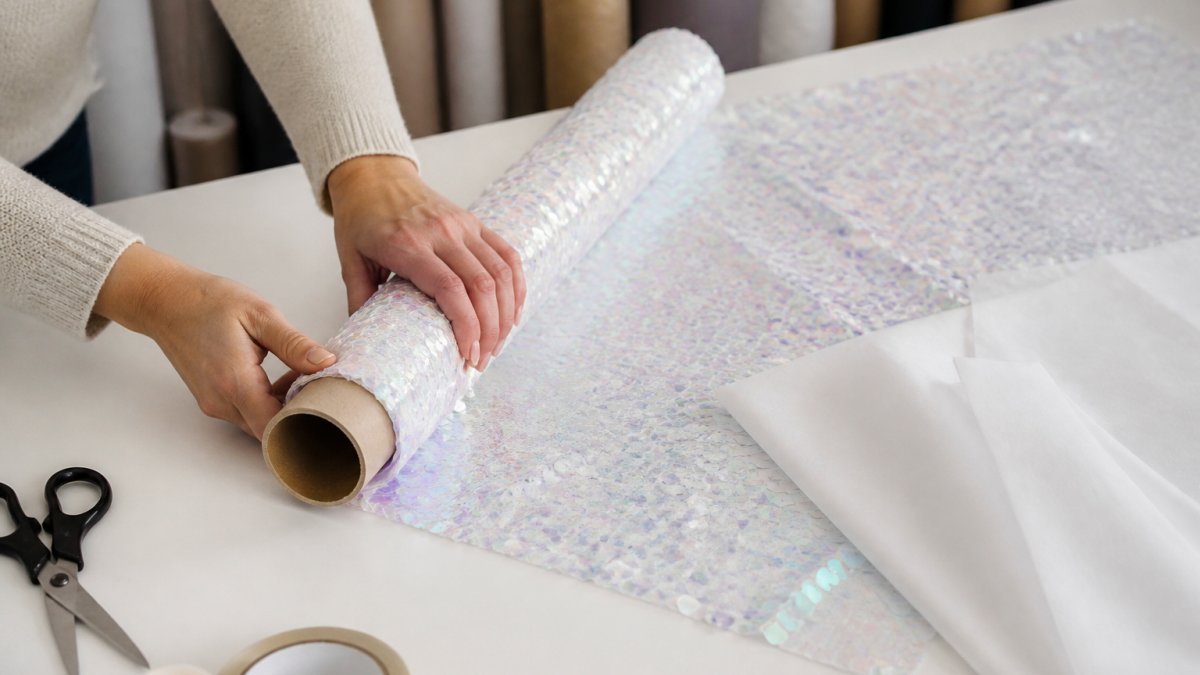
Rolling is the safest method for sequin fabric because it eliminates sharp creases entirely. The fabric curves gently instead of bending at hard angles, which protects both the mesh and the sequin rows.
Rolling Step by Step
- Start with a cardboard tube or a pool noodle wrapped in acid-free paper.
- Lay the fabric sequin-side up and smooth it flat.
- Place the tube at one short edge.
- Roll slowly, keeping the edges aligned.
- Slip a sheet of tissue paper in every few turns to separate the layers.
- Secure the roll with a loose strip of fabric or a soft tie. Never use rubber bands.
- Store the roll horizontally so it can't slide and crush itself.
Rolling vs. Folding: Which to Choose
| Method | Best For | Main Risk | Space Needed |
|---|---|---|---|
| Rolling | Long yardage, long-term storage | Tube dents if stored upright | Long, flat shelf |
| Folding | Short pieces, quick access | Sharp creases, sequin snags | Drawer or shelf |
| Hanging | Heavy garments, gowns | Stretching under weight | Tall closet |
Rolling wins for anything you're storing for more than a season. Folding is fine for a few yards you'll use soon. Hanging is for finished garments, not raw yardage.
Best Fabric Storage Containers for Sequin Fabric
The best fabric storage containers for sequin fabric are breathable and rigid. You want airflow to prevent moisture buildup, but you also want structure so nothing presses down on the sequins. The right choice depends on how long you're storing the fabric, how much you have, and how the sequins are attached.
Match the Container to the Sequin Construction
Not all sequin fabric is built the same way, and the construction changes what's safe:
- Sewn-on sequins on mesh: The most common construction. Sequins are stitched through the mesh, so a snag pulls thread rather than glue. Breathable garment bags and acid-free boxes both work well. Avoid anything that presses the sequin faces together.
- Glued sequins on mesh or knit: Adhesive can soften with heat and humidity. Keep these in the coolest, driest container you have, a rigid acid-free box with a silica packet beats a breathable bag, because the bag lets humidity in.
- Sequins on stretch backing (spandex or power mesh): Stretch fabric wants to relax and take a set. Roll rather than fold, and store flat. Hanging a stretch sequin fabric will cause it to elongate under its own weight.
Container Comparison
| Container | Airflow | Moisture Risk | Best For | Watch Out For |
|---|---|---|---|---|
| Breathable garment bag (cotton or non-woven) | High | Low | Folded pieces, hanging garments, short-to-medium term | Doesn't block dust or pests well |
| Rigid acid-free box | Low | Low if lined | Long-term storage, delicate mesh, glued sequins | Costs more; needs silica in humid rooms |
| Plastic storage tote | None | High if sealed | Structured storage in dry rooms | Traps moisture; line with tissue and leave lid slightly loose |
| Plastic garment bag (dry-cleaner style) | None | High | Short trips only | Mildew risk within months |
| Cardboard tube + tissue | Moderate | Moderate | Rolled yardage | Plain cardboard is acidic; wrap in acid-free paper first |
A rigid tote lined with acid-free paper and topped with a lavender sachet covers most needs. Just don't seal it airtight.
Packing Materials That Are Safe, and Ones That Aren't
- Acid-free tissue paper: The default barrier between layers. Buy tissue labeled "acid-free" or "archival", regular tissue and newsprint are acidic and will discolor mesh over time.
- Unbleached cotton muslin: Good for wrapping rolls or lining boxes. Breathable and inert.
- Polyester batting or foam: Avoid. Foam off-gasses over time and can leave residue on sequins.
- Rubber bands and wire ties: Never. They leave permanent dents in the backing and can rust.
A Quick Decision Path
- Under 3 yards, using within 3 months? Fold with acid-free tissue into a breathable garment bag.
- Over 3 yards, or storing 6+ months? Roll on an acid-free-wrapped tube and store horizontally in a rigid box or on a shelf.
- Glued sequins or delicate mesh? Rigid acid-free box, single layer, silica packet, no stacking.
- Stretch backing? Roll only, store flat, never hang.
- Humid room and no climate control? Rigid sealed tote with rechargeable silica, checked monthly.
How to Store Fabric Long Term Without Damage
Long-term storage comes down to controlling four variables: temperature, humidity, light, and pests. Fabric left in a hot attic or a damp basement will degrade no matter how well you fold it, and the damage is usually cumulative, you won't see it in week one, but you will in month six.
Temperature and Humidity Ranges That Actually Work
Aim for a stable environment rather than a specific number. Preservation guidance from the National Archives on storing textiles and the Library of Congress preservation guidance both emphasize the same principle: fluctuations do more damage than a slightly imperfect but steady reading.
What to avoid:
Mini Glitz Disc Sequins 50" Wide| New Creations Fabric & Foam Inc. →
- Attics and garages. Summer temperatures routinely climb above 100°F, which softens glued sequin adhesive and can warp mesh backing.
- Basements and crawl spaces. Humidity above 65% invites mildew on the mesh and can oxidize metallic sequin coatings, leaving a dull, cloudy film.
- Exterior walls and concrete floors. These surfaces wick moisture and create cold spots where condensation forms.
If your only option is a humid space, use a sealed rigid tote with a rechargeable silica gel packet (the kind sold for gun safes and camera cases).
Light Exposure
Direct sunlight fades sequin color and weakens the mesh over time. UV light breaks down the dyes in colored sequins and can make clear or iridescent finishes yellow. Store fabric in the dark, or cover it with a breathable cotton cloth. Avoid storing sequin fabric in clear plastic bins on an open shelf near a window, the bin won't block UV, and the greenhouse effect inside can push internal temperatures well above room temperature.
Pest Control for Stored Sequin Fabric
Moths and carpet beetles chew through natural fibers and can leave holes in the mesh. Sequins themselves aren't a food source, but the backing, thread, and any sizing or starch residue can attract insects. Keep stored fabric clean, since food crumbs and dust attract insects. Add a lavender sachet or cedar block to your storage container, cedar loses potency as it dries, so refresh it with a light sanding every six months.
A Simple Inspection Schedule
Set a recurring reminder and run through this checklist:
- Every 1-2 months: Open the container, feel for dampness, and sniff for a musty odor. Musty smell means moisture is trapped.
- Every 3 months: Unfold or unroll one section and check for loose sequins, snags, and color shifts. Look along the fold lines for compression creases that haven't relaxed.
- Every 6 months: Full inspection. Re-roll or re-fold along different lines to prevent permanent creases from setting in. Replace silica packets and cedar blocks. Check the underside of the container lid for condensation.
- Annually: Photograph the fabric in good light. A dated photo makes it easy to spot fading or discoloration over years.
Common Mistakes That Damage Stored Sequin Fabric
Most storage damage traces back to a handful of avoidable mistakes. Here's what to watch for:
- Storing fabric in a hot attic or damp basement
- Sealing sequin fabric in airtight plastic for months
- Folding with sequin sides pressed together
- Stacking heavy items on top of stored fabric
Fix these and your sequin fabric will hold up for years. For more on caring for delicate fabrics before you store them, the American Cleaning Institute's fabric care resources offer practical guidance on gentle handling and washing.
The Library of Congress preservation guidance also notes that clean, cool, dark conditions with stable humidity extend the life of delicate materials. That advice applies directly to sequin yardage.
When you're ready to restock, our Mini Glitz Disc Sequins 50" Wide and Mini Sequin Fabric 54" Wide both ship wrapped and folded, ready for storage the moment they arrive.

Frequently Asked Questions
Should you fold or roll sequin fabric for storage?
Rolling is generally safer for sequin fabric because it avoids sharp creases that can crack the sequin coating or loosen stitching. Use an acid-free tube and interleave tissue paper to prevent sequins from pressing into each other. Folding works for short-term storage if you pad the fold lines with tissue paper and avoid stacking heavy items on top. For long-term storage of sequin fabric, rolling is the better choice.
Can sequin fabric be stored in a plastic bag?
Avoid sealed plastic bags for long-term storage. Plastic traps moisture, which can cause the mesh backing to mildew and the sequins to tarnish. Instead, use a breathable garment bag made from cotton or muslin. If you must use plastic for short-term transport, leave the bag open and transfer the fabric to a breathable container as soon as possible.
How do you keep sequins from snagging or falling off during storage?
Line your storage container with acid-free tissue paper and place a layer of tissue between each rolled or folded section. Never store sequin fabric next to Velcro, zippers, or rough hardware. Keep pieces separated so sequins do not rub against each other. A breathable garment bag adds another layer of protection and keeps dust off the surface.
How do you remove creases from sequin fabric after storage?
Hang the fabric in a steamy bathroom for 20 to 30 minutes, letting the humidity relax the mesh backing. Do not iron sequins directly; the heat will melt or dull them. If you must press, turn the fabric face down on a thick towel and use a cool iron on the back side only, with a pressing cloth between the iron and the mesh.
Storing sequin fabric well takes a little care, but the payoff is fabric that looks as good months later as the day it arrived. If you're sourcing sequin fabric for your next project, New Creations Fabric & Foam Inc offers a range of sequins, velvet, and faux fur built for consistent, professional results. Explore our collections for fabrics with the refined finishes your production needs, and store them right so nothing goes to waste.