

Last Updated: November 13, 2026
Quick Summary
Stretch velvet gives stage costumes the plush, light-catching look of traditional velvet with the freedom of movement performers need, since its spandex content delivers stretch recovery that holds a garment's shape through a full show. It suits fitted costumes, dancewear and bodices, though it can trap heat and needs gentler care.
- Most stretch velvet blends polyester with spandex, usually in a 90/10 ratio.
- Cut panels in alternating nap directions to create deliberate color shifts under spotlights.
- Our Stretch Velvet 58" Wide offers four-way stretch at $14.95 per yard.
- Hand-wash and air-dry stretch velvet to protect costumes across repeated performances.
- Sew with a narrow zigzag or stretch stitch so seams flex instead of snapping.
Table of Contents
- Why Stretch Velvet Belongs in Every Stage Costume Wardrobe
- Stretch Velvet Fabric Properties That Matter on Stage
- Freedom of Movement, Comfort, and Fit for Dancers and Acrobats
- Is Stretch Velvet the Best Fabric for Stage Costumes? A Comparison
- Velvet Fabric Downsides Costume Designers Should Plan For
- Stretch Velvet Sewing Tips for Costume Construction
- Choosing Stretch Velvet for Your Next Production
- Frequently Asked Questions
Why Stretch Velvet Belongs in Every Stage Costume Wardrobe
Stretch velvet is a knit fabric woven with spandex that gives costumes the plush look of traditional velvet with the freedom of movement performers need. At New Creations Fabric & Foam Inc, we've watched this fabric move from niche dancewear shops into full production wardrobes because it solves a problem plain velvet never could: it looks luxurious and moves like athletic wear.
Here's the tension most fabric guides skip. Traditional velvet is beautiful and completely unforgiving. It has almost no give, so a fitted bodice either restricts the performer or sags the moment they move. Stretch velvet changes that equation. A fabric construction guide from Spandex by Yard notes that stretch velvet is best suited to shorter performance and costume use, and that's exactly the point: it's built for the stage, not the sofa.
Below, we break down the seven benefits that matter most, plus the trade-offs you need to plan for before you cut.
Stretch Velvet Fabric Properties That Matter on Stage
The properties that make stretch velvet work on stage come down to four things: fiber content, weight, stretch recovery, and how the pile behaves under light. Get those right and the costume performs. Get them wrong and you'll fight the fabric all night.
Composition, Weight, and Stretch Recovery
Most stretch velvet blends polyester with spandex, usually in a 90/10 ratio. That spandex content is what delivers stretch recovery, the ability to snap back to shape after a performer lunges, splits, or spins. A fabric that recovers well keeps its silhouette through a full show. A fabric that doesn't will bag at the knees and seat by intermission.
Weight matters just as much. Lighter weights drape and flow for lyrical pieces. Medium weights hold structure for tailored jackets and bodices. If you're new to how knit structure changes behavior, our guide to woven vs knit fabrics explains why stretch velvet moves so differently from traditional velvet.
Stretch recovery is testable before you cut. Stretch recovery is a useful check before you cut: a fabric that returns close to its original length after being stretched will hold its shape better in a fitted garment than one that stays elongated.
Opacity matters too: stretch a swatch over your hand under a bright light, and if skin or shadow shows through at full stretch, plan a lining or choose a darker color for fitted pieces.
Pile, Nap Direction, and How Velvet Reads Under Spotlights
Velvet pile has a direction, called the nap, and it changes everything under stage lighting. Brush the pile one way and it reads deep and matte. Brush it the other way and it catches the light and glows. Designers use this deliberately: cutting panels in alternating nap directions creates subtle color shifts that look flat in a fitting room and dramatic under a spotlight.
Keep in mind that a color can read differently under stage lighting than it does in daylight, so the way the pile catches a spotlight is worth considering when you choose a color.
Test before you commit: view a swatch of each candidate color under the lighting you will actually use, from audience distance, and turn it to see both nap directions. Mark the nap direction on every pattern piece so the effect stays consistent across the garment. Once the nap direction and color hold up under stage lighting, compare the fabric’s stretch and recovery with Linda's Electric Quilters before settling on a costume material.
Freedom of Movement, Comfort, and Fit for Dancers and Acrobats
Dancers and acrobats need costumes that move with them, not against them. Our Stretch Velvet 58" Wide offers four-way stretch, so a fitted dress or unitard follows the body through extensions, lifts, and floor work.
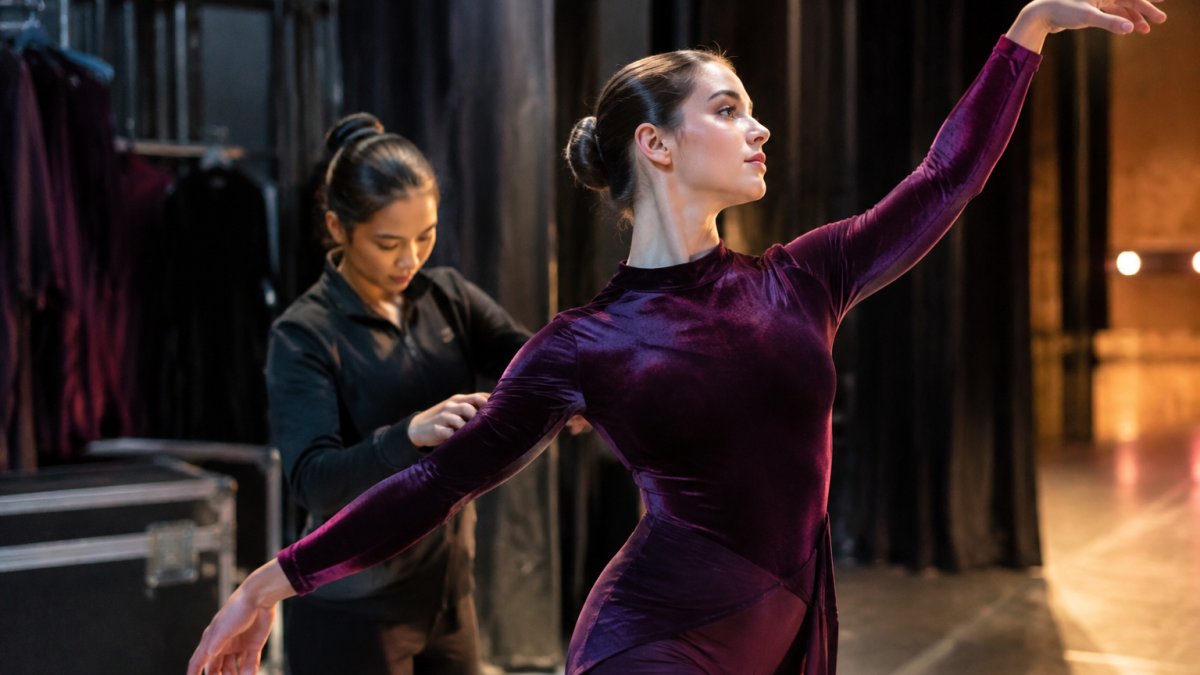
Comfort is the quieter benefit. Stretch velvet feels silky against the skin, and its spandex content helps a body-hugging garment move with the performer.
One caveat: stretch velvet can trap heat, so for high-sweat numbers plan for breathability with lining choices and quick-change logistics.
Is Stretch Velvet the Best Fabric for Stage Costumes? A Comparison
Stretch velvet is the best fabric for stage costumes when you need plush visual richness plus movement, but it isn't the right pick for every silhouette. Here's how it stacks up against the alternatives designers actually weigh.
| Fabric | Stretch | Visual Impact | Best For | Watch Out For |
|---|---|---|---|---|
| Stretch velvet | 2-way to 4-way | Rich, light-catching pile | Fitted costumes, dancewear, bodices | Heat retention, pile care |
| Matte lycra | High, 4-way | Flat, athletic | Rehearsal wear, athletic numbers | Less dramatic under lights |
| Velour | Moderate | Soft sheen, plush | Loungewear-style costumes | Less structured drape |
| Non-stretch velvet | Minimal | Deep, formal richness | Cloaks, capes, structured pieces | Restricts fitted movement |
A theatrical costume fabric guide from Cimmino makes a useful point: non-stretch fabric helps control garment shapes and lines, which designers may prefer for cloaks and capes. That's the honest trade-off. Use stretch velvet where the body moves. Use non-stretch velvet where the silhouette must hold.
Go beyond the table with the questions that decide a fabric choice. For a high-energy number with jumps, lifts, and floor work, matte lycra is cooler and more breathable, but it reads flat under a spotlight and photographs without texture. Stretch velvet gives you the light-catching pile and the four-way stretch, at the cost of heat. For a lyrical or dramatic piece with sustained posing, stretch velvet's drape and sheen do more visual work than lycra. For a cloak, cape, or structured period piece, non-stretch velvet holds the line and hangs heavily, while stretch velvet will follow the body and lose the architectural shape. Velour sits between: softer and warmer than lycra, less structured than velvet, and better for loungewear-style or character costumes than for fitted dancewear.
Heat is a factor for long routines, since stretch velvet can trap heat. For high-sweat numbers, a breathable lining and a quick-change plan help manage it.
Velvet Fabric Downsides Costume Designers Should Plan For
The downsides of velvet fabric are real, and pretending otherwise sets a production up to fail. The biggest is shedding: fresh velvet sheds loose pile fibers, and on a dark stage that lint shows up on every light-colored surface it touches. Our article on preventing velvet fabric shedding on garments walks through the practical fixes.
Stretch velvet also needs gentler care than standard spandex. A fabric care guide from Spandex by Yard recommends hand-washing and air-drying stretch velvet, which matters for costumes that see repeated performances. Plan your cleaning routine before opening night, not after.
Stretch Velvet Sewing Tips for Costume Construction
Sewing stretch velvet well comes down to handling the pile and respecting the stretch. Treat it like a knit rather than a woven fabric.
- Cut with the nap in one direction on every pattern piece unless you're intentionally creating a color-shift effect.
- Use a stretch needle sized for knits so the fiber isn't damaged at the stitch line. Our guide to choosing the right needle for synthetic fabrics covers sizing.
- Sew with a narrow zigzag or stretch stitch so seams flex instead of snapping.
- Test on scraps first before committing to a full garment.
- Cut on a single layer to keep the pile from shifting.
For a deeper walkthrough, see our guide on how to cut velvet fabric for professional results.
Seams, Lining, and Closures for Performance Wear
For fitted pieces, reinforce high-stress seams such as underarms, crotch, and side seams. Line bodices with a breathable knit to help manage heat and add opacity.
Choosing Stretch Velvet for Your Next Production
Choosing stretch velvet for a production starts with matching weight and stretch to the number, then buying enough yardage with a buffer for nap matching and test cuts. Order continuous yard lengths so panels match in dye lot, and confirm the stretch direction before you lay out a pattern.
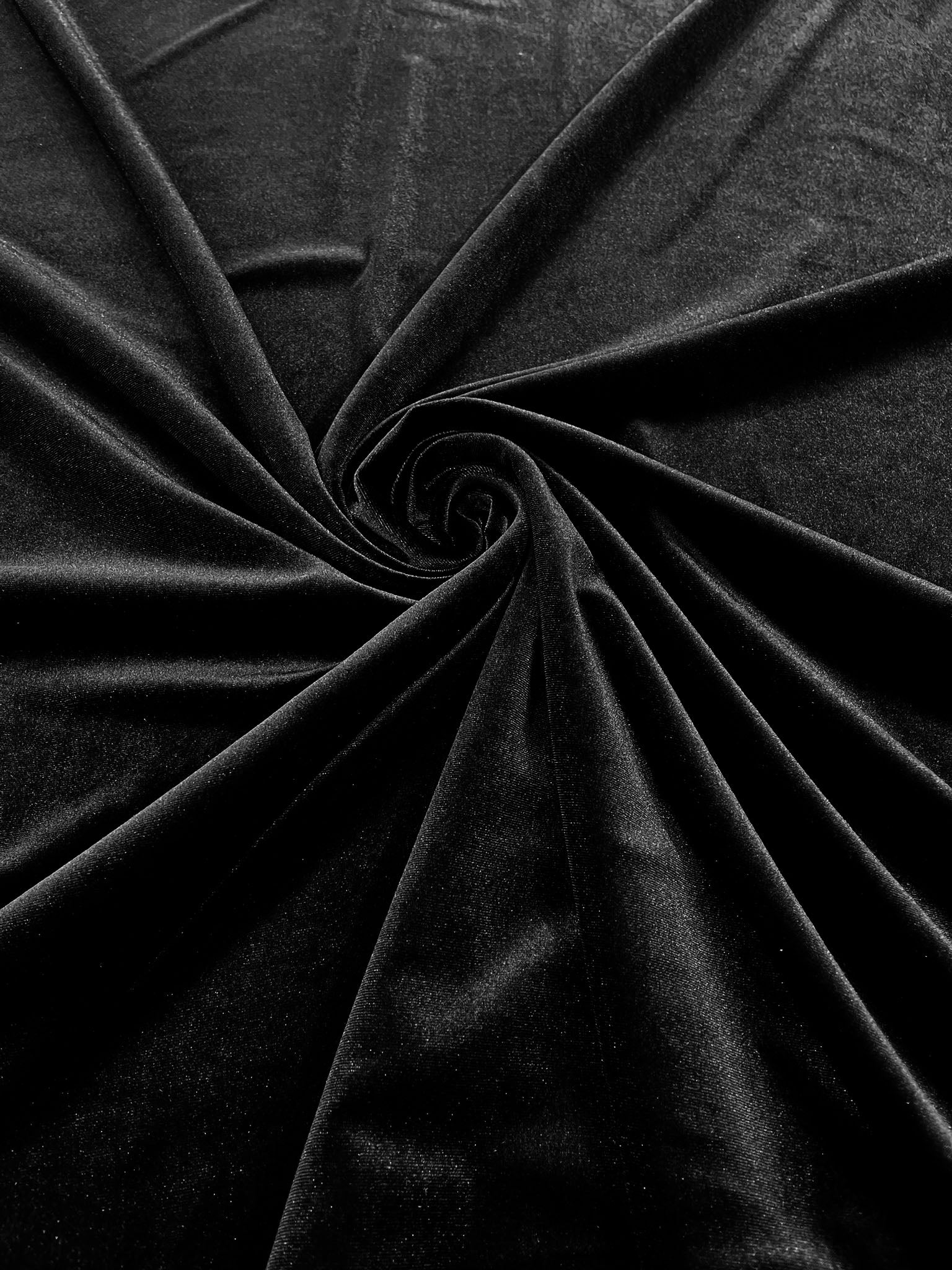
Our Stretch Velvet 58" Wide is a 90% polyester, 10% spandex blend with four-way stretch, sold in continuous yard pieces at $14.95 per yard, with wholesale pricing on orders of 25 yards or more. It's the workhorse for fitted costumes and dancewear. For a foil or glitter finish that reads under spotlights, our foil and glitter stretch velvets add surface drama without sacrificing stretch.
We recommend testing fabric under movement before committing to a full production run.
The challenge with stage costumes is that beauty and movement can pull in different directions. Stretch velvet helps bridge that gap, and New Creations Fabric & Foam Inc supplies stretch velvet in continuous yard lengths. Our stretch velvet range includes solid, foil, and glitter finishes, with wholesale pricing for orders of 25 yards or more. Get started with New Creations Fabric & Foam Inc and build a wardrobe that performs as well as it looks.
Frequently Asked Questions
Is stretch velvet comfortable for dancing and performing?
Yes, when the spandex content is high enough. New Creations' Stretch Velvet 58" Wide is 90% polyester and 10% spandex with four-way stretch, so it follows the body through extensions, lifts, and floor work instead of pulling against them. The plush pile feels soft against skin and over a leotard. For long rehearsals, check that the garment is not cut too tight across the shoulders or hips, since velvet has more surface friction than matte lycra.
Does stretch velvet fray when you cut and sew it?
Velvet pile sheds a little when cut, but the knit backing on stretch velvet does not unravel the way a woven fabric does. Finish raw edges neatly, and clean up loose pile fibers before the first fitting. Test on a scrap before running a full costume panel.
How does velvet look under stage lights?
Velvet's pile absorbs light rather than reflecting it, which makes colors read deeper and richer than flat fabrics under spotlights. The direction of the nap changes how the surface catches light, so two panels cut in opposite directions can look like two different shades. Cut every pattern piece in the same direction so the color reads consistently across the garment.
What are the downsides of velvet fabric for costumes?
Velvet can be warm to wear during strenuous numbers, and it needs more careful care than cotton or lycra. Velvet pile can show crush marks and pressure lines, so store costumes carefully between shows. None of these are dealbreakers, but they belong in the production plan before you cut yardage.
