

Table of Contents
- What High Resiliency Foam Cushions Actually Deliver
- High Resilience vs High Density Foam: What the Labels Hide
- Comfort, Support, and Pressure Distribution in Daily Use
- How to Choose the Right Foam Density for Sofas and Chairs
- Durability, Sagging, and Cushion Lifespan
- Is High Resilience Foam Worth the Cost?
- Wrapping, Construction, and Finishing Touches
- Frequently Asked Questions
Last Updated: October 20, 2026
What High Resiliency Foam Cushions Actually Deliver
High resiliency foam is a polyurethane foam engineered to recover its shape quickly after compression, and the benefits of high resiliency foam cushions come down to three things: lasting support, consistent bounce-back, and slower sagging than standard foam. We supply foam and upholstery materials to furniture makers, event decorators, and independent designers, so we see how cushion specs translate into real performance. The short version: HR foam holds its loft under repeated use, which matters most on seats that get sat in every day.
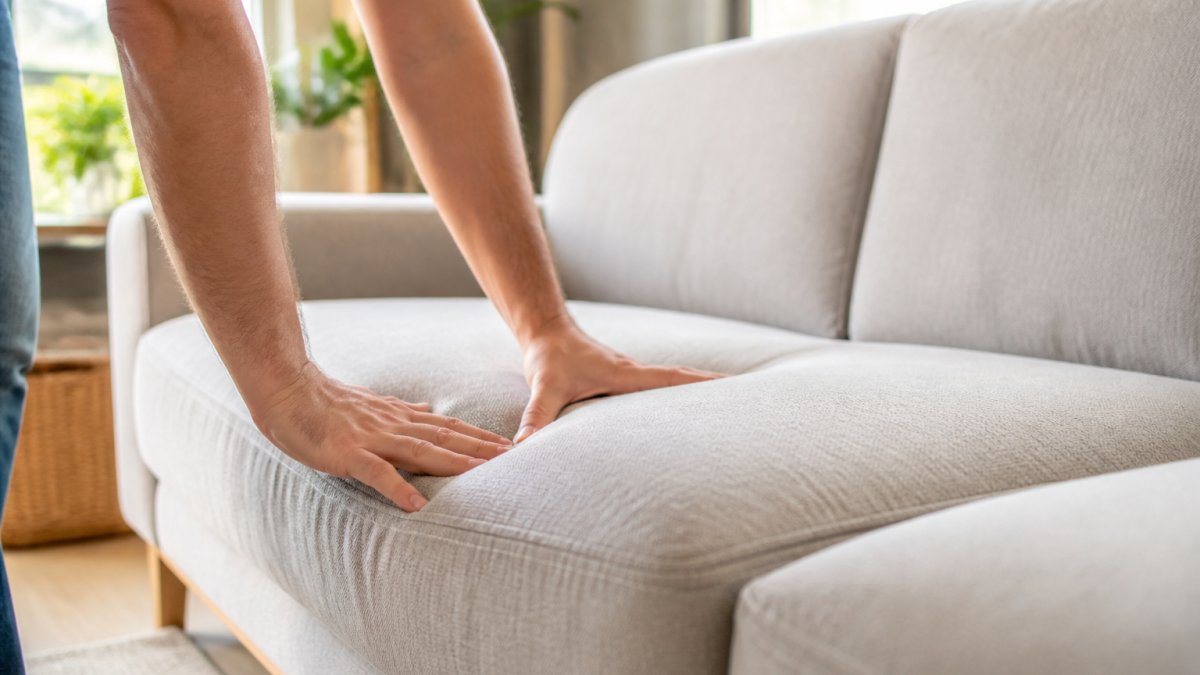
What separates HR foam from the cheap stuff is recovery rate. Press a standard foam cushion and it stays compressed for a beat. Press an HR cushion and it rebounds almost immediately. That single behavior drives comfort, support, and longevity all at once.
High Resilience vs High Density Foam: What the Labels Hide
The labels confuse buyers because density and resilience measure different things, and one doesn't guarantee the other. Foam density is weight per unit volume, usually expressed in pounds per cubic foot. Resilience is how quickly the foam returns to its original thickness after compression. A dense foam can still be sluggish; a resilient foam can be lightweight. High-density foam simply packs more material into the same space, which often improves durability but says nothing about springiness.
That distinction is the one most product pages skip. When you compare high resilience vs high density foam, ask two separate questions: how much material is in the foam, and how fast does it bounce back? HR foam is formulated for the second quality, and many HR foams also sit in a mid-to-high density range. The label alone won't tell you which you're getting, so check the spec sheet.
Comfort, Support, and Pressure Distribution in Daily Use
Comfort comes from how a cushion spreads your weight, and HR foam distributes pressure more evenly than conventional foam because it doesn't bottom out in one spot. On a sofa or task chair, standard foam compresses into a shallow bowl under your hips and thighs, concentrating pressure at the pressure points. HR foam resists that collapse, keeping load-bearing support across the full seat surface. The result is better weight distribution, less fatigue on long sits, and seating posture that doesn't degrade by mid-afternoon.
For ergonomic seating, this matters more than firmness. A soft cushion that sinks unevenly feels plush for ten minutes and punishing after an hour. HR foam stays supportive without feeling like a board, which is why it shows up in office chairs and daily-use sofas alike. Good cushioning isn't about being soft or hard; it's about staying consistent from the first minute to the hundredth.
How to Choose the Right Foam Density for Sofas and Chairs
Choosing the right foam density for sofas and chairs starts with matching the foam to who sits on it and for how long. There's no universal best number, only a best fit for the use case. A decorative accent chair and a family room sofa that hosts movie nights need different specifications, and buying one density for both usually means overpaying on one and underperforming on the other.
Before the table, separate the three specs that get conflated. Density is weight per unit volume, expressed in pounds per cubic foot (pcf), and it tracks how much polyurethane is in the foam. Firmness is measured by indentation force deflection (IFD), the pounds of force required to compress a 4-inch-thick sample by 25 percent, typically reported as a number such as 35 IFD. Resiliency is the ball-rebound percentage, how high a steel ball bounces off the foam, and it captures springiness rather than load-bearing capacity. A cushion can be high-density and low-resilience, or low-density and high-resilience; the three properties move independently.
Use this as a starting framework for how to choose the right foam density for sofas, with the understanding that these are common industry ranges rather than fixed rules:
| Use Case | Typical Density | Typical IFD | What to Look For |
|---|---|---|---|
| Occasional accent seating | 1.8-2.2 pcf | 20-28 | Mid-range density, resilient core, softer hand-feel |
| Daily family sofa | 2.4-2.8 pcf | 30-38 | Higher density, HR formulation, support factor above 2.0 |
| Task or office chair | 2.5-3.0 pcf | 35-45 | Firm HR foam, quick rebound, low compression set |
| Heavy or long-duration use | 2.8+ pcf | 38-50 | High density plus high resilience, wrapped construction |
Translate body weight and seating duration into a starting point. For occasional seating under an hour a day, a 1.8-2.2 pcf HR foam at 20-28 IFD is usually enough. For daily sofa use of one to three hours, most practitioners steer toward 2.4-2.8 pcf and 30-38 IFD. For task chairs used four or more hours a day, or for sitters above roughly 200 pounds, the working range shifts toward 2.8 pcf and 38 IFD or higher, paired with a support factor (the ratio of 65 percent IFD to 25 percent IFD) above 2.0 so the foam stiffens progressively instead of bottoming out. These are starting points, not prescriptions, cushion thickness, wrap, and seat deck all change the felt result.
Ask for the full spec sheet, not just the density number. A listing that shows only pcf is telling you half the story, and that half is about weight, not comfort. The mistake is picking density by feel alone in a showroom, where a five-minute sit tells you almost nothing about year three.
Durability, Sagging, and Cushion Lifespan
Durability is where HR foam earns its keep, because the foam resists the compression set that turns cushions into pancakes. Compression set is the permanent deformation left after repeated loading, and it's the mechanism behind sagging. It's measured by compressing a sample under controlled heat and time, then recording how much thickness it fails to recover, a lower percentage means better recovery.
Set realistic expectations by use pattern. On a daily family sofa, a quality HR foam core commonly holds acceptable support for roughly five to eight years before noticeable flattening, while a task chair used full-time may show compression at the seat front edge in three to five years. Occasional accent seating can last a decade or more. These are typical ranges, not guarantees, foam density, wrap condition, upholstery tightness, and how evenly the cushion is loaded all shift the outcome.
Bonded Dacron Upholstery Grade Polyester Batting 48 Inch Wide (5 yards) →
A simple maintenance routine extends that window. Rotate and flip removable cushions monthly so load is distributed across the surface rather than concentrated in one spot. Vacuum the upholstery to keep grit from working into the wrap and abrading the foam. Keep cushions out of direct sun and away from heating vents, since heat accelerates foam breakdown.
Know the signs that replacement is due rather than a refresh. A cushion that stays compressed after you stand up, shows a visible dip that doesn't recover overnight, or lets you feel the deck through the seat is past the wrap-only stage. Cracking or crumbling foam at the edges, or a persistent musty odor from the core, means the foam itself has degraded. In those cases, re-wrapping a sound core is the highest-value step; replacing the core is the answer when the foam no longer recovers.
Foam wrap and construction also shape how long a cushion lasts. A fiber or batting wrap adds a soft outer layer and protects the foam core, and replacing a worn wrap can refresh a cushion without replacing the foam inside. We stock a Bonded Dacron Upholstery Grade Polyester Batting ($23.95) that wraps around foam cushions to smooth out bumps and restore a soft, full look, which is a practical way to extend the life of upholstery you already own.

Is High Resilience Foam Worth the Cost?
High resilience foam is worth the cost when a cushion gets regular, load-bearing use, and it's overkill for decorative pieces that rarely get sat on. The premium buys you a longer service life and steadier comfort, so the value depends entirely on how hard the cushion works. On a daily sofa or a task chair, the extra spend usually pays back by delaying replacement. On a throw pillow or a showpiece chair, standard foam does the job.
Weigh it as cost over time, not cost at checkout. A cushion that holds its shape for years costs less per year of use than a cheaper one that sags and gets replaced. The one honest limitation: HR foam can feel firmer out of the box, and some cushions need a short break-in period before they soften into their long-term feel. That's normal, not a defect.
Wrapping, Construction, and Finishing Touches
Construction decides whether good foam actually feels good, and the finishing layers are where many cushions succeed or fail. A resilient foam core wrapped in batting or fiber delivers a softer hand-feel while protecting the foam from friction and wear. The wrap also smooths the transition between foam and upholstery, so the cushion looks full and tailored rather than lumpy. Foam construction is the difference between a cushion that performs on paper and one that performs in the living room.
For anyone refreshing existing furniture, re-wrapping is the highest-value step. New batting over a sound foam core restores the soft look and hides the bumps that build up over years of use. Pair a quality foam core with a proper wrap, and you get the comfort, support, and durability that high resiliency foam promises, finished the way a professional upholsterer would do it.
Frequently Asked Questions
Is high resilience foam good for daily use furniture?
Yes. High resiliency foam is built for repeated compression, which makes it a strong fit for sofas, task chairs, and any seat that gets used every day. Its bounce-back and support factor help it recover after compression instead of flattening out. For households that sit on the same couch nightly, HR foam typically holds its shape longer than conventional foam. Pair it with a bonded Dacron wrap to smooth the surface and extend the cushion's clean look.
What is the difference between high resilience foam and high-density foam?
Density and resilience measure different things. High-density foam refers to weight per cubic foot, so it is heavier and often firmer. High resiliency foam refers to how quickly and fully the foam recovers after compression. A foam can be high-density without being highly resilient. HR foam is engineered for springiness and support factor, while high-density foam is chosen for load-bearing and firmness. Check both specs before buying.
Does high resilience foam lose its shape over time?
All foam compresses with use, but HR foam resists sagging better than standard foam because of its recovery rate and support factor. Compression set, the measure of permanent deformation, is typically lower in quality HR foam. Realistic cushion lifespan depends on body weight, seating duration, and whether the cushion has a wrap or protective cover. Rotating cushions and using a Dacron wrap can extend usable life.
Is high resilience foam worth the cost?
For seats used daily, HR foam usually earns its higher price through longer cushion lifespan and less sagging. The upfront cost is offset by fewer replacements and better support over time. For occasional guest chairs or decorative pieces, standard foam can be enough. Weigh body weight, seating duration, and how often the piece is used. A bonded Dacron wrap at $23.95 for 5 yards is a low-cost way to protect the foam and improve the finish.
Cushion performance lives or dies on the materials you start with, and sourcing consistent foam and wrap is the difference between a piece that lasts and one that sags. New Creations Fabric & Foam Inc supplies upholstery-grade batting and a broad range of fabrics built for consistency and refined finishes at production scale. Explore our fabrics and foam materials to give your next project the support and finish it deserves.