

Last Updated: October 23, 2026
Quick Summary
Clean velvet stains by blotting, never rubbing, with a white cloth and cool water with mild detergent, then air-dry flat and brush the pile. Silk, beaded, vintage, or dry-clean-only velvet should go straight to a professional cleaner.
- Check the care label first; dry clean only means no water and no home spot treatment.
- Blot from the outside of the stain inward and use white cloth only.
- Never scrub velvet, since crushed pile cannot be fully reversed.
- Rehydrate dried stains with cool water before blotting with mild detergent.
- Stop after two home attempts and take the dress to a professional cleaner.
Table of Contents
- Step 1: Identify Your Velvet and Read the Care Label
- Step 2: How to Remove Stains from Velvet Clothes Safely
- Step 3: How to Clean a Velvet Dress at Home
- Step 4: How to Remove Old Stains from Velvet
- Step 5: How to Remove Water Marks from Velvet
- Step 6: Stain-Specific Treatment for Luxury Dress Fabrics and Embellishments
- Step 7: When to Choose Professional Dry Cleaning
- Conclusion
- Frequently Asked Questions
Step 1: Identify Your Velvet and Read the Care Label
Cleaning velvet stains from luxury dresses starts with one step most people skip: knowing what your garment is actually made of, since velvet stains behave differently on every fiber. At New Creations Fabric & Foam Inc, we supply velvet to designers and production teams, so we see how a silk pile that forgives gentle care differs from a synthetic pile that marks at the first drop of water.
Velvet Fiber Types: Silk, Synthetic, and Blends
Velvet is a woven fabric with a raised, cut pile surface, and the fiber underneath that pile decides how it must be cleaned. Silk velvet has a soft, deep pile that shows every mark; synthetic velvet, usually polyester, holds up better to moisture; blends sit between the two.
Check the label for fiber content before you touch the stain. If the label is gone, test a hidden edge first. For a closer look at how silk and rayon velvet differ in behavior, read our guide to silk vs rayon velvet for evening gowns.
What the Care Label Tells You
A care label is the manufacturer's washing instruction tag sewn into the garment. It is the single most reliable guide you have.
- "Dry clean only" means stop: no water, no home spot treatment
- "Dry clean recommended" leaves room for careful spot cleaning
- No label at all means treat the garment as delicate
Photograph the label before you start. If a treatment goes wrong, you will want to know what the maker originally specified.
Step 2: How to Remove Stains from Velvet Clothes Safely
Knowing how to remove stains from velvet clothes comes down to two rules: work small, and never scrub. Velvet pile is directional, and aggressive rubbing flattens it, which reads as a permanent dull patch.
Spot-Cleaning vs. Full Cleaning
Spot cleaning means treating only the stained area, not the whole garment. It is the right choice for a fresh spill on a structured gown where full washing would risk the shape. Full cleaning makes sense when the whole dress is soiled, has odor, or is a thrifted garment you want to freshen.
The Blot, Don't Rub Rule
Blotting lifts stain out of the pile; rubbing pushes it deeper and crushes the nap.
- Press a clean white cloth straight down on the stain
- Hold for a few seconds, then lift
- Move to a clean section of cloth and repeat
Use white cloth only, a colored cloth can transfer dye onto damp velvet.
Step 3: How to Clean a Velvet Dress at Home
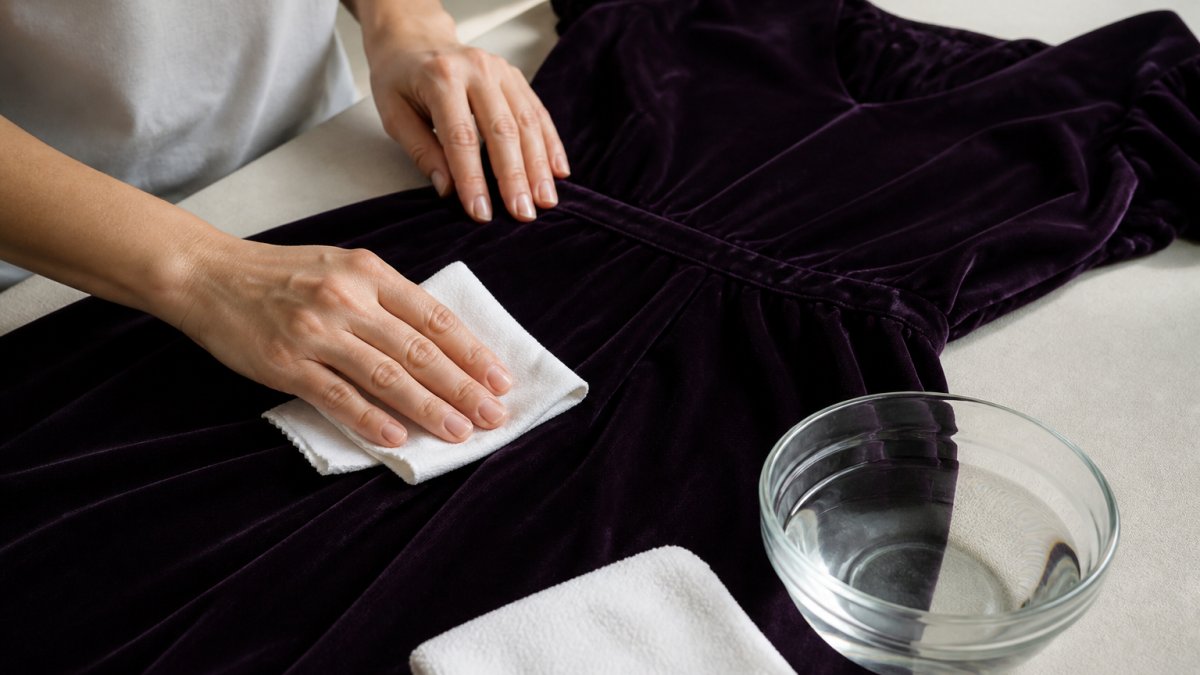
Home cleaning works on washable velvet: cool water, mild detergent, and patience. Skip the dryer entirely.
Cool Water and Mild Detergent Method
- Fill a bowl with cool water and add a few drops of gentle detergent
- Dip a white microfiber cloth and wring it out until barely damp
- Blot the stain, rinsing the cloth often
- Press a dry white towel over the area to pull out moisture
- Let the garment air-dry flat, away from heat and sun
Cool water matters. Warm water can set some stains and loosen dye. If you are worried about color running, our guide to preventing dye bleeding in laundry covers the precautions that protect a dark velvet dress.
Drying and Restoring the Pile
Never wring, twist, or hang a wet velvet dress, water weight distorts the shape. Lay it flat on a clean towel and air-dry, then brush the pile gently with a soft clothing brush in one direction to lift the nap. For pressing without flattening the pile, see our guide to pressing velvet without crushing the pile. If the nap looks thin or sheds, our article on preventing velvet fabric shedding explains what to do.
Step 4: How to Remove Old Stains from Velvet
Old stains have bonded to the fibers, so you have to loosen them before you can lift them.
When a Stain Has Dried: Rehydrate and Retreat
Rehydrating means adding moisture back into a dried stain so it can release from the pile. Dampen a white cloth with cool water and hold it against the stain for several minutes, do not soak the garment. Once the stain softens, blot with mild detergent as you would a fresh mark, repeating in short sessions rather than one long soak.
What to Do When a Home Treatment Fails
Stop after two attempts, more rubbing on the same spot does more harm than the stain itself. Take the dress to a professional cleaner and tell them exactly what you used; that information changes how they treat it.
Step 5: How to Remove Water Marks from Velvet
Water marks are the most common velvet complaint, and they are usually fixable.
Why Water Marks Form and How to Lift Them
Water marks form when moisture dries unevenly across the pile, leaving a ring where the fibers settled differently. The fix is to wet the whole area evenly, not just the ring.
- Dampen a clean white cloth with cool water
- Lightly mist the entire marked area, feathering past the ring
- Blot evenly with a dry towel
Even moisture dries evenly. That is the whole trick.
Step 6: Stain-Specific Treatment for Luxury Dress Fabrics and Embellishments
Luxury dresses bring complications plain velvet does not: beading, embroidery, linings, and older fibers. The biggest mistake is treating every stain the same way, match the treatment to both the stain type and the component it sits on.
Match the Treatment to the Stain
| Stain type | What it does to velvet | First move | What to avoid |
|---|---|---|---|
| Oil or grease | Bonds to the pile and darkens it | Blot, then apply a tiny amount of mild detergent mixed with cool water; work from the outside in | Hot water, which can set the oil and loosen dye |
| Red wine | Pigment soaks into the pile fast | Blot immediately, then dab with cool water and mild detergent; repeat with a clean cloth section each time | Rubbing, which drives pigment deeper; salt, which can leave its own ring |
| Makeup (foundation, lipstick) | Waxy pigment clings to the nap | Scrape off excess with a dull edge, then blot with mild detergent and cool water | Alcohol-based removers, which can strip dye from silk and rayon velvet |
| Perspiration | Salts and oils yellow the pile over time | Blot fresh marks; for older marks, rehydrate with cool water before blotting with detergent | Heat, which sets the yellowing |
| Unknown stain | You cannot predict the reaction | Test on an inside seam first, then treat as the gentlest category (cool water and mild detergent) | Guessing with a strong solvent on a visible area |
In practice, oil and makeup respond to the same mild-detergent approach, while wine and perspiration need repeated short sessions rather than one long soak.
Protect the Components, Not Just the Pile
- Beads and sequins: keep water off the thread holding them. Work the cloth between the beads rather than across them, and never soak a beaded bodice.
- Linings: a stain on the velvet face can wick into the lining. Blot from the outside only; do not flood the garment, or the lining will transfer dye back into the pile.
- Trims and appliqués: test any trim on a hidden end first. Metallic thread and some appliqués react to moisture and detergent differently than the velvet itself.
Silk Velvet, Beaded, and Vintage Garments
- Silk velvet: blot only, minimal moisture, no brushing while damp
- Beaded velvet: keep water away from the thread holding the beads; dabbing around the beadwork beats soaking through it
- Vintage or thrifted velvet: test every method on an inside seam first, since old fibers weaken with age
The inconspicuous area test is not optional on luxury pieces. Apply your detergent mix to a hidden hem or inside seam, wait a few minutes, and check for color change or pile damage before touching the visible stain.
Step 7: When to Choose Professional Dry Cleaning
Professional dry cleaning is the right call more often than most people realize, and waiting usually costs more than the trip. Use this decision path before you touch the stain again.
The Stop-Home-Treatment Decision Tree
Work through these questions in order. The first "yes" is your answer.
- Does the care label say "dry clean only"? Stop. Do not spot-treat. Take it to a professional cleaner.
- Is the velvet silk, rayon, or a silk blend? Stop. These fibers mark easily and set stains fast; a professional can assess without adding damage.
- Is the garment beaded, sequined, or heavily embellished? Stop. Home moisture risks the threadwork, and a loose bead is harder to fix than a stain.
- Is the dress vintage, thrifted, or of unknown fiber content? Stop. Old fibers weaken with age, and an unknown fiber can react badly to water.
- Is the stain large, unknown, or more than a day old? Stop. A cleaner can identify the stain type and treat it without guesswork.
- Have you already tried two home treatments without success? Stop. A third attempt often does more harm than the stain itself.
- Is it a small, fresh spill on washable synthetic velvet? Home spot cleaning is reasonable. Proceed with cool water and mild detergent.
What to Tell the Professional Cleaner
A good cleaner will ask, but you should volunteer it:
- What caused the stain, if you know
- What you already tried, including water, detergent, and any home remedy
- How long the stain has been there
That information changes how they treat the garment.
When a Home Treatment Has Already Failed
If you have already treated the stain and it looks worse, a ring, a dull patch, or a spread mark, do not keep going. Set-in stains, water rings, and detergent residue are recoverable by a professional but get harder to fix with each home attempt. Bag the dress loosely, do not iron it, and take it in.
Home vs. Professional at a Glance
| Situation | Best choice | Why |
|---|---|---|
| Label says "dry clean only" | Professional cleaner | Water can damage the pile or finish |
| Silk velvet gown | Professional cleaner | Silk marks easily and sets stains fast |
| Beaded or heavily embellished | Professional cleaner | Home moisture risks the threadwork |
| Large or unknown stain | Professional cleaner | Cleaner can assess without more damage |
| Vintage or thrifted velvet | Professional cleaner | Old fibers weaken with age |
| Small fresh spill, washable velvet | Home spot cleaning | Fast, low risk, no trip needed |
Conclusion
A stained velvet dress is rarely a lost dress. Identify the fiber, read the label, blot instead of rub, use cool water and mild detergent, and hand off to a professional when the garment is silk, beaded, vintage, or labeled dry clean only.
When you are sourcing velvet for a collection, the fabric you start with decides how well it survives real wear. Once the dress is clean, our guide to storing luxury velvet clothing covers keeping it that way.
Frequently Asked Questions
Can you get old stains out of velvet?
Old, dried stains are harder to lift but often not permanent. Start by rehydrating the area with a damp white cloth, then apply a small amount of mild detergent and blot gently. Let it sit for a few minutes before blotting again with cool water. If the stain persists after two attempts, stop and take the garment to a professional dry cleaner, especially if it is silk velvet or has embellishments.
Can you spot-clean a velvet dress labeled dry clean only?
Spot-cleaning a dry-clean-only velvet dress carries risk, but a careful, small-scale approach is sometimes possible. Test any method on an inconspicuous area first, use only a barely damp white cloth and a tiny amount of mild detergent, and blot rather than rub. Never submerge the garment. If the stain is large, on silk velvet, or near beading, professional dry cleaning is the safer choice.
How do you remove water marks from velvet?
Water marks form when moisture dries unevenly and disturbs the pile. To remove them, lightly mist the entire affected panel with distilled water so the moisture is even, then gently brush the pile in one direction with a soft clothing brush. Let it air-dry away from heat. For stubborn marks, a professional cleaner can steam the fabric and restore the nap.
When should a velvet dress be taken to a professional cleaner?
Take a velvet dress to a professional when the care label says dry clean only, when the stain is old or has already been treated at home without success, or when the garment is vintage, silk, or heavily embellished. Also go professional for large spills, oil-based stains, or any stain on a light-colored luxury dress where a failed attempt would be visible.
