

Table of Contents
- Understanding Velvet Fabric Before Storage
- Preparing Your Velvet Garments for Storage
- How to Hang a Velvet Dress and Other Garments
- Best Garment Bags for Velvet Clothing
- Choosing the Right Storage Location
- How to Remove Creases from Velvet
- How to Store Velvet Long Term
- Frequently Asked Questions
Last Updated: October 10, 2026
Understanding Velvet Fabric Before Storage
Velvet is a luxury fabric with a distinctive soft pile. The pile consists of short, densely packed fibers that stand upright from the base. This structure creates the fabric's signature luster and smooth feel, but it also makes velvet vulnerable to damage during storage.
The pile can flatten under pressure, crush from moisture, or lose its sheen if exposed to direct sunlight. Understanding these vulnerabilities is the first step to protecting your investment. When you know what threatens velvet, you can choose storage methods that preserve its beauty.
Velvet comes in different types, and each type's fiber content and construction directly affect how you should store it:
Silk velvet is the most delicate and expensive. It has a lightweight pile and is prone to crushing under even modest pressure. Silk velvet should always be hung on padded hangers and never folded, even for short periods. The fibers are sensitive to humidity fluctuations and require consistent environmental control.
Cotton velvet is heavier and more durable than silk. It can tolerate hanging or careful rolling for storage, depending on the garment's weight and shape. Cotton velvet is less susceptible to pile flattening than silk, but the pile can still crush if the garment is compressed or folded tightly.
Synthetic velvet (polyester and polyester blends) is the most resilient. Royal velvet, a 100% polyester option, can be hung or folded without significant risk of permanent damage. Synthetic fibers recover from compression better than natural fibers, though the pile may still show temporary creasing.

Stretch velvet blends polyester with spandex for flexibility and comfort. The spandex adds elasticity, which means the fabric can recover from minor creasing and pressure marks. However, stretch velvet should not be stored in tightly folded positions for extended periods, as the spandex fibers can lose elasticity over time if held in a compressed state.
Crushed velvet has a textured appearance created by pressing the pile in different directions. This intentional texture is stable and resists flattening, making crushed velvet one of the easiest velvet types to store. It can be hung or folded without concern for pile damage.
Beyond fiber type, the garment's weight and lining affect storage choice. A lightweight velvet blouse can be folded or hung with equal safety. A heavy velvet gown or coat should always be hung to prevent the weight from crushing the pile or stretching the seams. Lined garments are more stable during storage than unlined pieces, since the lining provides internal structure and reduces pile compression.
Understanding your velvet's fiber content, weight, and construction allows you to choose the storage method that best protects your specific garment, rather than applying one-size-fits-all advice.
Preparing Your Velvet Garments for Storage
Learning how to store luxury velvet clothing starts with cleaning the garment thoroughly before storage. Dust, body oils, and stains attract pests and can set permanently if left during long storage. Check the care label for washing instructions. Many velvet pieces can be machine washed in cold water with gentle detergent, then tumble dried on low heat.
Once clean, inspect the fabric for any damage. Look for loose seams, small tears, or missing buttons. Repair these issues now, before storage. Small problems worsen in storage conditions and become expensive to fix later.
Allow the garment to dry completely before storing. Any residual moisture invites mold and mildew. Hang the piece in a well-ventilated area for at least 24 hours after washing. This prevents mold growth and ensures the fabric is truly dry inside and out.
How to Hang a Velvet Dress and Other Garments
The best way to store luxury velvet clothing is to hang it properly. Hanging prevents the creasing and pressure marks that come from folding. Use a padded or broad hanger that supports the garment's weight evenly. Narrow wire hangers concentrate pressure on a small area and can leave permanent marks.
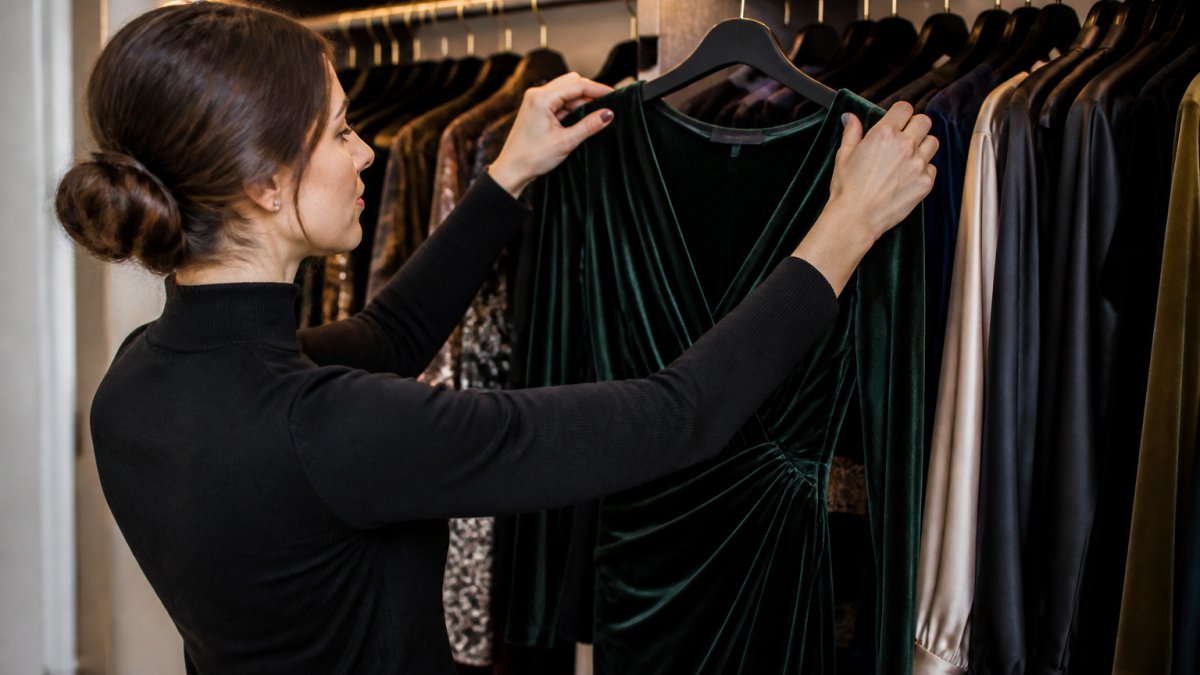
Space garments at least one inch apart on the rod. Crowding causes friction between pieces and can crush the pile. Leave room for air to circulate around each item. This reduces moisture buildup and prevents musty odors.
Hang heavier pieces like velvet gowns and dresses on their own dedicated hanger. Lightweight pieces can share space if they do not touch. Avoid hanging multiple heavy items on a single rod, as the combined weight can stretch the fabric and deform the hanger.
Best Garment Bags for Velvet Clothing
Protect hanging garments with a breathable garment bag. Breathable cotton or canvas bags allow air circulation while blocking dust and light. These materials prevent moisture from trapping inside the bag, which causes mildew.
Avoid plastic covers and airtight bags entirely. Plastic traps humidity against the fabric and promotes mold growth. It also blocks air circulation, creating a damp microclimate inside the bag. Even expensive velvet pieces stored in plastic covers will develop mold and musty smells.
Unbleached cotton garment bags are the standard choice for velvet storage. Cotton is breathable, lightweight, and allows the pile to remain undisturbed. Look for bags with reinforced seams and quality zippers that will not snag the velvet.
Canvas garment bags offer heavier protection than cotton. Canvas is more durable and provides better dust blocking, making it suitable for long-term storage or storage in less-controlled environments.
Muslin bags are a middle ground between cotton and canvas. Muslin is tightly woven cotton that blocks more dust than standard cotton garment bags while remaining breathable. Muslin is often used for archival storage of formal wear and is a good choice if you want enhanced dust protection without sacrificing air circulation.
Specialty polyrobe or cotton dust covers designed for formal wear combine breathable outer layers with dust-blocking construction. These bags often feature reinforced seams, quality zippers, and sometimes interior pockets for cedar blocks or lavender sachets.
What to avoid: Never use dry-cleaning bags (thin plastic with paper backing), vacuum-seal bags, or any airtight storage. These trap moisture and prevent air circulation. Avoid bags with plastic windows, as the plastic can off-gas chemicals that damage the pile or cause discoloration.
Royal Velvet Fabric 58" Wide| New Creations Fabric & Foam Inc. →
Bag size and fit: Choose a bag that is slightly larger than the garment. A bag that is too tight compresses the fabric and can crease the pile. A bag that is too loose allows the garment to shift and bunch inside, which can also cause creasing.
Zippers and closures: Quality zippers are essential. Cheap zippers can snag velvet pile or fail during storage, leaving the garment exposed to dust and light. Look for bags with metal zippers or high-quality plastic sliders. Some specialty bags use hook-and-loop closures instead of zippers to eliminate snag risk entirely.
For long-term storage of multiple pieces, consider investing in a few high-quality cotton or canvas garment bags rather than using one bag repeatedly. Rotating bags reduces wear on zippers and seams, and allows you to air out bags between uses, preventing odor buildup.
Choosing the Right Storage Location
The storage location makes or breaks velvet preservation. Choose a cool, dry place away from direct sunlight. Heat accelerates fabric deterioration and can cause permanent color fading. Sunlight bleaches velvet over time, especially darker colors.
Ideal storage temperatures stay between 60 and 70 degrees Fahrenheit. Basements often work well if they stay dry. Attics can work if properly insulated, but they tend to get too hot in summer. Avoid storage in kitchens, bathrooms, or laundry rooms where humidity spikes.
Keep garments away from heating vents, air conditioning units, and windows. Temperature fluctuations stress the fabric fibers. Humidity swings cause the pile to absorb and release moisture, which weakens fibers and encourages mold growth.
Ensure good air circulation in your storage area. Stagnant air traps moisture and odors. If storing in a closet, leave the door cracked slightly to allow air movement. In a dedicated storage room, consider a small fan running on low to keep air flowing gently.
How to Remove Creases from Velvet
Creases happen despite careful storage. The good news is that velvet creases often release with gentle steaming. Never iron velvet directly, as heat and pressure flatten the pile permanently.
Use a garment steamer held 6 inches from the fabric. Move the steamer slowly across the creased area. The steam relaxes the fibers and allows the pile to spring back up. For stubborn creases, hang the garment in a steamy bathroom for 30 minutes. The ambient humidity helps release the wrinkles.
For minor flattening, try brushing the pile gently with a soft-bristled brush or a piece of clean velvet. Brush in one direction to lift the flattened fibers. This technique works best on fresh flattening before it sets into the fabric.
Never use a regular iron on velvet. The direct heat and pressure destroy the pile. Never dry-clean velvet unless the care label specifically recommends it. Dry-cleaning chemicals can damage the pile and cause color fading.
How to Store Velvet Long Term
Long-term storage of luxury velvet clothing requires extra attention. If storing for more than one season, inspect the garment every three months. Check for signs of mold, pest damage, or odors. Air out the piece briefly if you detect any musty smell.
Keep the storage area pest-free. Pests like moths and silverfish damage velvet fibers. Use cedar blocks or lavender sachets to deter insects, but do not let them touch the fabric directly. Place them in a separate compartment of the garment bag or on a nearby shelf.
Document your velvet pieces before long-term storage. Take photos of each garment and note details like fiber content, color, and any existing damage. Store this information with your collection. It helps you track what you have and identifies any new damage when you retrieve items.
For archival-quality storage, use acid-free tissue paper to wrap delicate pieces. Acid-free materials do not yellow or degrade the fabric over time. Wrap the garment loosely without creasing. Place it in an archival-quality storage box in your cool, dry location.
Rotate stored pieces occasionally. Every six months, remove items from storage and hang them in a well-ventilated area for a few hours. This refreshes the fabric and prevents permanent creasing. It also gives you a chance to inspect for any issues that need attention.
Storing luxury velvet clothing properly preserves its beauty for years. The key is protecting the pile from pressure, moisture, heat, and light. Whether you're storing a velvet dress, gown, or other formal wear, the same principles apply: hang on padded hangers in breathable bags, keep the space cool and dry, and check periodically for any signs of damage.
New Creations Fabric & Foam Inc provides premium velvet fabrics including Royal Velvet Fabric, Stretch Velvet, and Stretch Crushed Velvet designed for apparel and formal wear. Explore our fabric collections and discover how to store luxury velvet clothing with confidence.


Frequently Asked Questions
Should velvet clothing be hung or folded?
Most velvet garments should be hung on padded or broad hangers to prevent creasing and crushing. However, delicate or heavily beaded pieces may be stored flat on acid-free tissue paper in archival boxes. Stretch velvet and crushed velvet can tolerate gentle folding better than traditional pile velvet. The key is avoiding prolonged pressure on the nap. For formal gowns and luxury pieces, hanging is the safest approach to preserve the fabric's appearance.
Can you use mothballs when storing velvet clothes?
Mothballs are not recommended for velvet storage. They can leave odors that are difficult to remove and may damage the delicate pile. Instead, use cedar blocks, lavender sachets, or sealed cedar closets for pest prevention. Ensure your storage area is clean and dry to discourage moths naturally. Cedar and lavender provide natural protection without the harsh chemical smell or potential fabric damage that mothballs cause.
How do you prevent creases in velvet clothing?
Prevent creases by using padded hangers with adequate spacing between garments, allowing air circulation. Store velvet in breathable cotton garment bags rather than plastic covers. Maintain humidity between 30-50% to keep the fabric supple. For long-term storage, check garments monthly and gently fluff the pile with your hand. Avoid folding heavy velvet pieces, and never store items in compressed or crowded spaces where weight can permanently flatten the nap.
How do you store a velvet dress without crushing it?
Store velvet dresses on padded or broad hangers in a cool, dry closet with good air circulation. Use breathable cotton garment bags to protect from dust while allowing the fabric to breathe. Keep dresses spaced at least 2 inches apart to prevent pressure marks. Avoid plastic covers and airtight storage, which trap moisture and promote creasing. For beaded or heavily embellished velvet dresses, consider storing flat in archival boxes lined with acid-free tissue paper to distribute weight evenly and protect delicate details.