

Table of Contents
- Top Wholesale Fabrics for Fashion Brands
- How to Source Fabric for Your Clothing Line
- Understanding Minimum Order Quantity Fabric Wholesale
- Sustainable Fabric Wholesalers and Ethical Sourcing
- Fabric Quality Standards and Testing for Apparel Manufacturing
- Fabric Sourcing by Type: Knits, Woven, and Specialty Materials
- Wholesale Pricing, Bulk Orders, and Cost-Per-Garment Analysis
- Conclusion
Last Updated: August 15, 2026
Top Wholesale Fabrics for Fashion Brands
Sourcing the right wholesale fabric determines whether your production runs smoothly or derails before it starts. The fabrics you choose affect drape, shape retention, color consistency, and ultimately your brand's reputation with customers.
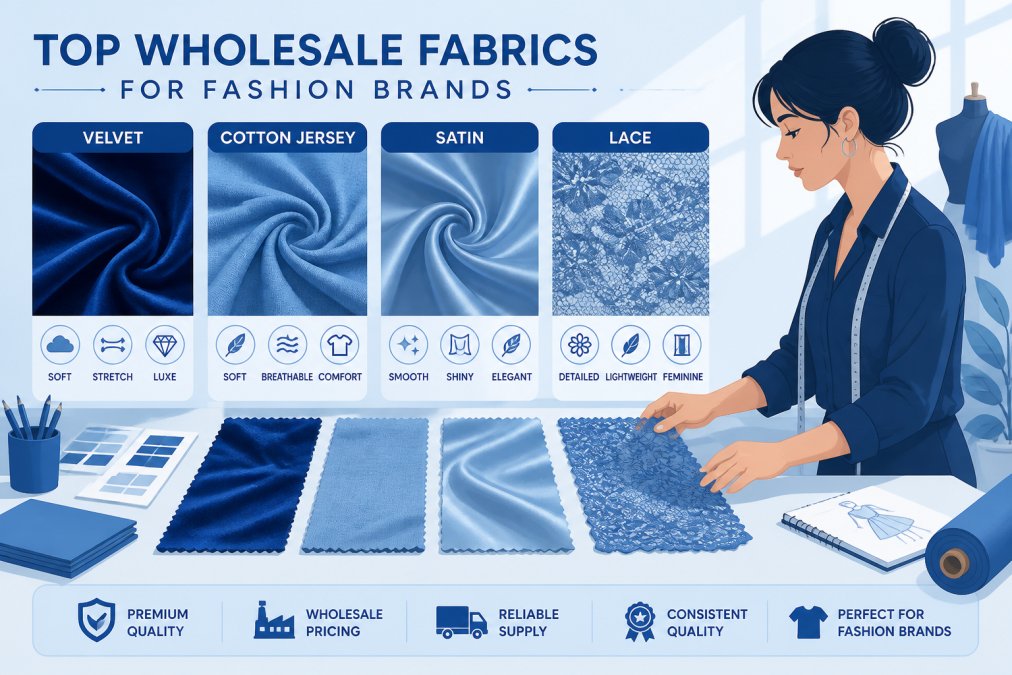
Professional procurement means understanding which fabrics solve which problems. Luxury apparel needs different materials than activewear. Event decor requires different durability profiles than bridal wear. New Creations Fabric & Foam Inc specializes in precision sourcing, offering materials with consistent hand feel, predictable shrinkage, and finishes that survive production and customer use.
1. Stretch Velvet for Luxury Apparel and Costumes
Stretch velvet (90% polyester, 10% spandex) delivers silky softness with 4-way stretch, ensuring garments conform to movement without losing shape. Velvet's natural depth hides minor seaming imperfections and color variations, reducing production tolerance requirements. At $14.95 per yard from New Creations Fabric & Foam Inc, wholesale pricing applies on orders of 25+ yards.
Best for: evening wear, dancewear, formal costumes, and high-end loungewear.
What to watch: velvet shows footprints if customers sit heavily. Make care instructions explicit.
2. Cotton Jersey Spandex Knit for Everyday Wear
Cotton jersey spandex (95% cotton, 5% spandex) breathes like pure cotton but moves like activewear. At 180 GSM and 0.45mm thickness, it's substantial enough to prevent seam puckering while remaining light for summer wear. The 50% vertical and 25% horizontal stretch conform to body shape without restriction. At $12.95 per yard, it's cost-effective for mid-market brands building volume.
This fabric takes dye well for custom colorways. Single-knit construction creates natural visual interest without pattern printing.
Best for: t-shirts, casual dresses, loungewear, and comfort-driven collections.
What to watch: single-knit fabrics curl at edges if not finished properly. Budget for flatlock or coverstitch seaming.
3. Scuba Double Knit for Structure and Durability
Scuba double knit (100% polyester, 180 GSM, 0.65mm thickness) holds its shape through washing and wearing. The wrinkle-free characteristic means garments look crisp after packing, signaling durability. At $9.95 per yard, it's the most affordable option here, making it accessible for emerging brands testing designs.
Best for: structured dresses, jackets, skirts, and silhouettes requiring shape retention.
What to watch: double-knit weight affects shipping costs. Calculate cost-per-garment including freight.
4. Stretch Taffeta for Formal and Event Wear
Stretch taffeta (96% polyester, 4% spandex) stretches 25% vertically while maintaining crisp lines. The signature crisp hand feel and subtle sheen work for ballgowns, wedding dresses, and event decor. At $14.95 per yard, it withstands both machine washing and professional dry cleaning.
Best for: formal gowns, prom dresses, bridesmaid dresses, and event backdrops.
What to watch: taffeta's stiff hand feel softens with wear. Communicate this in care instructions.
5. Dull Satin for Bridal and Premium Collections
Dull satin (100% polyester, 60 inches wide, 6.1 oz/yard) delivers satin luxury without shine. The matte finish reads as refined and expensive, justifying premium pricing. At $14.95 per yard, it's reasonable for bridal and premium collections.
Best for: bridal gowns, bridesmaids' dresses, evening wear, and premium collections.
What to watch: satin requires careful seam finishing. Budget for French seams or binding to prevent raveling.
6. Specialty Laces for High-End Designs
Specialty laces like Princess 3D Floral Lace with beading ($22.95/yard) and Maria Multi Color Mexican Sarape Floral Design with embroidery ($19.95/yard) create immediate visual differentiation. These statement fabrics justify higher price points and photograph exceptionally well for social media marketing.
Best for: bridal overlays, prom accents, costume embellishment, and high-end evening wear details.
What to watch: beads and 3D elements snag during sewing. Plan for slower production and higher scrap rates.
How to Source Fabric for Your Clothing Line
Sourcing fabric is a process, not a transaction. Systematic supplier relationships and quality control separate brands that scale smoothly from those hitting production walls.
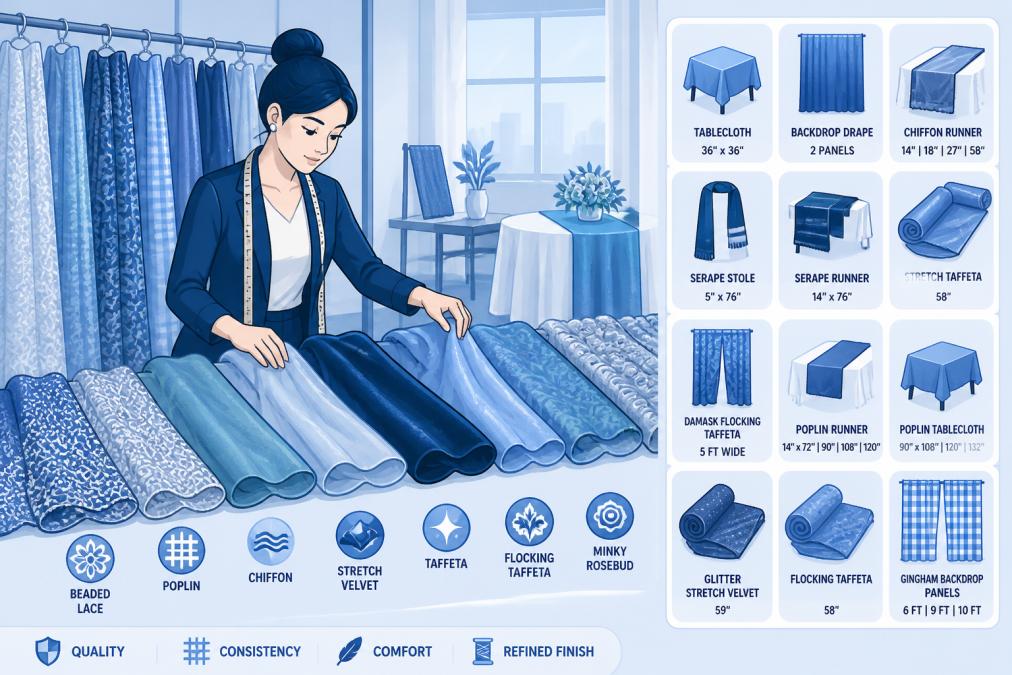
Step 1: Define Your Fabric Specifications
Before contacting suppliers, specify width, weight, fiber content, stretch direction and percentage, and finish. Document GSM (grams per square meter) range, a 180 GSM cotton jersey behaves differently than 200 GSM. Get pattern maker specifications in writing.

Document color requirements. Do you need exact Pantone matches or flexibility within a range? How critical is batch-to-batch consistency? Specify care requirements: machine wash or dry clean? Chlorine exposure? Tumble dry or line dry? Your specifications should reflect actual customer use.
Step 2: Request Fabric Swatches and Test Quality
Never order bulk fabric without physical samples. Request swatches from at least three suppliers for each fabric type.
When samples arrive, wash them using your specified care instructions. Evaluate shrinkage, color shift, and hand feel changes. Test colorfastness by washing dark swatches with white fabric. Request formal AATCC colorfastness testing for fabrics where color stability is critical.
Evaluate drape by hanging samples and photographing in different lighting. Request samples large enough to cut pattern pieces and test fit.
Step 3: Evaluate Supplier Reliability and Lead Times
Ask every supplier: What are lead times? Minimum order quantities? What happens if they run out mid-order? Request references from other brands and ask directly about on-time delivery, quality consistency, and communication during issues.
Understand their inventory situation. Do they stock continuously or source to order? Continuous stocking means faster turnaround; sourcing to order extends lead times by weeks. Know your constraints and find suppliers who can work within them.
Understanding Minimum Order Quantity Fabric Wholesale
Minimum order quantity (MOQ) is where many small brands hit their first sourcing wall. Understanding MOQ thresholds and negotiating strategically determines whether you can source at wholesale pricing.
MOQ Thresholds and Bulk Discount Pricing
Most wholesale suppliers structure pricing around volume tiers: 1-24 yards at retail price, 25-99 yards at 15% discount, 100+ yards at 25% discount. Calculate cost-per-garment at each tier. If your design requires 2 yards per garment, a 50-yard order produces 25 garments; 100 yards produces 50. Run the numbers before committing to larger minimums.
New Creations Fabric & Foam Inc offers wholesale pricing on 25+ yard orders for many fabrics. Consider whether you can store excess inventory. Storage costs and obsolescence risk factor into whether larger orders actually save money.
Negotiating MOQs for Small Fashion Brands
Published minimums aren't always fixed. Approach negotiation as partnership: "I'm building a clothing line with quarterly orders. Can we discuss lower minimums for my first order if I commit to ongoing purchases?" Many suppliers negotiate if they see long-term potential.
Offer alternatives reducing their risk: order colors they stock rather than custom dye, accept slight shade variations between batches, or offer flexible delivery timelines. Document negotiated terms in writing to prevent misunderstandings.
Sustainable Fabric Wholesalers and Ethical Sourcing
Customers increasingly ask where fabrics come from and whether they're produced ethically. Sustainable sourcing is now a competitive advantage and risk mitigation strategy.
Request transparency from suppliers. Ask about certifications: Global Organic Textile Standard (GOTS) for organic fibers, Fair Trade certification for labor practices, or similar third-party verification. Evaluate whether sustainable sourcing aligns with your brand positioning. If sustainability is central to your story, commit across your supply chain. If secondary, source conventionally and focus sustainability efforts elsewhere. Greenwashing damages brand trust more than transparency about conventional sourcing.
Fabric Quality Standards and Testing for Apparel Manufacturing
Durability and Colorfastness Testing
Durability testing evaluates how fabrics hold up to washing, wearing, and use. AATCC standards provide standardized testing protocols. Request colorfastness data for fabrics where color stability matters. Dark fabrics bleeding onto lighter garments is a common complaint.
For activewear and swimwear, request durability testing under chlorine exposure. Regular colorfastness tests don't account for pool chemicals. Ask suppliers whether they test finished fabrics or raw fibers. Finished fabric testing gives real-world performance data.
Shrinkage and Hand Feel Consistency
Shrinkage testing determines how much fabric shrinks when customers wash garments. Expect 2-5% for most fabrics. Request shrinkage data for your specific care instructions, a fabric might shrink 3% with warm wash and tumble dry, but 5% with hot water and heat drying.
Request samples from multiple dye lots before committing to large orders. Specify acceptable hand feel variation in purchase agreements.
Fabric Sourcing by Type: Knits, Woven, and Specialty Materials
Knit Fabrics for Comfort and Stretch
Knit fabrics are constructed by interlocking loops of yarn, naturally creating stretch and drape. Cotton jersey, scuba double knit, and power mesh are all knits. They conform to body shape, ideal for fitted garments and activewear.

Knits require ballpoint needles and stretch thread to prevent seam puckering. Production speeds are slower due to special handling. Knit weight (measured in GSM) determines drape: lighter knits (under 150 GSM) create fluid garments for summer; heavier knits (180+ GSM) provide structure for dresses or jackets.
Woven Fabrics for Structure and Drape
Woven fabrics are constructed by interlacing perpendicular yarn systems, creating structure and stability. Stretch taffeta and dull satin are wovens. They hold shape better than knits, ideal for structured and formal wear.
Wovens use standard sewing needles and thread with typically faster production than knits. They lack built-in stretch, so fitted woven garments require precise pattern grading. Hand feel varies dramatically: taffeta is crisp; satin is smooth and fluid. These characteristics affect how customers perceive quality.
Specialty Materials: Lace, Mesh, and Embellished Textiles
Specialty materials like lace, mesh, and embellished fabrics are typically used as accents or overlays. Specialty laces offer dimensional detail justifying premium pricing.
Lace requires careful seam finishing to prevent raveling. Directional patterns require single-direction layout, increasing fabric waste. Mesh fabrics like power mesh work as support layers or overlays with 4-way stretch, but require careful seaming to prevent laddering. Embellished textiles with beading or embroidery add visual impact but increase production difficulty. Plan for slower production and higher scrap rates.
Wholesale Pricing, Bulk Orders, and Cost-Per-Garment Analysis
The true measure of a good sourcing decision isn't per-yard price; it's cost-per-garment delivered to your warehouse. This includes fabric cost, waste, shipping, duties, and quality issues requiring rework.
A fabric costing $12 per yard with 15% waste actually costs more per garment than a $14 fabric with 5% waste. Calculate shipping cost per garment. A 100-yard order costing $50 to ship adds $1 per garment; a 200-yard order costing $75 adds only $0.38 per garment. Larger orders reduce per-unit shipping, but only if you can use the inventory.
Evaluate whether bulk discounts improve margins. A 10% price reduction requiring doubled order quantity needs confident sales projections. Excess inventory ties up cash and creates storage costs exceeding savings.
Request cost breakdowns from suppliers: base fabric cost, custom dye charges, setup fees, and shipping. Transparency prevents surprises and enables effective negotiation.
New Creations Fabric & Foam Inc pricing: Stretch Velvet $14.95/yard, Cotton Jersey Spandex $12.95, Scuba Double Knit $9.95, Stretch Taffeta $14.95, Dull Satin $14.95, specialty laces $19.95-$22.95. Wholesale pricing applies on 25+ yard orders.

| Fabric Type | Price Per Yard | Best For | Key Consideration |
|---|---|---|---|
| Stretch Velvet | $14.95 | Luxury apparel, costumes | Requires careful seam finishing |
| Cotton Jersey Spandex | $12.95 | Everyday wear, activewear | Single-knit requires edge finishing |
| Scuba Double Knit | $9.95 | Structured dresses, jackets | Heavier weight affects shipping costs |
| Stretch Taffeta | $14.95 | Formal wear, event decor | Crisp hand feel requires care instructions |
| Dull Satin | $14.95 | Bridal, premium collections | Requires French seams or binding |
| Specialty Laces | $19.95-$22.95 | High-end details, accents | Beads and embroidery slow production |
Sourcing the right wholesale fabric for fashion brands means matching materials to design intent and understanding the full cost equation. The fabrics New Creations Fabric & Foam Inc specializes in, from stretch velvet to specialty laces, are selected for consistency and refined finishes at professional scale. Whether building a luxury collection or testing designs on a limited budget, start with clear specifications, request physical samples, and evaluate suppliers on reliability and quality, not just price. Explore Fabrics at New Creations Fabric & Foam Inc to discover how the right materials transform designs into products customers want to wear.
Frequently Asked Questions
Where do fashion designers buy their fabric wholesale?
Fashion designers source wholesale fabric from direct importers, textile mills, and B2B fabric distributors that specialize in apparel manufacturing. Look for suppliers offering bulk orders, fabric swatches for quality verification, and transparent pricing. Reputable wholesalers provide consistent material specifications, multiple fabric types (knits, woven, specialty textiles), and support for both small independent designers and large manufacturers.
What is the minimum order quantity for wholesale fabric?
Minimum order quantities vary by supplier and fabric type, typically ranging from 25 to 50 yards for specialty fabrics and laces, with larger MOQs (100+ yards) for standard knits and wovens. Many wholesalers offer tiered pricing: smaller orders at standard rates, with discounts kicking in at 25-yard, 50-yard, or 100-yard thresholds. Direct importers often negotiate MOQs for established brands, and some suppliers accept smaller minimums for premium or specialty materials.
How do I know if wholesale fabric quality is consistent across orders?
Request fabric swatches and conduct durability testing before placing large orders. Check for colorfastness, shrinkage rates, hand feel, and drape consistency. Ask suppliers about their quality standards, GSM (grams per square meter) specifications, and whether fabrics meet industry testing standards. Reliable wholesalers maintain detailed material specifications, batch documentation, and offer quality guarantees. Always test a sample batch before committing to bulk production orders.
What fabrics work best for sustainable fashion brands?
Sustainable fabric wholesalers offer organic cotton, recycled polyester, linen, and responsibly sourced natural fibers. Look for suppliers with certifications (GOTS, OEKO-TEX) and transparency about supply chain practices. Cotton Jersey Spandex blends provide durability with natural fiber content, while deadstock fabric sourcing reduces waste. Verify supplier claims about sustainable practices, manufacturing standards, and environmental impact before partnering for production.
How do I calculate the actual cost per garment from wholesale fabric pricing?
Multiply the per-yard fabric cost by the yardage required per garment, then factor in shrinkage (typically 3-5% for most textiles). For example, a dress requiring 2 yards of $12.95 fabric costs $25.90 before shrinkage adjustment. Account for waste during cutting (usually 10-15%), quality control rejects, and bulk discount savings at higher MOQs. Compare cost-per-garment across suppliers to find the best value for consistent, production-ready materials.
This article was written using GrandRanker