

Table of Contents
- How Long Do Event Tablecloths Last?
- Choosing the Best Fabric for Reusable Event Tablecloths
- How to Care for Polyester Tablecloths Between Events
- How to Wash Tablecloths After an Event
- Event Linen Replacement Signs: When to Retire a Tablecloth
- Cost Per Use: Repair or Replace Event Tablecloths?
- Extending the Life of Your Event Tablecloths
- Frequently Asked Questions
Last Updated: October 8, 2026
How Long Do Event Tablecloths Last?
Event tablecloths typically last 50 to 100 wash cycles before showing real wear, which works out to roughly one to three years for most rental and catering operations. Heavy-use inventory that gets laundered weekly often needs replacing sooner. Lighter event schedules can stretch the same cloth much further.
Fabric choice drives most of the answer. A durable polyester poplin holds up far better than cotton or a thin blend, especially under repeated commercial laundering. American Cleaning Institute guidance on fabric care notes that proper washing and drying habits protect fabric structure over time.

Below, we cover how to care for polyester tablecloths, how to wash tablecloths after an event, the best fabric for reusable event tablecloths, and the signs that tell you it's time to retire a cloth.
| Fabric | Typical Lifespan | Best For | Key Weakness |
|---|---|---|---|
| Polyester poplin | 50-100 washes | High-volume rental | Holds oil stains |
| Cotton | 20-40 washes | Formal sit-down dinners | Shrinks, wrinkles |
| Linen | 30-50 washes | Upscale weddings | Creases easily |
| Poly-cotton blend | 40-70 washes | Mixed event use | Fades over time |
Choosing the Best Fabric for Reusable Event Tablecloths
Polyester poplin is the best fabric for reusable event tablecloths because it resists stains, sheds wrinkles, and survives repeated washing better than cotton or linen. Rental companies build their whole inventory around it for that reason. But "best" depends on how often the cloth will be used and how it will be laundered, so it helps to compare materials on durability, maintenance, and cost per use rather than looks alone.
Here's how the main options compare:
- Polyester poplin: Holds color, resists stains, machine washable, and withstands professional cleaning detergents. It tolerates warm water and repeated commercial cycles better than any natural fiber, which is why it dominates high-volume rental inventory. Its weakness is oil, polyester holds grease stains if they aren't treated before washing.
- Cotton: Looks rich but shrinks and wrinkles, so it needs more care per use. Cotton fibers break down faster under repeated hot-water washing and high-heat drying, and the cloth usually needs pressing after every event.
- Linen: Elegant for formal events but creases fast and costs more to maintain. Linen is strong when dry but abrades at fold lines, so the same creases that show up in storage become the first places it wears thin.
- Blends: A middle ground, though they tend to fade sooner than pure polyester. A poly-cotton blend washes more easily than pure cotton but still loses color faster than 100% polyester under repeated laundering.
How fabric choice changes expected lifespan
The material you pick sets the ceiling on how many events a cloth can survive. As a working rule:
- Polyester poplin: roughly 50-100 wash cycles before visible wear.
- Cotton: roughly 20-40 cycles, less if washed hot.
- Linen: roughly 30-50 cycles, with the first failures usually at fold lines and hems.
- Poly-cotton blend: roughly 40-70 cycles, with fading often showing up before structural wear.
Those ranges assume commercial laundering. A cloth washed gently at home and air-dried will usually land at the top of its range; one pushed through hot water, bleach, and high-heat drying lands at the bottom.
The cost-per-use trade-off
A common mistake is buying on looks alone. A gorgeous cotton cloth that needs ironing after every event costs more in labor than it saves. Run the numbers before you commit:
- Cost per use = purchase price ÷ number of uses before replacement.
- A cloth that costs more up front but lasts 80 events can beat a cheaper cloth replaced after 15.
- Add pressing labor, stain-treatment time, and the risk of a visible flaw at a client event to the true cost of the fussier fabrics.
For most rental and catering operations, polyester poplin wins on cost per use even when it isn't the cheapest per unit, because it needs the least labor between events and the fewest replacements per year.
How to Care for Polyester Tablecloths Between Events
Caring for polyester tablecloths between events comes down to three habits: keep them dry, keep them flat, and keep them clean before stains set. Moisture and creases cause more damage than most people realize.
Follow this routine:
- Shake off crumbs and debris right after the event.
- Spot-treat any spills before they dry.
- Store only when completely dry to prevent mildew.
- Fold along consistent lines to avoid sharp creases.
- Keep stored linens in a cool, dry space away from sunlight.
Wrinkles form when a damp cloth sits folded for weeks. That crease becomes a permanent weak point in the fabric over time.
How to Wash Tablecloths After an Event
Washing tablecloths after an event starts with a simple rule: treat stains fast, wash on a gentle cycle, and dry fully before storing. Most fabric damage comes from skipping one of those steps. But the bigger question for anyone tracking lifespan is how each laundering choice shortens or extends the number of cycles a cloth can survive, because laundering, not the event itself, is what wears event linens out.
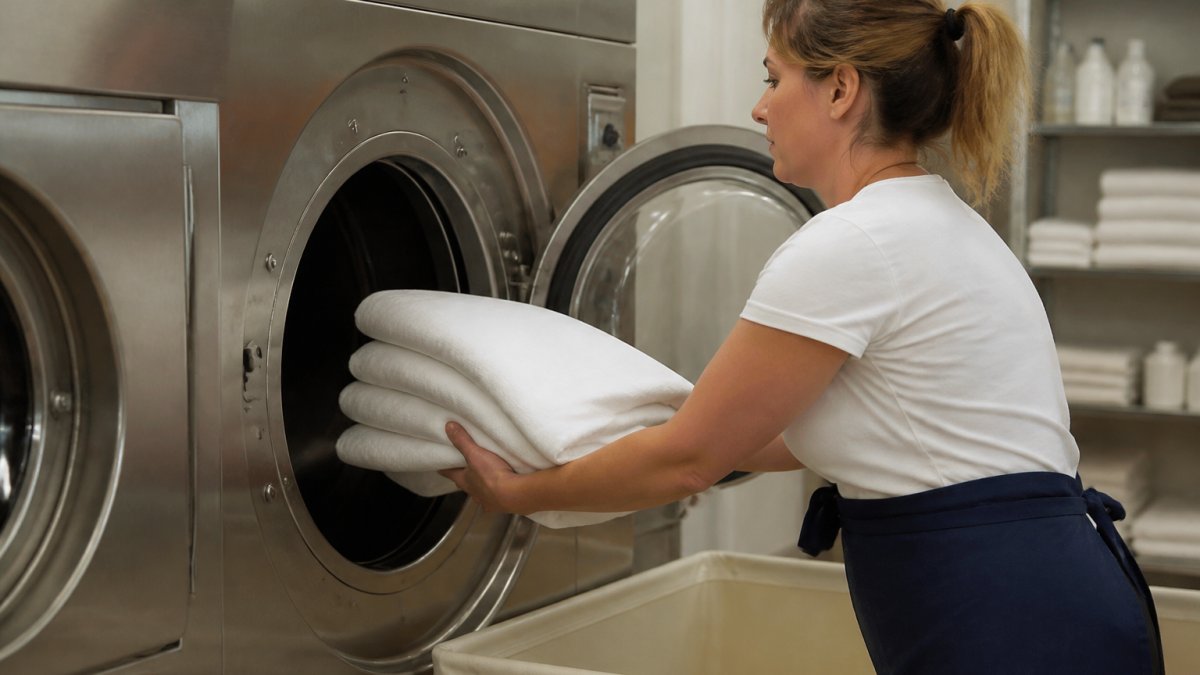
Here's the wash process we recommend:
- Shake out loose food and debris outdoors.
- Pre-treat stains with a mild detergent within 24 hours.
- Wash on a gentle cycle in warm water.
- Skip bleach on colored cloths to prevent fading.
- Tumble dry low or hang to dry completely.
- Remove promptly to reduce wrinkles.
Check the care instructions on each cloth before washing. A stain that sits for days can set permanently, especially oil-based food stains.
How each laundering choice affects lifespan
Every wash cycle removes a little fiber and a little dye. The choices below decide whether a polyester cloth reaches 100 cycles or fails at 50:
- Water temperature: Warm water cleans effectively without the fiber stress of hot water. Repeated hot washes accelerate shrinkage in cotton and weaken polyester over time. Reserve hot water for sanitizing after illness, not for routine event cleanup.
- Detergent: Use a mild, low-alkaline detergent. Harsh or overdosed detergent leaves residue that dulls color and traps soil, which then needs more aggressive washing next time, a cycle that shortens life.
- Bleach: Chlorine bleach is the single fastest way to destroy event linens. It weakens fibers, yellows white polyester, and strips color from anything dyed. If you must whiten, use an oxygen-based (color-safe) bleach sparingly.
- Drying method: High-heat drying is the second-fastest killer after bleach. Tumble dry low or hang to dry. Overdrying embrittles fibers and sets wrinkles that then require more pressing.
- Load size: Overloading a machine causes friction between cloths, which abrades hems and seams. Wash fewer cloths per load than you think you need to.
Commercial laundering vs. home laundering
Commercial laundries typically run hotter water and stronger chemistry than a home machine, which is why rental inventory often wears out faster than the same cloth cared for at home. If you send linens out, ask the laundry to run event linens on a gentle, low-bleach program. If you launder in-house, the home-style routine above will usually get more cycles out of each cloth.
90" Wide by 108" Long Rectangular Polyester Poplin Seamless Tablecloth →
A note on stain timing
Oil-based food stains are the most common reason a cloth gets retired early. Polyester holds oil, and once an oil stain is heat-set in a dryer it can be nearly impossible to remove. Treat oil stains before any heat touches the cloth, this single habit adds meaningful life to a polyester inventory.
Event Linen Replacement Signs: When to Retire a Tablecloth
Event linen replacement signs show up long before a cloth actually falls apart. Catching them early keeps your tables looking sharp and protects your reputation.
Watch for these signals:
- Fraying edges that keep growing after each wash
- Permanent stains that survive repeated cleaning
- Discoloration or uneven fading across the cloth
- Split seams from stress during folding or transport
- Thin spots where the fabric has worn through
Once fraying starts at a seam, repairs rarely hold. The cloth will keep failing in the same spot.
Cost Per Use: Repair or Replace Event Tablecloths?
Cost per use is the number that decides repair versus replace. A cheap cloth that lasts ten events can cost more per use than a quality cloth that lasts eighty.
Do the math on your own inventory:
- Cost per use = purchase price ÷ number of uses before replacement
- A cloth used 60 times before wearing out costs far less per event than one replaced after 10 uses
- Add repair labor and cleaning costs to the repair side of the ledger
- Factor in the risk of a visible flaw ruining event photos
When a repair costs more than a third of the replacement price, replace it. Small tears on a rarely used cloth are worth fixing. Widespread wear is not.
Extending the Life of Your Event Tablecloths
Extending the life of your event tablecloths comes down to prevention. Good storage, correct washing, and prompt stain treatment add dozens of uses to each cloth.
Build a simple care schedule:
- After every event: shake out, spot-treat, and air dry.
- Weekly: inspect high-use cloths for early wear.
- Monthly: rotate stock so no single cloth wears out first.
- Seasonally: retire cloths that fail inspection.
For inventory that needs to hold up cycle after cycle, the Textile Exchange guidance on fiber durability points to fabric construction as a key factor in how long linens survive repeated laundering.
At New Creations Fabric & Foam Inc, we make tablecloths built for exactly this kind of repeated use. Our 90" x 108" Rectangular Polyester Poplin Seamless Tablecloth is made in the USA from 100% spun polyester poplin, with a seamless design and serged edges for a clean finish. It resists stains, sheds wrinkles, and stands up to machine washing and professional cleaning detergents. The 90" x 120" version covers longer banquet tables with a full floor-length drape.

Frequently Asked Questions
How long should an event tablecloth last?
Most polyester event tablecloths last 75 to 100 wash cycles with proper care, which can mean several years of regular use. Cotton and linen typically wear out faster, often after 30 to 50 cycles, because the fibers break down more quickly with repeated washing and pressing. How often you host events matters as much as fabric type: a caterer running weekly events will replace linens sooner than someone hosting twice a year.
Can polyester tablecloths be used repeatedly?
Yes. Polyester poplin is the most common choice for reusable event tablecloths because it resists stains and wrinkles and holds up to machine washing and professional laundering. A quality seamless polyester tablecloth can withstand over 75 wash cycles while keeping its color and drape. Rotate several tablecloths through your inventory so no single one takes all the wear, and always wash according to the care instructions.
How often should event tablecloths be washed?
Wash tablecloths after every event, even if they look clean. Food residue, spills, and body oils that aren't visible can set into the fabric over time and cause discoloration or stains that won't come out later. For polyester, a standard machine wash cycle with mild detergent is enough. If you store a tablecloth without washing it first, those hidden stains may become permanent by the next time you use it.
When should you replace a stained or damaged tablecloth?
Replace a tablecloth when stains won't lift after two wash cycles, when you see fraying along the edges or seams, or when the fabric develops thin spots and discoloration that show through under event lighting. A single small stain on a floor-length cloth might be hidden by a centerpiece, but fraying seams and faded patches are event linen replacement signs that will be visible to guests. Keep one or two spares on hand so a damaged cloth never disrupts an event.
Getting a full season out of your event linens is less about luck and more about choosing the right fabric and caring for it correctly. New Creations Fabric & Foam Inc offers durable polyester poplin tablecloths built for repeated use, with seamless construction, serged edges, and stain-resistant fabric that holds its look through cycle after cycle. Explore our tablecloth collection and stock inventory that keeps your tables looking sharp event after event.