

Table of Contents
- What Is Synthetic Velvet and Why It Matters for Upholstery
- Velvet Fabric Rub Count for Upholstery: What the Numbers Mean
- Synthetic vs Cotton Velvet: Durability, Feel, and Cost
- How to Clean Synthetic Velvet Upholstery Without Damage
- Pet-Friendliness and Claw Resistance in Synthetic Velvet
- Environmental Impact and VOC Considerations
- Top Synthetic Velvet Picks for Upholstery Projects
- Frequently Asked Questions
Last Updated: September 17, 2026
What Is Synthetic Velvet and Why It Matters for Upholstery
Synthetic velvet is a pile fabric woven from manufactured fibers, most often polyester, that mimics the look and softness of traditional silk or cotton velvet at a fraction of the cost. At New Creations Fabric & Foam Inc, we supply polyester velvets to designers, event teams, and manufacturers who need consistency across large orders; upholstery is one of our fastest-growing uses.
Velvet Fabric Rub Count for Upholstery: What the Numbers Mean
Velvet fabric rub count for upholstery is the number of abrasion cycles a fabric survives before visible wear, measured with the Wyzenbeek or Martindale test. Higher double rubs mean longer life in high-traffic settings.

| Double Rubs | Durability Tier | Best For |
|---|---|---|
| Under 15,000 | Light duty | Decorative pillows, accent chairs |
| 15,000-30,000 | Medium duty | Residential sofas, dining chairs |
| 30,000-50,000 | Heavy duty | Family rooms, hotel seating |
| 50,000+ | Contract grade | Lobbies, restaurants, offices |
Synthetic vs Cotton Velvet: Durability, Feel, and Cost
The trade-off is simple: synthetic velvet wins on durability and price, cotton velvet on hand-feel and prestige. Which matters more depends on where the piece lives.
| Factor | Synthetic Velvet | Cotton Velvet |
|---|---|---|
| Durability | High, 30K-50K double rubs typical | Moderate, varies by weave |
| Hand-feel | Soft, slightly cooler | Warm, dense, natural |
| Stain resistance | Strong, often treated | Weaker, absorbs liquids |
| Colorfastness | High | Moderate |
| Cost per yard | Lower | Higher |
How to Clean Synthetic Velvet Upholstery Without Damage
How to clean synthetic velvet upholstery comes down to what the fiber does under stress. Polyester is hydrophobic, so water-based cleaners work far better than on cotton or silk velvet. But the pile is the fragile part: crush it and you create permanent shiny patches no cleaner can reverse.
- Vacuum weekly with a brush attachment on low suction, working with the nap; high suction mats the pile.
- Blot spills immediately with a clean white cloth, working from the outside inward to avoid spreading the ring.
- Mix two or three drops of mild dish soap in one cup of cool water; hot water sets protein stains and dulls the sheen.
- Test on a hidden area first, then dab, never rub.
- Air dry away from direct heat; a hair dryer on low, held six inches away, works for small spots.
- Brush the pile back up with your hand or a soft-bristle brush once dry.
Matching the Cleaner to the Stain
Not every spill responds to the same approach:
- Coffee, wine, juice: Blot, then dab with the dish-soap solution; these are water-soluble and lift cleanly from polyester.
- Oil, grease, makeup: Use a solvent-based cleaner or a little rubbing alcohol on a white cloth; water alone spreads them.
- Ink, marker: Dab with rubbing alcohol, working outside in. Test first, some inks set permanently in polyester.
- Pet accidents: Blot, then use an enzymatic cleaner; standard soap leaves residue that attracts repeat marking.
Reading the Cleaning Code
Check the tag sewn into your furniture. The code tells you what the mill permits:
- W, water-based cleaners are safe.
- S, solvent-based cleaners only; water can leave rings.
- WS, either water or solvent is fine.
- X, vacuum only; no liquid cleaners.
What Actually Ruins Velvet Upholstery
The biggest cause of ruined velvet upholstery is scrubbing: friction mats the pile into permanent shiny patches no brushing will lift. The second is over-wetting, which drives moisture into the backing and causes mildew or delamination long before the pile shows wear.
The pile is the fragile part, not the fiber. Blot, never scrub, and never over-wet. A properly cared-for polyester velvet will outlast a cotton velvet in the same seat by a wide margin.
For high-traffic pieces, consider a professional fabric protector applied at the mill rather than a spray-on aftermarket treatment. Mill-applied protectors bond to the fiber during finishing and last through repeated cleanings; spray-on versions sit on the surface and wear away in weeks.
Never use a steam cleaner on velvet upholstery. Steam drives heat and moisture into the pile, flattens the nap, and can shrink the backing. It is one of the fastest ways to permanently ruin a velvet sofa.
Pet-Friendliness and Claw Resistance in Synthetic Velvet
Most upholstery guides cover spills and stop there. Pet owners want to know one thing: will my cat destroy this couch? Synthetic velvet performs better than most people expect, but the reason is mechanical, not magical.
Royal Velvet Fabric 58" Wide| New →
Why Polyester Velvet Resists Claws Better Than Loose Weaves
A cat's claw hooks into a fiber loop and pulls, so damage depends on how much loop is exposed. In loose weaves like linen, tweed, or boucle, yarns sit proud of the surface and offer plenty to grab. In a tight, short-pile polyester velvet, fibers are packed densely and cut short, leaving little loop to catch.
What Synthetic Velvet Will and Will Not Survive
- Walking, lying, kneading: No problem; the pile rebounds.
- Occasional claw snags: Trim a single pulled fiber flush with small scissors; do not pull it, which creates a run.
- Determined scratching: A cat that has decided the sofa arm is its scratching post will eventually damage any fabric, including polyester velvet. No upholstery fabric is claw-proof.
- Dog nails: Blunt nails cause less damage than cat claws, but untrimmed dog nails can abrade the pile over time, especially on the front edge of a seat cushion.
Practical Habits That Make the Biggest Difference
- Trim claws every two weeks. Blunt tips do far less damage; this is the highest-impact habit.
- Place a scratching post next to the furniture your pet targets most. Cats scratch to mark territory, so the post must be in the same room, not a closet.
- Choose short, dense pile over long, shaggy pile. Short pile releases pet hair with a lint roller; long pile traps hair and dander deep in the fibers.
- Use a washable throw on the seat your pet favors. Laundering a throw beats spot-cleaning a sofa.
- Address marking early. Enzymatic cleaners remove the scent markers that trigger repeat marking; standard soap does not.
Matching the Fabric to the Household
A few patterns worth knowing before you buy:
- Single cat, well-trained: Almost any short-pile polyester velvet will hold up for years.
- Multiple cats or a known scratcher: Choose the heaviest, tightest velvet you can find, and budget for professional reupholstery of the seat cushions in five to seven years.
- Large dogs: Focus on pile density rather than pile height; a dense, short pile resists abrasion from body weight and nails better than a plush, long pile.
- Senior pets or incontinence: Prioritize a velvet with a moisture-barrier backing, or use a waterproof liner under the cushion cover.
Pet owners who want a soft, luxury look without the snag risk of loose weaves. Pair a short-pile polyester velvet with regular claw trimming and a nearby scratching post for the best results.
The mechanism matters: tight, short pile gives claws less to grab, and polyester's elastic recovery erases the indentations that would become permanent flat spots on cotton velvet. No fabric is claw-proof, but synthetic velvet is one of the more forgiving choices for a pet household.
Environmental Impact and VOC Considerations
The environmental case against synthetic velvet centers on microfibers and chemical finishes, and it deserves an honest look. Polyester is petroleum-derived, and every wash or heavy wear cycle can release tiny plastic fibers into wastewater. Stain-resistant and flame-retardant finishes also carry volatile organic compounds (VOCs) that off-gas after manufacturing.
- Look for low-VOC or water-based finishes when you can.
- Air out new upholstery in a well-ventilated space before bringing it indoors.
- Wash less often and spot-clean instead to reduce microfiber shedding.
- Choose a durable fabric in the first place, since longer life means less replacement waste.
Top Synthetic Velvet Picks for Upholstery Projects
The best synthetic velvet for upholstery depends on your project, and the picks below come straight from our own mill.
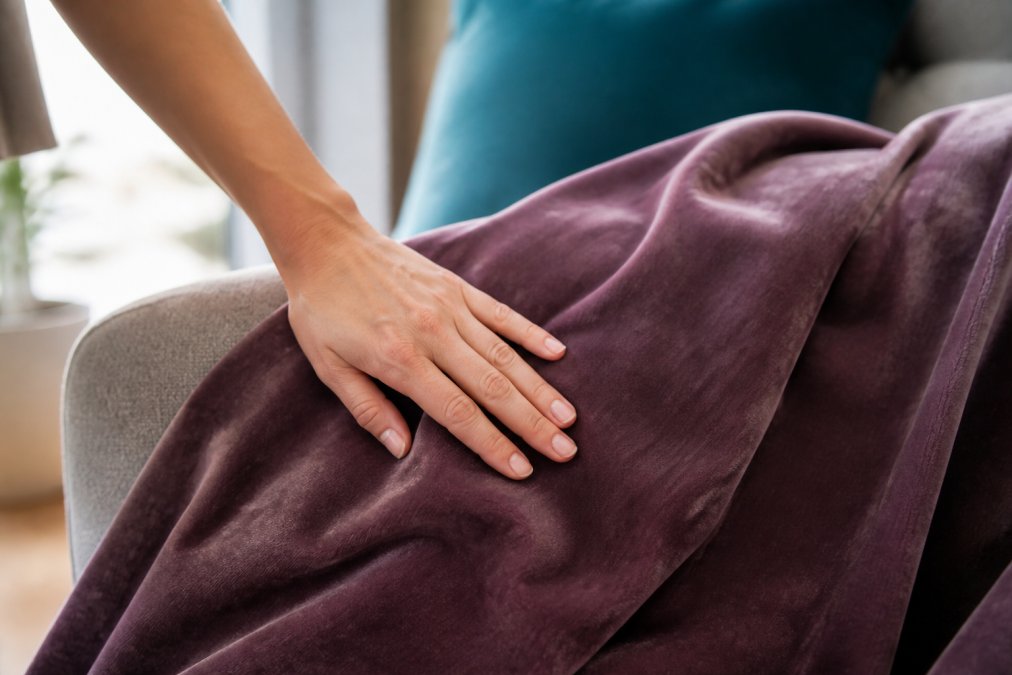
| Fabric | Content | Price/Yard | Best For |
|---|---|---|---|
| Royal Velvet | 100% polyester | $14.95 | Sofas, heavy upholstery |
| Stretch Crushed Velvet | 90% poly, 10% spandex | $14.95 | Accent pieces, drapery |
| Crush Stretch Panne Velvet | 96% poly, 4% spandex | $12.95 | Decorative, event furniture |
Frequently Asked Questions
What type of velvet is best for upholstery?
Polyester velvet is often the best choice for upholstery because it balances durability, stain resistance, and cost. Its synthetic fibers resist fading and hold up to heavy use better than silk or cotton velvet. Look for fabrics with a high double rub count, like those made from 100% polyester woven fibers, which offer a heavy, durable hand feel suitable for sofas and chairs.
How long does velvet upholstery last?
The lifespan of velvet upholstery depends on the fiber and construction. Synthetic velvet made from polyester can last many years in high-traffic areas because it resists abrasion and fading. Natural velvets like cotton or silk may show wear sooner. Proper cleaning and rotating cushions extend the life of any velvet furniture, but synthetic options generally provide the longest wear for daily use.
Is synthetic velvet easier to clean than cotton velvet?
Yes, synthetic velvet is typically easier to clean. Polyester velvet can often be machine washed or spot cleaned with mild detergent, and it withstands professional cleaning detergents. Cotton velvet usually requires dry cleaning and is more prone to water stains. For everyday spills, a gentle blot with a damp cloth works well on synthetic velvet, making it a practical choice for busy homes.
Does synthetic velvet fade in sunlight?
Synthetic velvet has good lightfastness compared to natural fibers, meaning it resists fading from sunlight. Polyester fibers are inherently more colorfast, so furniture near windows holds its color longer. However, prolonged direct sun exposure can still degrade any fabric over time. Using curtains or blinds during peak hours helps preserve the rich color of your velvet upholstery.
Is polyester velvet durable for high-traffic furniture?
Polyester velvet is durable for high-traffic furniture. Its synthetic fibers have high tensile strength and abrasion resistance, often exceeding 50,000 double rubs. This makes it suitable for family rooms and commercial spaces. The tight pile weave also resists crushing and shedding. For best results, choose a heavyweight velvet with a backing, like a 100% polyester royal velvet, which maintains its appearance under frequent use.