

Table of Contents
- How Flame Retardant Fabric Reduces Fire Risk in High-Risk Environments
- Flame-Resistant vs. Flame-Retardant Fabric: Key Differences Explained
- What Is the Best Flame-Resistant Fabric for Industrial and Creative Use?
- Flame-Resistant Fabric Testing Standards You Should Know
- Flame-Resistant Clothing Care and Maintenance for Long-Term Performance
- How to Choose the Right Flame Retardant Fabric for Your Project
- Frequently Asked Questions
Last Updated: October 6, 2026
How Flame Retardant Fabric Reduces Fire Risk in High-Risk Environments
Flame retardant fabric is a textile designed to resist ignition, slow the spread of flames, and self-extinguish once the heat source is removed.
The core benefit is time. Fire moves fast, and a fabric that resists ignition gives workers and wearers extra seconds to escape. That window is the difference between a close call and a serious burn injury.
So what is the benefit of flame retardant fabric in practice? It reduces fire risk in three ways:
- It resists ignition, so it is harder to set alight
- It slows flame spread, so fire does not race across the surface
- It self-extinguishes, so continued burning stops when the flame source is gone
These properties matter most in high-risk environments like welding, electrical work, and oil and gas, where heat exposure is constant.
The Difference Between Slowing Ignition and Preventing Burns
Here is the part most guides get wrong: flame retardant fabric is not fireproof, and it does not make a wearer immune to burns. It buys time, it does not block heat entirely.
A material that resists ignition still transfers heat. Prolonged thermal exposure can cause burns even when the fabric never catches fire. Think of it as a shield that delays, not a wall that stops.
That distinction shapes how safety managers buy. They pair flame-resistant protective apparel with the right layer for the hazard, not a single fabric for everything.
Flame-Resistant vs. Flame-Retardant Fabric: Key Differences Explained
The terms get used interchangeably, but they describe two different paths to the same goal. Flame-resistant fabric is made from fibers that resist ignition by their nature. Flame-retardant fabric has a chemical treatment applied to slow ignition and flame spread.
The practical difference shows up over time. A treated fabric can lose its protective properties as it wears and washes. An inherently flame-resistant fabric keeps them for the life of the garment.
Inherent Protection vs. Chemically Treated Fabric
Inherently flame-resistant fabric gets its protection from the fiber structure itself. Aramid and modacrylic fibers fall into this group. The protection does not wash out because it is built into the material, not added to the surface.
Treated fabric, by contrast, relies on a chemical treatment or textile coating. Common examples include treated cotton and cotton blends. These cost less, but laundering durability becomes a real concern. Each wash can strip away part of the fire-retardant treatment.
What Is the Best Flame-Resistant Fabric for Industrial and Creative Use?
The best flame-resistant fabric depends on the hazard, not the price tag. Two fabrics with the same flame resistance can behave very differently under an arc, a molten metal splash, or a sustained radiant heat load. The right choice starts with the hazard and works backward to the fiber.
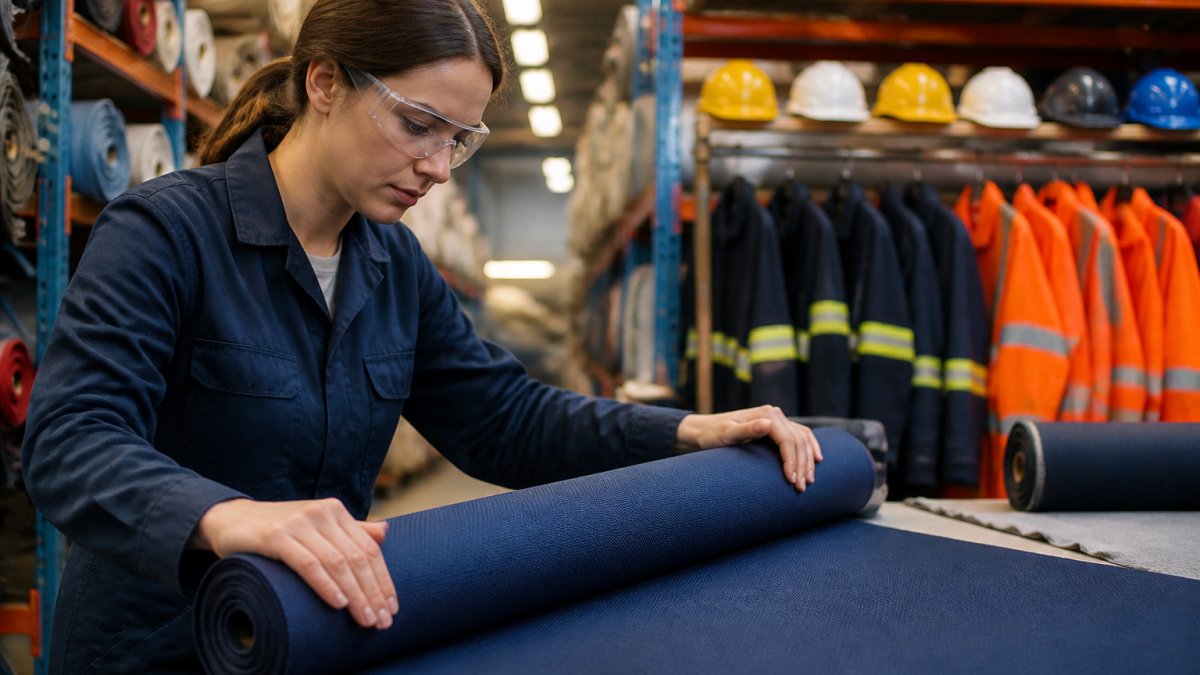
Here is how the most common options compare:
| Fabric | Protection Type | Best For | Main Trade-Off |
|---|---|---|---|
| Aramid (meta-aramid, para-aramid) | Inherent | Welding, electrical, oil and gas, arc flash | Higher cost, can feel stiff |
| Modacrylic | Inherent | Blends needing softness and drape | Lower heat tolerance than aramid |
| FR-treated cotton | Chemical | Budget industrial use, light exposure | Protection fades with washing |
| FR-treated cotton/nylon blends | Chemical | Lightweight comfort | Treatment durability varies |
| Carbonized or oxidized acrylic (pre-oxidized) | Inherent | High-heat industrial use | Cost and limited color options |
Why the Fibers Behave Differently
Meta-aramid fibers, the family that includes the material commonly sold under the Nomex brand, are built so the polymer itself resists ignition.
Para-aramid fibers, the family associated with Kevlar, are better known for strength than for flame resistance alone, but they are often blended with meta-aramid to improve durability and abrasion resistance in high-wear garments.
Modacrylic fibers are inherently flame resistant and self-extinguishing, and they blend well with cotton or aramid to soften the hand of a garment.
FR-treated cotton relies on a chemical finish applied to the fiber or fabric. The finish interrupts the combustion cycle, so the cotton self-extinguishes instead of continuing to burn.
Matching the Fabric to the Job
A few practical pairings:
- Arc flash and electrical work: arc-rated aramid or aramid-blend garments, selected to meet or exceed the incident energy of the task.
- Welding and molten metal: heavier-weight aramid or treated-cotton garments with leather or FR layering, chosen for char resistance and spatter protection.
- Oil and gas, petrochemical: NFPA 2112-compliant garments, often aramid or treated blends, with attention to static control and coverage.
- Light industrial and event use: treated cotton or modacrylic blends can be a reasonable entry point when the exposure is low and the care routine is disciplined.
For creative and event work, the same logic applies. If a backdrop or curtain sits near heat or open flame, an inherently flame-resistant fabric removes the guesswork that a treated one adds, because the protection does not depend on a finish that can wash or wear away. For decorative pieces with no heat exposure, a treated fabric may be sufficient, provided the buyer understands what the treatment does and does not guarantee.
Flame-Resistant Fabric Testing Standards You Should Know
Flame-resistant fabric testing standards measure how a material behaves under controlled heat. The useful part for a buyer is not the standard number itself, it is what the test simulates and what the resulting number lets you claim. In the United States, several organizations publish the methods that most protective-clothing programs rely on.
Here is how the main pieces fit together:
- NFPA 2112, Standard on Flame-Resistant Clothing for Protection of Industrial Personnel Against Short-Duration Thermal Exposures from Fire sets the benchmark for industrial FR garments. It covers both fabric-level and garment-level requirements, including a vertical flame test and a thermal manikin test.
- NFPA 70E, Standard for Electrical Safety in the Workplace governs arc flash protection and defines arc-rated (AR) clothing. It requires an arc rating expressed in cal/cm².
- ASTM F1506 covers the performance of flame-resistant textile materials for electrical workers, and ASTM F1959 is the test method used to determine arc rating.
- ASTM D6413 is the vertical flame test method used to measure afterflame, afterglow, and char length on a fabric strip.
What the Tests Actually Measure
The vertical flame test (ASTM D6413) suspends a fabric strip over a controlled flame for a set time, then removes the flame.
The arc rating test (ASTM F1959) exposes fabric to a controlled electrical arc and measures how much heat energy passes through before a second-degree burn would occur. The result is reported in cal/cm², and that number becomes the garment's arc rating.
The thermal manikin test used under NFPA 2112 puts a full garment on an instrumented manikin exposed to a controlled flash fire. It predicts the percentage of body area that would receive second- and third-degree burns.
How to Read a Rating Without Overreading It
A few practical rules keep ratings honest:
- A fabric passing a vertical flame test is not automatically arc-rated. Flame resistance and arc rating are separate properties.
- An arc rating applies to the garment as tested, not to a fabric cut and sewn into a different design.
- A higher arc rating is not a license to work closer to a hazard. It reflects the energy the garment can block, not a guarantee against injury.
- Ratings assume the garment is worn correctly, with the required layers and coverage, and is maintained per the care label.
Ask your supplier which standard a fabric meets, which test method produced the number, and whether the documentation is at the fabric level or the garment level. A reputable supplier will answer all three without hesitation. A vague answer about "meeting safety standards" is a signal to keep asking.
Flame-Resistant Clothing Care and Maintenance for Long-Term Performance
Flame-resistant clothing care and maintenance decide whether protection lasts. A garment that met its rating on day one can fail it after a year of rough washing.
Follow these steps to protect fabric performance:
- Wash according to the care label, and never guess
- Skip bleach and fabric softener, which can harm protective fibers
- Repair tears and worn spots before they grow
- Retire garments with heavy soiling or fraying
- Track wash cycles for treated fabrics, since the treatment fades
For treated fabric, laundering durability is the weak point. For inherent fabric, physical wear is the concern. Either way, inspection matters more than brand names.
How to Choose the Right Flame Retardant Fabric for Your Project
Choosing the right fabric comes down to matching the material to the hazard, then checking the paperwork. Start with a hazard assessment, then work backward to the fiber.
Use this checklist before you buy:
- Identify the hazard: open flame, arc flash, or radiant heat
- Confirm the required standard, such as NFPA 2112 or an arc rating
- Decide between inherent and treated protection
- Check laundering durability against how often it will be washed
- Review care and maintenance needs for the full life of the item
- Ask for test documentation before placing a bulk order
For apparel makers and event teams, consistency matters as much as the rating. A fabric that performs the same roll to roll keeps your production timeline safe. We focus on that consistency and refined finish so your bulk order matches your sample.
A quick note on environmental and skin-contact concerns: treated fabrics can involve chemical finishes, so check with your supplier about skin-contact suitability if the item sits against skin for long periods.
Frequently Asked Questions
What is the best flame retardant fabric?
The best flame retardant fabric depends on your use case. For industrial settings like welding or electrical work, aramid fibers such as Nomex and Kevlar offer inherent protection and high arc ratings. For general apparel, modacrylic blends provide softness and durability. Treated cotton is a cost-effective option but loses effectiveness over time. Always check the fabric's arc rating and certification to ensure it meets safety requirements for your specific hazard.
What does OSHA say about FR clothing?
OSHA requires employers to conduct a hazard assessment and provide appropriate flame-resistant clothing for workers exposed to thermal hazards. The agency references NFPA 70E and ASTM standards for arc-rated and flame-resistant garments. Employers must ensure clothing is worn correctly, maintained, and replaced when damaged. OSHA does not certify specific brands but enforces that protective apparel meets recognized performance standards to reduce burn injury risk.
Does flame-retardant fabric lose its effectiveness after washing?
Chemically treated flame-retardant fabrics can lose effectiveness after repeated laundering, especially if washed with bleach or fabric softeners. Inherently flame-resistant fabrics maintain their protective properties for the life of the garment. Always follow the manufacturer's care instructions, which typically include washing with mild detergent and avoiding high heat. Regular inspection for wear and tear is also necessary to ensure continued protection.
Is 100% cotton considered flame-resistant?
Untreated 100% cotton is not flame-resistant; it can ignite and burn easily. However, cotton can be chemically treated to become flame-retardant, though the protection may diminish with washing. Some inherently flame-resistant fabrics blend cotton with synthetic fibers like modacrylic to achieve permanent protection. For safety-critical applications, always choose fabrics that meet specific testing standards such as NFPA 2112 or ASTM F1506.
Fire risk does not wait, and neither should your fabric choice. Whether you are outfitting a welding crew or sourcing material for a production, the right flame-resistant fabric protects the people who wear it. New Creations Fabric & Foam Inc supplies fabrics built for consistency and refined finishes at scale, so your order arrives the way you planned it. Explore our fabrics to find the right match for your project.