

Table of Contents
- Start With the Story: Defining Your Collection's Textile Direction
- Types of Fabrics in Fashion Design: Natural, Synthetic, and Blended
- Fabric Sourcing for Fashion Designers: Finding Mills That Deliver
- Fabric Quality Testing for Apparel: Small-Scale Tests Before Bulk Orders
- Mixing and Matching Fabrics in Fashion Design for a Cohesive Line
- Cost, Sustainability, and Production Readiness in Textile Selection
- Conclusion: A Repeatable Workflow for Choosing Unique Textiles
- Frequently Asked Questions
Last Updated: October 4, 2026
Start With the Story: Defining Your Collection's Textile Direction
The strongest fashion collections begin with a clear point of view, not a fabric order. Learning how to choose unique textiles for fashion collections starts with one question: what should this garment make someone feel?
At New Creations Fabric & Foam Inc, we work with designers at every stage, from a single custom gown to full production runs. The pattern we see is consistent.
Turning Inspiration Into a Fabric Brief
A fabric brief is a short written plan that connects your design idea to specific material qualities. It keeps you from buying on impulse.
Write one page with these fields:
- Mood: three words that describe the collection
- Season and use: where and when the garment gets worn
- Hand feel: soft, crisp, fluid, or structured
Building a Swatch Library Before You Commit
Order swatches before you order yards. This single habit prevents most sourcing regrets.
Keep every swatch labeled with its mill, fiber content, weight, and price. Pin them to a board next to your sketches. You will spot clashes and pairings faster than any screen can show you.
Types of Fabrics in Fashion Design: Natural, Synthetic, and Blended
Every fabric in fashion design falls into one of three families: natural, synthetic, or blended.
Natural fibers come from plants or animals. Silk, wool, cotton, and linen sit here.
Synthetic fibers are made in mills. Polyester, nylon, and spandex are the common ones.
Blended fabrics combine both. A cotton-spandex blend keeps the comfort of cotton with the recovery of spandex.
| Family | Examples | Best For | Watch Out For |
|---|---|---|---|
| Natural | Silk, wool, cotton, linen | Breathable daywear, tailoring, luxury finishes | Shrinkage, wrinkling, higher cost |
| Synthetic | Polyester, nylon, spandex | Stretchwear, costumes, performance pieces | Less breathable, can pill |
| Blended | Cotton-spandex, poly-wool | Everyday garments needing stretch and structure | Behavior varies by blend ratio |
How Construction, Weight, and Drape Shape a Garment
Two fabrics can share a fiber content and still behave nothing alike. Construction decides how a cloth is woven or knit, and that decides how it falls.
A fluid drape suits flowing dresses and bias-cut skirts. A structured hand suits jackets and sculpted silhouettes. Weight matters too.
Test drape before you cut. Pin a yard over a dress form and let it hang overnight.
Fabric Sourcing for Fashion Designers: Finding Mills That Deliver
Fabric sourcing for fashion designers comes down to three things: consistency, communication, and lead time. A mill that nails all three is worth more than one with a lower price. But those three words hide the operational details that decide whether a collection ships on schedule. Treat sourcing as a production decision, not a shopping trip.
The Five Questions to Ask Before You Commit
Most sourcing failures trace back to questions that were never asked. Run every candidate supplier through this list before you place a production order.
- Minimum order quantity (MOQ): What is the smallest run the mill will produce, and does it change by colorway? A low MOQ on a stock fabric is common; a low MOQ on a custom dye lot usually is not.
- Lead time: How many business days from purchase order to ship date, and does that number hold during peak season? Ask for the lead time in writing and add a buffer for your own production calendar.
- Stock versus made-to-order: Is the fabric held in inventory, or is it woven or knit after you order? Stock fabrics reorder faster; made-to-order fabrics lock in your quantity but can strand you if a reorder is needed.
Stock Swatch Versus Production Swatch
Start by asking for a stock swatch and a production swatch of the same fabric. Compare them side by side. Color and hand should match closely. If they do not, ask why before you order. A stock swatch shows what the mill has on hand; a production swatch shows what a full run will actually look like. The gap between them is where surprises live.
Dye Lots and the Full-Quantity Order
Ask about dye lots. Colors ordered at different times may not match exactly, so plan your full production quantity in one order whenever possible. This is the single most common source of color variation between rolls, and it is entirely preventable.
Production Readiness Checklist
Before you publish a launch date, confirm these items in writing:
- Full production quantity ordered in a single dye lot
- Lead time confirmed against your cut-and-sew schedule
- Reorder terms and pricing locked for the season
- Shipping method and any duties or fees identified
We keep a broad range in stock for exactly this reason. Designers who need sequins, velvet, or faux fur for a full run can source it in one continuous order instead of chasing restocks. Our U.S. Small Business Administration guidance on supplier management frames it simply: reliable suppliers protect your timeline as much as your budget.
Liquid Iridescent Dupioni Fabric 58" Wide| Costume, Dressmaking, Flowing →
Fabric Quality Testing for Apparel: Small-Scale Tests Before Bulk Orders
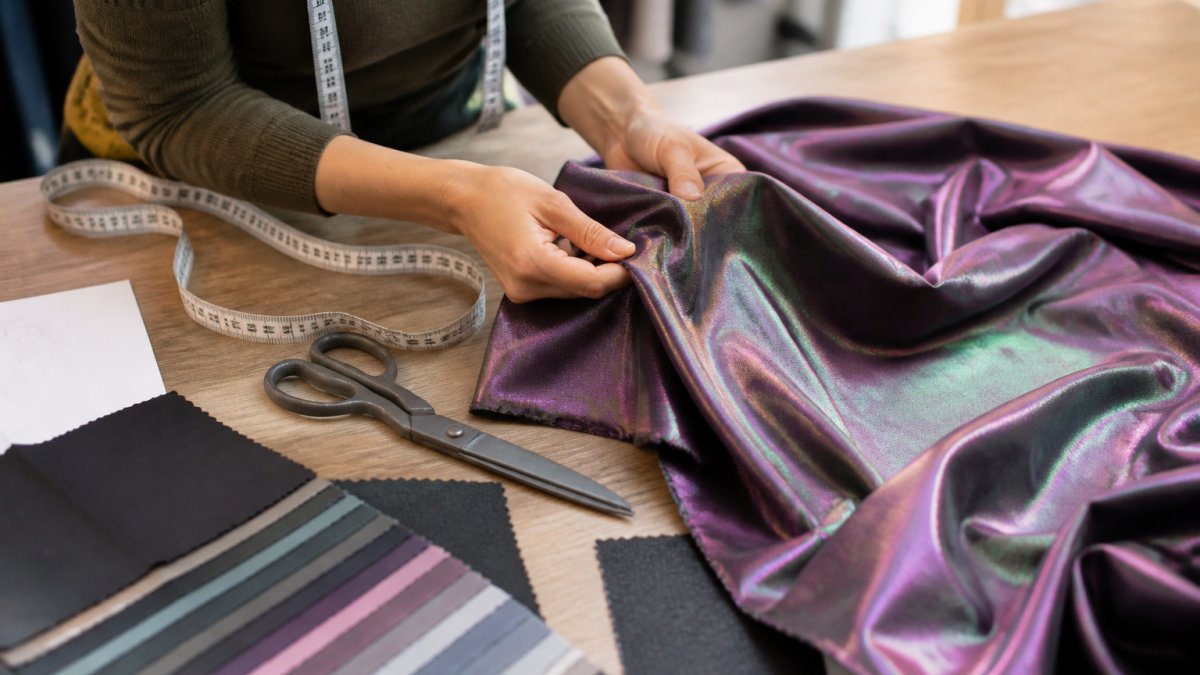
Fabric quality testing for apparel is the step most designers skip, and it is the one that saves the most money. A few simple checks on a swatch can catch problems before they reach a full roll.
The Seven Swatch Tests
Run these on every new fabric before you commit to bulk. Record the result for each one so you can compare candidates side by side.
- Stretch and recovery: Cut a strip, mark a fixed length, pull it to a set extension, release, and measure. A fabric that does not return close to its original length will bag at the knee, elbow, or seat.
- Fray check: Rub a cut edge against itself and against a hard surface. Count loose threads. Heavy fraying means you need a seam finish such as a French seam, binding, or serger, which adds labor cost.
- Shrinkage: Measure a square, wash and dry it the way the finished garment will be cleaned, then measure again. Note the change in both directions. Cut your patterns with that allowance built in.
- Colorfastness: Rub a damp white cloth against the fabric and check for transfer. Then wash a small square with a white cloth and look for bleeding. Crocking and bleeding are separate problems with separate fixes.
From Swatch Result to Bulk Decision
A test result only matters if it changes what you do. Use these thresholds as a starting framework:
- If shrinkage exceeds what your pattern can absorb, either pre-shrink the yardage or add allowance before cutting.
- If colorfastness fails, plan a cold wash, a color catcher, or a different dye lot before you commit.
- If seam behavior is poor, test an alternate stitch, needle size, or seam finish before you cut production.
- If opacity is borderline, budget for a lining and add it to your cost sheet.
The Sample Garment Is the Real Test
Sew a full sample garment before committing to bulk. One test dress tells you more about drape, comfort, and wearability than a dozen spec sheets. Wear it for a full day. Sit, walk, reach, and wash it. Note where it pulls, where it bags, and where it itches. Those notes become your pattern corrections and your fabric approval.
Mixing and Matching Fabrics in Fashion Design for a Cohesive Line
Mixing and matching fabrics in fashion design works when one element stays constant. Keep the color story or the weight consistent, and contrast the rest.
A collection reads as one line when pieces share a thread. That thread can be a palette, a texture family, or a silhouette. Break all three at once and the line falls apart.
Try these pairings:
- Contrast in texture, match in color: matte velvet with a glossy liquid dupioni in the same tone
- Contrast in weight, match in drape: a light chiffon layered over a heavier crepe
- Contrast in finish, match in pattern scale: a foil print beside a flat print of similar size
For statement pieces, our Liquid Iridescent Dupioni Fabric at $14.95 per yard pairs well with a matte base. The Tie Dye Damask Burnt Out Stretch Velvet at $17.95 per yard brings depth through its burnout transparency, and the Mamba Snake Foil Stretch Velvet at $34.95 per yard gives a collection its showpiece.


Cost, Sustainability, and Production Readiness in Textile Selection
Cost planning starts with the whole garment, not the price per yard.
Build your cost sheet around these lines:
- Yards per garment, including a waste allowance
- Sample and test yardage
- Shipping and minimum order quantities
- Labor time per unit, which changes with how slippery or stretchy the cloth is
Sustainability belongs in the same sheet. The Federal Trade Commission's guidance on green claims sets the standard for how you describe environmental benefits in marketing, so keep your claims specific and provable.
Production readiness is the last gate. Confirm stock levels, lead times, and reorder terms before you publish a launch date.
Conclusion: A Repeatable Workflow for Choosing Unique Textiles
The designers who source well are not luckier. They follow the same steps every season.
Write the brief. Build the swatch library. Choose your fiber family. Test before you buy. Mix with one constant. Plan the cost. Confirm the supply.
That workflow is how you choose unique textiles without gambling on a full roll you have never touched. When you are ready to source, explore fabrics at New Creations Fabric & Foam Inc.
Frequently Asked Questions
What factors should fashion designers consider when choosing fabric?
Start with the garment's purpose and the wearer's movement. A structured blazer needs fabric with enough weight and body to hold a shoulder line, while a flowing dress needs drape and softness. Check fiber content, weight, stretch, and how the fabric takes dye and finishing. Test a swatch for shrinkage, pilling, and colorfastness before committing to a bulk order. For statement pieces, consider specialty options like iridescent liquid dupioni, which drapes effortlessly and adds a wet-look shimmer that shifts with movement.
How can designers find unique textiles for a clothing line?
Look beyond standard wholesale catalogs. Specialty suppliers carry fabrics like burnout stretch velvet, foil-printed velvet, and retro paisley spandex that give a collection a distinct identity. Request swatches first, then run small-scale tests for stretch recovery, fraying, and color consistency between rolls. Build relationships with suppliers who can confirm stock depth and lead times, so a standout fabric does not become a production bottleneck when you scale.
How do you test fabric quality before production?
Order a swatch or a single yard and run a few practical checks. Cut a small piece and test stretch and recovery by pulling it and seeing if it returns to shape. Wash or spot clean a sample to check shrinkage and color bleeding. Rub the fabric against a light cloth to spot dye transfer. Fold and crease it to see how it holds a shape. For stretch velvets, confirm the stretch percentage along the grain and vertically before cutting a full pattern.
How can you mix and match textiles in a fashion collection?
Anchor the collection with one or two base fabrics, then add one statement textile per look. Use a shared color palette or a repeating motif to tie different materials together. Combine matte and shine, or smooth and textured, so each fabric reads as intentional. For example, pair a stretch velvet with a lightweight woven in the same tone, or use a foil-print velvet as the focal point against a solid spandex base. Test every combination in a sample garment before production.