

Table of Contents
- Why Fabric Quality Assessment Matters for Your Projects
- Start with the Fiber Content Label and Fabric Composition
- Physical Tests: How to Test Fabric Durability at the Store
- Fabric GSM Meaning: How Weight and Density Signal Quality
- Visual Inspection for Common Fabric Defects in Manufacturing
- Advanced Checks: Microfiber Testing and Sustainability Indicators
- Plan for Post-Purchase Care to Maintain Fabric Integrity
- Conclusion: Build a Reliable Fabric Sourcing Routine
- Frequently Asked Questions
Last Updated: September 8, 2026
Why Fabric Quality Assessment Matters for Your Projects
A beautiful print can hide a weak weave, and a soft hand-feel can disguise poor dye retention. Knowing how to assess fabric quality before buying protects your timeline, your budget, and your reputation. At New Creations Fabric & Foam Inc, the label is only the starting point.
Fabric quality is the measurable combination of fiber content, construction, weight, and finishing that determines how a textile performs, drapes, and wears over time. A batch that frays at the seams or loses color after two washes can derail an entire production run. Below, we show how to verify these qualities using visual cues and simple physical tests.
Start with the Fiber Content Label and Fabric Composition
The fiber content label tells you what the fabric is made of, but not how well it was made. Natural fibers like cotton and linen offer breathability, while synthetic blends often add durability and stretch. The weave structure and knit quality determine how the fabric holds up under stress.
Look for the fiber percentages and check the finishing. A fabric labeled 100% cotton can still be low quality if the yarn is coarse or the weave is loose. For example, our [Ivory Muslin natural 100% cotton(/products/ivory-muslin-natural-100-cotton-medium-quality-unbleached-fabric-45-48-wide-pattern-maker-fabric-sold-by-the-yard) | newcreationsfabricsinc.com] is cut from first-quality rolls and offers a consistent medium weight ideal for pattern making and quilting. The composition matters less than the honesty of the label and the consistency of the roll.
Physical Tests: How to Test Fabric Durability at the Store
You cannot assess fabric quality from a screen alone. The most reliable method for how to test fabric durability is to put the material through simple stress tests at the store or the moment your swatch arrives. These tests take under two minutes each and reveal more than any product description. Perform them in order, from least destructive to most aggressive.
The Stretch and Recovery Test
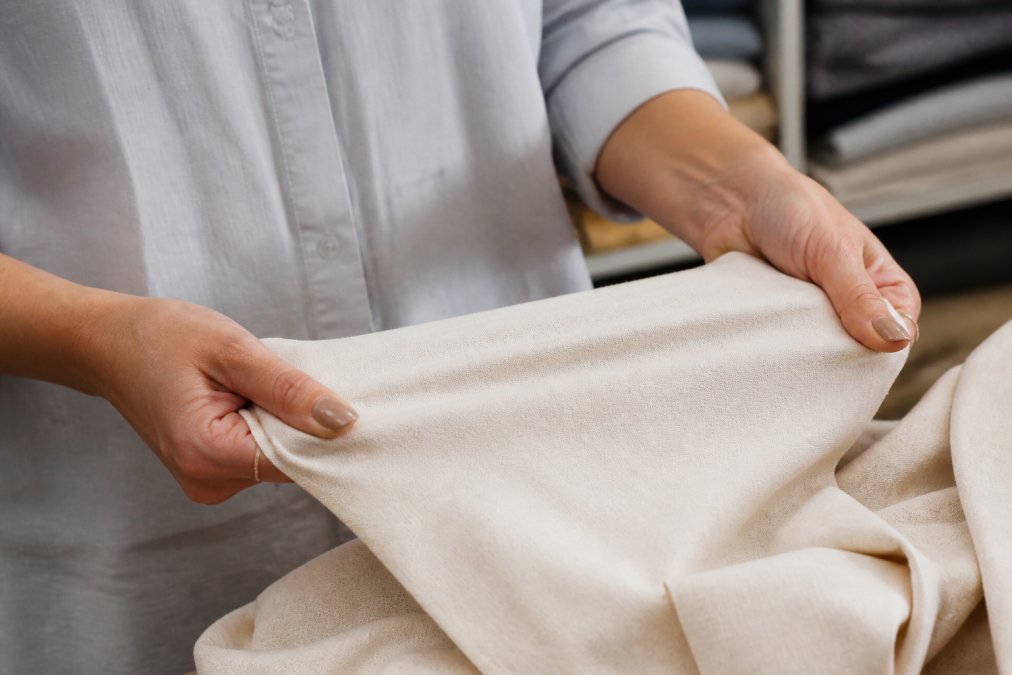
Hold a section of fabric between both hands and pull firmly. A quality woven fabric should resist stretching along the grain and return to its original shape when released. A fabric that stretches easily and stays stretched indicates poor tensile strength or a loose weave structure.
For knits, pull the fabric widthwise and release it. Good knit quality snaps back quickly with no visible distortion. If the fabric remains baggy or ripples, the recovery is weak.
The Burst and Snag Test
Press a sharp object, a ballpoint pen or key, firmly against the fabric from the wrong side, pushing outward. Quality fabric should resist without tearing or creating a visible run. Then drag the tip across the face in a straight line. A clean drag with no audible breakage and no visible snag means the yarn tension is even and the weave or knit is stable. Popping or a pulled loop means the fabric will snag on zippers, jewelry, and everyday wear.
The Crease Recovery Test
Grip a corner of the fabric and crush it tightly in your fist for 10 seconds. Release and smooth it flat. Linen and cotton blends will hold some creasing, that is expected. But a synthetic or blended fabric that stays deeply creased after 30 seconds has poor resin finishing or low fiber resilience. This test predicts how the garment will look after shipping or hanging overnight.
The Water Absorption and Wicking Test
Place a single drop of water on the fabric surface and time how long it takes to absorb. Tightly woven cotton and linen absorb within 3 to 5 seconds (peer-reviewed research). Synthetics like polyester and nylon may take 30 seconds or longer, or may bead up entirely. For performance wear, faster wicking matters; for outerwear, beading is a feature. A fabric labeled "moisture-wicking" that beads water for over a minute has a failed finish.
The Burn Test for Fiber Identification
When you have a swatch you are willing to sacrifice, the burn test is the definitive method for confirming fiber content. Cut a strip about 1 inch by 2 inches, hold it with metal tweezers over a fireproof surface, and light one corner. Natural cellulose fibers like cotton and linen burn quickly with an orange flame and leave fine, gray ash. Protein fibers like wool and silk burn slowly, curl away from the flame, smell like burning hair, and leave a brittle black bead that crushes to powder. Synthetics like polyester and nylon melt and drip, produce black smoke, and leave a hard, plastic-like bead that does not crush (fabriclink.com). Acrylic burns rapidly with a sputtering flame and leaves an irregular, hard bead. This test exposes mislabeled blends.
Run these five tests on every candidate fabric before you commit. A fabric that passes all of them will perform predictably through cutting, sewing, and repeated wear. A fabric that fails even one test deserves scrutiny, and likely a pass.
Fabric GSM Meaning: How Weight and Density Signal Quality
Fabric GSM meaning is straightforward: grams per square meter, the standard metric for fabric weight. Higher GSM generally indicates a denser, more durable fabric, while lower GSM suits flowing garments and linings. A lightweight rayon linen at roughly 195 GSM drapes beautifully for clothing, while a 225 GSM faux suede provides structure for event decor.

Use GSM as a benchmark for consistency. When you order multiple rolls for a production run, the GSM should match across every roll. Variations in fabric weight between batches signal inconsistent manufacturing, which translates directly into uneven drape and fit in your finished pieces. Ask your supplier for the GSM on every lot.
Visual Inspection for Common Fabric Defects in Manufacturing
Common fabric defects in manufacturing are easier to spot than most buyers realize, if you know what to look for and where to look. Defects occur in predictable zones: near the selvedge, at the beginning and end of a roll, and along the fold line if shipped folded. Inspect these zones first, then scan the full width.
Set Up Your Inspection Station
Find a flat table with good overhead lighting, natural daylight is best. Drape the fabric across the table so you can see a full width section. Run your hands across the surface first; your palms will catch slubs and thick spots your eyes may miss on patterned fabrics. Then look at the fabric at a 45-degree angle to reveal surface irregularities and uneven dye penetration.
The Selvedge-to-Selvedge Check
Start at the selvedge and work your way across the width. Look for these specific defects:
- Slubs and thick yarns: Short, thick sections in the yarn that create visible bumps on the surface. A few slubs in a rustic linen are character; more than one per square foot in a smooth cotton or silk signals poor yarn quality control.
- Thin spots and grin bars: Areas where the warp yarns spread apart, letting light through. Hold the fabric up to a light source and look for uneven light transmission across the width. Thin spots will wear out first and can cause tearing during cutting.
- Broken or missing yarns: Gaps in the weave or knit where a yarn is absent. These appear as fine lines or streaks running the length of the fabric. A single broken yarn can unravel an entire seam during sewing.
- Fraying along the selvedge: Loose yarns escaping from the edges. Some fraying is normal on loosely woven fabrics, but excessive fraying indicates poor edge construction and predicts seam failure.
- Bowing and skewing: On striped or plaid fabrics, check that the pattern runs perpendicular to the selvedge. Lay the fabric flat and measure from the selvedge to the same point on the pattern at both ends of a 36-inch section. A difference of more than 1/4 inch means the fabric was stretched during finishing, and your stripes will not match at the seams.
The Color Consistency Check
Color variation is the most common complaint in production runs, and it is almost always visible before you cut. Fold the fabric so the selvedge meets the center of the roll and compare the colors. Dye penetration issues show up as a lighter or darker band near the edges. Then compare the beginning of the roll against the end. If buying multiple rolls, compare them side by side under the same light. A difference of even one shade will be visible when panels from different rolls are sewn together.
For printed fabrics, check pattern registration. Look at the point where the print repeats. Misregistered prints show up as overlapping colors, white gaps between colors, or patterns that do not align at the repeat point. On a quality print, the repeat point is nearly invisible. On a poorly printed fabric, you can spot it from three feet away.
The Hand-Feel and Finish Assessment
Run the fabric between your thumb and forefinger. Quality fabric has a consistent hand-feel across its entire surface. Sudden changes in texture, a slick spot, a rough patch, an area that feels stiffer, indicate uneven finishing or chemical residue. Rub the fabric against itself; a quality finish should not produce excessive fiber dust or lint. Press the fabric against your cheek to catch harsh chemical finishes or dye irritants your fingertips miss.
The Hardware and Stitching Check for Finished Pieces
When assessing a finished garment or upholstered piece, the fabric is only half the story. Flip the piece inside out and examine the seams. Quality seams have 8 to 12 stitches per inch, consistent tension, and no skipped stitches. Run your finger along the seam, it should feel smooth, with no puckering or loose threads. Check the seam allowance: at least 5/8 inch on garments, 1/2 inch on upholstery.
Test every zipper by running it through its full range five times. A quality zipper moves smoothly with no catching. Check that the zipper tape is sewn securely into the seam. For buttons, tug firmly, a button that wiggles will detach within the first few wears. Snaps and hooks should close with a positive click and release cleanly.
The Sustainability and Longevity Angle
Visual inspection also reveals how long a fabric will last, and that is a sustainability issue. A fabric that shows pilling, thinning, or color inconsistency at the bolt will end up in a landfill after a few washes. Look for certifications like GOTS (Global Organic Textile Standard) or OEKO-TEX Standard 100 on the label or product page (global-standard.org). These verify environmental and safety standards, which correlate with better-controlled manufacturing processes.
Document every defect with a photo and a measurement. When you order from a supplier, send them your findings before you cut. The inspection takes 10 minutes per roll and saves hours of rework and material waste.
Advanced Checks: Microfiber Testing and Sustainability Indicators
For microfiber testing, rub the fabric firmly against a dark surface. Excessive lint or fiber shedding indicates weak yarns that will degrade quickly, affecting both appearance and durability.
Sustainability indicators are increasingly part of fabric quality. A fabric made with certified organic cotton or responsibly sourced fibers often signals a manufacturer that controls its entire process. Check for colorfastness by pressing a damp white cloth against the fabric. If color transfers, the dye is poorly set, and the fabric will bleed in the wash regardless of care instructions.
Plan for Post-Purchase Care to Maintain Fabric Integrity
The best fabric in the world loses quality with improper care. Fabric integrity depends as much on maintenance as on manufacturing. Review the care instructions before you buy, not after. A fabric that requires dry cleaning may not suit your production budget, while a cotton that withstands machine washing offers more flexibility.
Pre-shrink natural fibers before cutting to prevent post-production distortion. Wash and dry a sample swatch exactly as you plan to care for the finished item. This reveals shrinkage rates, colorfastness, and how the fabric responds to finishing. Our Solid 100% Cotton Fabric 58" Wide withstands machine washing and professional cleaning detergents, making it a dependable choice for consistent production. Post-purchase testing is not optional; it is the only way to confirm that the fabric performs as promised.
Conclusion: Build a Reliable Fabric Sourcing Routine
Assessing fabric quality before buying is a skill built through repetition, not guesswork. Combine label reading with physical tests, verify GSM and density, inspect for manufacturing defects, and confirm care requirements before committing to a large order. This routine catches problems at the swatch stage, where they cost time, not a full production run.
At New Creations Fabric & Foam Inc, we understand that consistency and refined finishes matter at scale. Our collections are selected to meet the demands of fashion brands, event designers, and independent creators who cannot afford surprises. Explore our range of quality fabrics to source materials with confidence, from natural muslin to durable faux suede, all backed by clear specifications and dependable stock.

Frequently Asked Questions
How do you tell if fabric is good quality?
Assess fabric quality by checking the fiber content label first, then evaluating the weave or knit structure for density and uniformity. Perform simple physical tests: hold the fabric up to light to check opacity, stretch it to see if it recovers, and rub it to test for pilling. A high-quality fabric has a consistent hand-feel, a clean finish, and a GSM that matches its intended use.
What does fabric GSM mean for quality?
GSM stands for grams per square meter, a direct measure of fabric weight and density. It is a key indicator of quality because it tells you whether the fabric is suitable for its purpose. For example, a light rayon at 195 GSM is ideal for flowing garments, while a 225 GSM faux suede suits upholstery. A higher GSM often means more durability and better opacity.
What are common fabric defects in manufacturing?
Common defects include slubs (thick spots in yarn), uneven dyeing or color variation between rolls, misaligned patterns, fraying at the edges, and holes or thin areas in the weave. You can spot many of these by examining the fabric under bright light and running your hand across the surface to feel for inconsistencies. Checking the selvedge for a clean finish also helps indicate overall quality.
How does fabric weight impact overall quality?
Fabric weight impacts quality by determining drape, durability, and suitability for the end product. A fabric that is too light will be transparent and may not hold its shape, while one that is too heavy will be stiff and uncomfortable. Matching the GSM to your project type is essential: use 100% cotton muslin for pattern making and heavier polyester suede for upholstery or event decor.
Choosing fabric does not have to be a gamble. Build a sourcing routine that verifies quality at every step, and you protect your creative work from the ground up. New Creations Fabric & Foam Inc offers a diverse range of fabrics designed for consistency, with refined finishes that support professional-scale manufacturing. Explore our collection to find the right material for your next project.