

Table of Contents
- Why Heavy Cotton Falls Short for Event Linens
- Polyester vs Cotton Tablecloths: A Direct Comparison
- Wrinkle-Resistant Tablecloth Materials That Hold Up
- Best Fabric for Restaurant Tablecloths and High-Traffic Venues
- Top Alternatives to Heavy Cotton for Tablecloths
- Heat Resistance, Acoustic Dampening, and Storage Logistics
- Sustainability Lifecycle: Comparing Natural and Synthetic Options
- Frequently Asked Questions
Last Updated: September 30, 2026
Why Heavy Cotton Falls Short for Event Linens
Heavy cotton has long been the default for table linens, but it rarely suits a busy venue. At New Creations Fabric & Foam Inc, buyers order it for its natural look, then spend the season fighting wrinkles, slow drying, and shrinkage. This guide covers the strongest alternatives to heavy cotton for tablecloths, from polyester poplin to crushed velvet, and which material fits which job.

The core problem is maintenance math. Heavy cotton absorbs water, dries slowly, and creases deeply under a hot iron. Textile care guidance from the American Cleaning Institute notes that natural cellulosic fibers hold moisture and need careful heat control to avoid damage. For a venue turning over dozens of tables per week, that translates into labor hours and replacement costs.
A practical definition: a tablecloth fabric is any textile woven or knit specifically for covering tables, chosen for its drape, weight, and resistance to staining and wrinkling. Weight and fiber content matter more than brand names.
Polyester vs Cotton Tablecloths: A Direct Comparison
Polyester wins on durability, wrinkle resistance, and cost-per-use; cotton wins on natural texture and breathability. That holds for most venues, but knowing why the fibers behave this way tells you which fits a specific table.
Why the fibers diverge. Cotton is a natural cellulosic fiber whose hydroxyl groups bond with water, so it absorbs moisture, swells, and holds creases where bent. Polyester is a hydrophobic synthetic with shape memory that recovers after bending. That one difference explains nearly every practical gap between them.
What that means at the table.
- Wrinkle behavior. Cotton creases because hydrogen bonds between cellulose chains break and re-form when folded or sat on; polyester's shape memory pulls it flat. A cotton cloth stacked overnight shows fold lines; poplin hung a few hours releases them.
- Stain behavior. Cotton wicks liquid into the fiber, so a wine spill travels and sets; polyester holds it on the surface long enough to blot, the difference between a cloth that returns to the table and one that goes in the rag bin.
- Drying time. Cotton holds water inside the fiber; polyester holds it mostly between fibers, where air reaches it. In a commercial laundry that gap compounds across a full floor.
- Shrinkage and shape. Cotton relaxes and shrinks with heat and agitation, so a cloth that fit on day one may not after ten washes. Polyester poplin holds its dimensions through repeated cycles.
Where cotton still wins. Feel and breathability.

| Factor | Heavy Cotton | Polyester Poplin |
|---|---|---|
| Wrinkle resistance | Low, needs pressing | High, hangs smooth |
| Drying time | Slow | Fast |
| Stain behavior | Absorbs, sets in | Resists, wipes clean |
| Wash life | Shrinks and fades | Holds shape through many cycles |
| Cost per use | Higher over time | Lower over time |
A note on heat: polyester softens and glazes if pressed at cotton temperatures, so use the lowest setting that removes creases and always use a pressing cloth. Cotton tolerates higher heat but scorches easily. Test on a hidden corner first.
Wrinkle-Resistant Tablecloth Materials That Hold Up
Wrinkle-resistant tablecloth materials fall into three families: spun polyester, polyester-spandex blends, and pile fabrics like synthetic velvet. Each resists creasing differently and suits a different table.
-
Hang poplin on a padded hanger or drape it over a table for a few hours; most fold lines fall out under their own weight.
-
For stubborn creases, mist lightly and tumble on low with a clean towel, then hang immediately.
-
Never press velvet directly. Steam from the back, or hang it in a steamy room and let the pile lift on its own.
-
Satin releases creases with low heat and a pressing cloth; direct high heat leaves shine marks that cannot be removed.
-
Fold along existing creases to avoid creating new ones.
-
Store flat or loosely rolled, not compressed into a tight stack.
-
Keep dye lots separated and labeled so a mixed-lot cloth never reaches the floor.
-
Hang poplin for a day before an event to let creases fall out.
-
Roll velvet rather than folding it, so the pile is not compressed along a hard line.
Best Fabric for Restaurant Tablecloths and High-Traffic Venues
The best fabric for restaurant tablecloths is commercial-grade spun polyester poplin: it survives repeated commercial laundering, resists food and drink stains, and keeps a crisp drape across long service hours. Velvet and satin look better but cost more to maintain. A restaurant may launder the same cloth dozens of times per year, which favors fabrics that tolerate cleaning chemicals and hold color.
- Spun polyester poplin: best all-around for daily service
- Gingham checkered polyester: casual dining, hides minor marks
- Bridal satin: front-of-house and specials, less stain-resistant
- Velvet: accent and statement tables, not high-turnover service
Top Alternatives to Heavy Cotton for Tablecloths
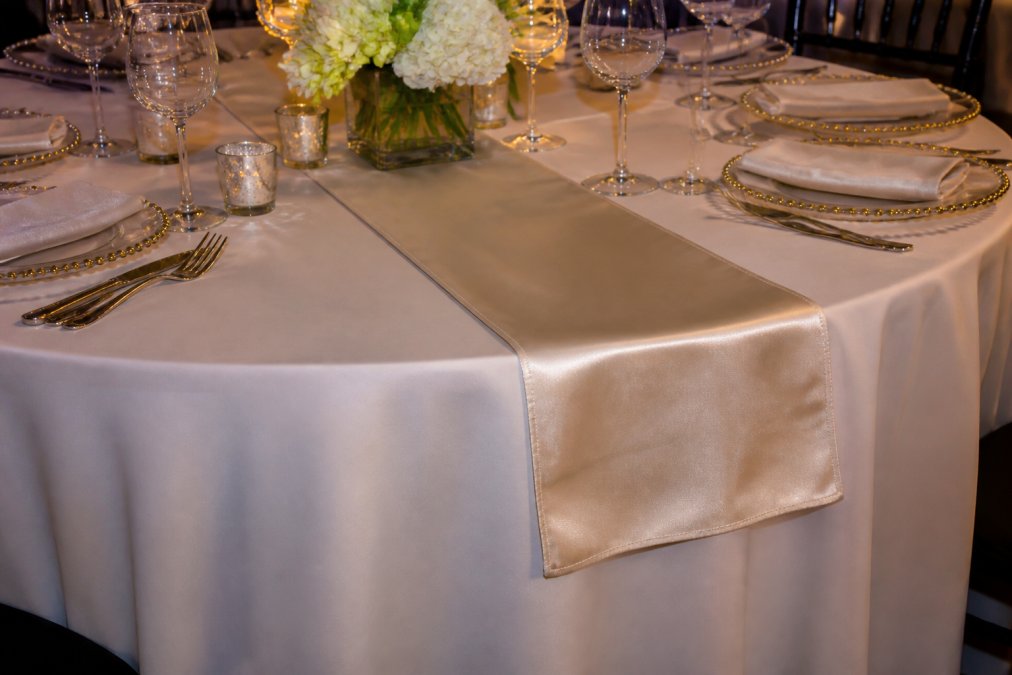
The strongest alternatives to heavy cotton for tablecloths are spun polyester poplin, bridal satin, and crushed velvet. Each replaces cotton's weight with a lighter fabric that drapes well, cleans easily, and resists the wrinkling that makes cotton impractical for events.

| Material | Best For | Texture | Care |
|---|---|---|---|
| Polyester poplin | Everyday events, restaurants | Matte, smooth | Machine wash, tumble dry low |
| Bridal satin | Weddings, formal tables | Glossy, fluid | Machine wash, low iron |
| Crushed velvet | Statement tables, backdrops | Soft, textured | Machine wash cold, tumble dry low |
Polyester Poplin: The Workhorse of Event Linens
Polyester poplin is the fabric professional rental companies reach for first: a 7 oz. spun polyester weave resists stains and wrinkles, dries quickly, and comes back crisp after machine washing or professional laundering.
Bridal Satin: Elegant Drape Without the Weight
Bridal satin gives you the shine and fluid drape of formal linen without cotton's bulk. It is 100% polyester, machine washable, and holds up to professional cleaning detergents, making it more practical than its appearance suggests.
Velvet and Crushed Velvet: Luxurious Texture for Statement Tables
Velvet is the material you choose when texture is the point. Synthetic-blend crushed velvet resists wrinkling through its pile structure, holding a full, heavy drape without the pressing cotton demands.
Heat Resistance, Acoustic Dampening, and Storage Logistics
Three factors separate a fabric that merely looks good from one that works in a real venue: heat tolerance, sound absorption, and storage.
- Fold along existing creases to avoid new ones
- Store flat or loosely rolled, not compressed
- Keep dye lots separated and labeled
- Hang poplin for a day before an event to let creases fall out
Sustainability Lifecycle: Comparing Natural and Synthetic Options
The sustainability comparison is less one-sided than it appears. Cotton biodegrades and comes from a renewable plant, but consumes significant water and energy to grow, process, and launder repeatedly. Synthetics are petroleum-derived and do not biodegrade quickly, yet last far longer and need less washing and pressing energy per use.
Frequently Asked Questions
What is the best fabric to use for tablecloths that doesn't wrinkle?
Polyester poplin is the top choice for wrinkle resistance. It resists creases during storage and use, and any wrinkles from packing typically fall out after a quick tumble dry on low. Blends of polyester with spandex, like crushed velvet, also resist wrinkles while offering a luxurious drape. For events where presentation matters, polyester poplin tablecloths maintain a crisp look through setup and service without constant steaming.
Is polyester or cotton better for tablecloths?
For most event and commercial uses, polyester outperforms cotton. It resists stains and wrinkles, dries faster, and holds color through repeated washing. Cotton offers a natural texture and breathability but requires ironing and can shrink. Polyester poplin tablecloths from New Creations Fabric & Foam Inc. withstand over 75 wash cycles while keeping their elegant look, making them a practical choice for high-turnover settings.
What are eco-friendly alternatives to heavy cotton tablecloths?
While cotton is natural, its water-intensive growth and processing reduce its eco-profile. Alternatives include recycled polyester and solution-dyed fabrics that use less water and energy. Polyester tablecloths last through hundreds of washes, reducing replacement frequency. For a balance of durability and lower environmental impact, consider high-quality polyester poplin, which outlasts cotton and requires less frequent laundering.
Which tablecloth materials are easiest to clean and maintain?
Polyester-based fabrics like poplin, satin, and crushed velvet are the easiest to maintain. They are machine washable, stain-resistant, and withstand professional cleaning detergents. For example, New Creations Fabric & Foam Inc.'s polyester poplin tablecloths can be cold machine washed and tumble dried low, then used again with minimal ironing. Velvet requires a bit more care but remains washable and durable for repeated event use.
How do linen-like synthetic fabrics compare to traditional cotton?
Linen-like synthetics, such as polyester poplin, mimic the texture and drape of natural linen without the wrinkles and high maintenance. They resist stains, dry quickly, and hold vibrant colors longer than cotton. While cotton offers breathability and a classic feel, synthetics provide superior durability and cost-effectiveness for events, making them a preferred choice for rental companies and restaurants.