

Quick Summary
The best fabrics for beginner sewing projects are stable, medium-weight woven cottons such as quilting cotton, cotton twill and broadcloth. They cut cleanly, hold their shape under the needle and forgive small mistakes. Avoid slippery, sheer, stretchy or very heavy fabrics until your seams are straight.
- Stable woven cotton is the easiest starting point because it cuts cleanly and does not stretch while handled.
- Quilting cotton weighs about 4-5 oz/yd², while cotton twill runs about 8-10 oz/yd².
- Prewash cotton fabrics and square the grainline before cutting to avoid shrinkage surprises.
- Buy an extra quarter yard for pattern matching, shrinkage and mistakes.
- Sew a test seam on a scrap of the same fabric before starting your project.
Table of Contents
- Why Fabric Choice Matters More Than Your First Pattern
- The Easiest Fabric to Sew for Beginners: Stable Woven Cotton
- Cotton Fabric Sewing Projects for Beginners, Project by Project
- Cotton Polyester Broadcloth and Muslin as Practice Fabric
- Best Fabric for Sewing Practice: Felt and Craft Options
- Fabrics Beginners Should Avoid (and Why)
- Preparing, Sourcing, and Buying Your First Yardage
- Start Your First Project With New Creations Fabric & Foam Inc
- Frequently Asked Questions
Why Fabric Choice Matters More Than Your First Pattern
Last Updated: October 29, 2026
Most beginners blame their first project on the pattern, the instructions or their own hands. In practice, the fabric often causes the problem. A slippery knit can pucker under the presser foot, and a loosely woven fabric can stretch out of shape before the seam is finished. Choosing a forgiving fabric is one of the simplest ways to make beginner sewing projects feel manageable. This guide walks through fabrics to consider for beginner sewing projects.
Fabric choice affects cutting, pinning, stitching and pressing. Stable, medium-weight wovens hold their shape, show clear grainlines and forgive small mistakes. Stretchy knits, sheer fabrics and fabrics with a lot of drape ask more of your machine and your patience. Start with the fabric that makes each step easier in your beginner sewing projects, then move to harder materials once your seams are straight.
The Easiest Fabric to Sew for Beginners: Stable Woven Cotton
For most beginners, stable woven cotton is the easiest place to start. It cuts cleanly, does not stretch while you handle it, and keeps its shape under the needle. Our Solid 100% Cotton Fabric 58" Wide is listed at $14.95 per yard. The listing notes that the fabric can be machine washed and withstands professional cleaning detergents, which is useful when you are testing seams and washing finished samples.

Hands smoothing a bolt of solid cotton fabric on a wooden cutting table beside a pair of fabric shears and a folded practice pattern.
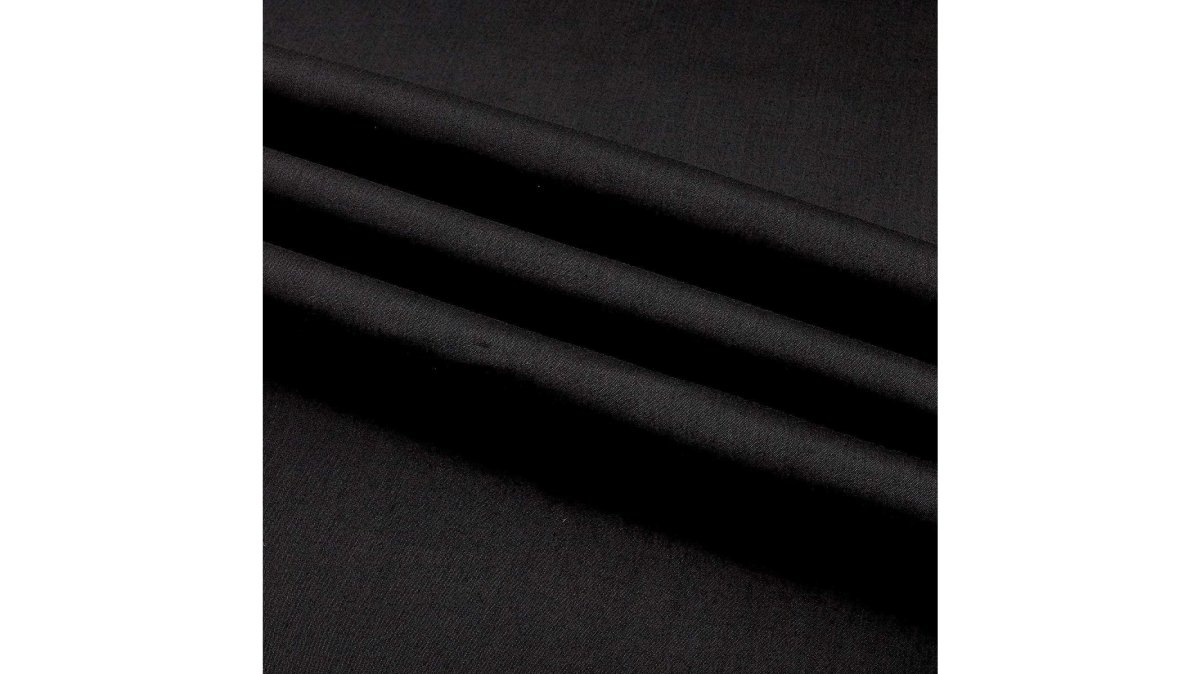
Cotton is also forgiving when you are learning to press. Use a moderate iron setting, test a scrap first, and press each seam before you cross it. Cotton that is too sheer or too loose can still be difficult, so pick a sturdy weave if you are new to sewing.
Cotton Fabric Sewing Projects for Beginners, Project by Project
Match the fabric to the project rather than buying whatever looks appealing. The table below maps common first projects to suitable fabrics, weights, and handling notes so you can choose with confidence. All weights are given in ounces per square yard (oz/yd²), the unit most U.S. fabric listings use.
| Beginner project | Recommended fabric | Typical weight | Why it works | Watch out for |
|---|---|---|---|---|
| Tote bag | Medium-weight cotton canvas or cotton twill | 7-10 oz/yd² | Holds shape, takes topstitching, resists sagging | Heavy layers can skip stitches on a light machine; use a denim needle |
| Pillowcase | Quilting cotton or cotton-polyester broadcloth | 4-5 oz/yd² | Crisp seams, easy to press, hides small errors in prints | Very loose weave can fray; finish seams with a zigzag |
| Simple skirt (elastic waist) | Medium-weight cotton, linen blend, or cotton twill | 5-8 oz/yd² | Enough body to hang straight without clinging | Avoid stiff canvas; it will not drape at the hem |
| Simple top or camp shirt | Light- to medium-weight cotton lawn, voile, or broadcloth | 3-5 oz/yd² | Breathable and presses flat for collars and plackets | Too sheer shows seam allowances; choose opaque weaves |
| Apron | Medium-weight cotton twill or canvas | 7-10 oz/yd² | Withstands washing and heavy use | Prewash to shrink before cutting |
| Patchwork or quilt block | Quilting cotton | 4-5 oz/yd² | Consistent weight cuts accurately and presses flat | Prewash to prevent color bleeding |
| Pouch or zipper bag | Quilting cotton with fusible interfacing | 4-5 oz/yd² plus interfacing | Interfacing adds body without bulk | Fuse interfacing before cutting to avoid shrinkage bubbles |
| Elastic-waist shorts or pajama pants | Light- to medium-weight cotton or cotton flannel | 4-6 oz/yd² | Soft against skin, easy to sew straight seams | Flannel can shrink; buy extra yardage |
Our Cotton Twill Fabric is listed at $11.95 per yard as a medium-weight option for jackets, pants and dresses.

Our Multi Color Hawaiian Hibiscus Floral Fabric is a 100% cotton quilting-weight print listed at $14.95 per yard. The listing describes it as suitable for quilting, general crafts, sewing, apparel, and home décor projects.
If you are unsure how heavy a fabric is, compare it to a known reference: quilting cotton is about 4-5 oz/yd², cotton twill is about 8-10 oz/yd², and 7 oz cotton canvas is a heavy utility weight. Our 7 oz Fine Arts Unprimed Cotton Canvas is a good example of a heavy utility fabric for bags and home projects, not first garments.
Cotton Polyester Broadcloth and Muslin as Practice Fabric
Our Cotton Polyester Broadcloth is a 60% cotton, 40% polyester plain weave, 58/60 inches wide and listed at $12.95 per yard. It is light to medium in weight and is described as suitable for garments and table covers. The listing says to machine wash cold and tumble dry low, and recommends washing with similar colors.
Our Ivory Muslin is 100% cotton, 45 to 48 inches wide and listed at $9.99 per yard. The listing describes it as suitable for quilting, clothing, curtains, aprons, sheets, pillow cases, and craft projects.

Best Fabric for Sewing Practice: Felt and Craft Options
Our Polyester Felt 72" Wide is listed at $15.95 per yard. The product details describe it as non-woven, heavyweight, and resistant to fraying when cut, and list apparel, accessories, decor, crafts, decorations, linings, and DIY projects among its uses.
Our Acrylic Craft Felt Fabric is listed at $15.95 per yard and is about 1.6 mm thick. Its listing describes it as easy to cut, glue and shape.
Solid 100% Cotton Fabric 58" Wide| New Creations Fabric & Foam Inc. →
Fabrics Beginners Should Avoid (and Why)
Some fabrics are better saved for later. Very slippery fabrics, sheer fabrics, stretchy knits and heavy canvas each ask for skills that take time to build. Slippery fabric shifts under the presser foot and is hard to cut straight. Sheer fabric shows every seam and every mistake. Stretchy knits need a stretch stitch or overlock finish, and heavy canvas can overwhelm a home machine.
Our 7 oz Fine Arts Unprimed Cotton Canvas is a heavy, stiff fabric. Its listing describes a 7-ounce weight and a 62-inch width, which makes it a good choice for tote bags or painting surfaces but a difficult first garment fabric. Move to it once your machine handles thick layers without skipping stitches.
Watch out: pulling a fabric to check its stretch before you cut can distort the grainline. Lay it flat and check the stretch gently instead.
Preparing, Sourcing, and Buying Your First Yardage
Before cutting, prewash cotton fabrics if you plan to launder the finished project. Many cottons shrink, and washing first prevents surprises. Straighten the grainline by pulling a thread across the width or by squaring the cut edge against a ruler. Keep the fabric folded neatly so it does not crease before you cut.
Needles, thread, and machine settings by fabric
Most skipped stitches and puckered seams come from using the wrong needle or thread for the fabric. The table below gives a practical starting point for common beginner fabrics. Needle sizes follow the American system (the larger the number, the heavier the needle).
| Fabric | Needle size | Thread | Machine settings to start |
|---|---|---|---|
| Quilting cotton, broadcloth | 80/12 universal | All-purpose polyester or cotton-wrapped polyester | Stitch length 2.5 mm, tension 4 |
| Cotton twill, 7 oz canvas | 90/14 or 100/16 denim | All-purpose polyester | Stitch length 3.0 mm, tension 4-5 |
| Linen and linen blends | 80/12 or 90/14 sharp | All-purpose polyester | Stitch length 2.5-3.0 mm, tension 4 |
| Cotton flannel | 80/12 universal | All-purpose polyester | Stitch length 2.5 mm, tension 4 |
| Stable knits (interlock, ponte) | 75/11 or 80/12 ballpoint | All-purpose polyester or woolly nylon in the loop | Stitch length 2.5-3.0 mm, narrow zigzag or stretch stitch |
| Felt (craft) | 80/12 or 90/14 universal | All-purpose polyester | Stitch length 2.5-3.0 mm, tension 4 |
A common pattern is to drop the needle size one step for lightweight fabric and go up one step for heavy fabric. Always sew a test seam on a scrap of the same fabric before starting the project. If you see skipped stitches, change to a new needle first; a dull needle is the most frequent cause.
How to assess fabric when you cannot touch it
When buying online, check the width, weight and care instructions in the listing. Those details tell you how much fabric to buy and how it will behave. Look for a stated weight in oz/yd² or grams per square meter (gsm); as a rough guide, 4-5 oz/yd² is light quilting cotton, 6-8 oz/yd² is medium apparel weight, and 9 oz/yd² and up is heavy utility fabric. Check opacity by holding the fabric up to a light if you can, or read reviews that mention sheerness. For stretch, look for a percentage of spandex or elastane; any amount above about 2% means the fabric will stretch and needs a stretch stitch.
For a simple garment, buying an extra quarter yard gives room for pattern-matching and mistakes. For more on calculating yardage and weight for a project, read How Do You Calculate Fabric Weight for Sewing Projects?
Budget and sourcing
Our Ivory Muslin is listed at $9.99 per yard, and our Solid 100% Cotton Fabric 58" Wide is listed at $14.95 per yard.
Start Your First Project With New Creations Fabric & Foam Inc
You can explore New Creations Fabric & Foam Inc fabrics.
Frequently Asked Questions
What is the easiest fabric to sew for beginners?
Solid 100% Cotton Fabric at 58 inches wide is listed at $14.95 per yard.
What fabric should I use to practice sewing?
Ivory Muslin is natural 100% cotton sold by the yard at $9.99, and Cotton Polyester Broadcloth is listed at $12.95.
Is cotton fabric good for beginner sewing projects?
Cotton Twill Fabric has a distinct diagonal weave and is listed as suitable for jackets, pants, and dresses. The Multi Color Hawaiian Hibiscus Floral Fabric is a 100% cotton quilting-weight print listed as suitable for apparel, quilting, general crafts, sewing, and home décor projects.
What fabrics should beginners avoid?
Beginners should avoid slippery or stretchy materials such as satin, chiffon, jersey knits, and very lightweight sheers, which shift under the presser foot and pucker at seams. Heavy canvas and thick layered fabrics can strain a home machine. Start with stable woven cottons and felt, then graduate to harder fabrics once your machine settings and seam allowances are reliable.
