

Table of Contents
- Why Velvet Fabric Stands Out for Tablecloths
- Velvet vs. Other Tablecloth Fabrics: What Makes the Difference
- 1. Stretch Velvet: Comfort and Flexibility for Event Tablecloths
- 2. Sequin Velvet: High-Impact Glamour for Premium Events
- 3. Crushed and Panne Velvet: Texture and Dimension for Tablescape Design
- How to Clean Velvet Tablecloths and Maintain Their Appearance
- Velvet Tablecloth Care Instructions and Storage Best Practices
- Choosing the Right Velvet Weight and Width for Your Event
Last Updated: August 20, 2026
Why Velvet Fabric Stands Out for Tablecloths
Velvet brings luxury and visual impact that few fabrics match. The soft pile creates distinctive sheen and dimension, with light reflecting differently depending on pile direction to create shadows and highlights that add depth. For event planners sourcing velvet tablecloths, the choice matters significantly, the wrong weight or pile direction can leave fabric looking flat, wrinkling unpredictably, or feeling stiff rather than sumptuous.
Velvet's appeal lies in its tactile quality and visual warmth. The fabric drapes with authority, creating elegant folds that hold their shape throughout an event. Unlike cotton or polyester blends that look utilitarian, velvet commands attention. A velvet tablecloth makes a statement.
The real challenge is understanding which type serves your specific needs. Stretch velvet offers flexibility for fitted applications. Sequin velvet delivers high-impact glamour for premium events. Crushed and panne velvet add texture and dimension that photograph beautifully. Each type has distinct properties affecting performance under different lighting, cleaning requirements, and aging.

Velvet vs. Other Tablecloth Fabrics: What Makes the Difference
Velvet's pile structure absorbs light rather than reflecting it uniformly, producing richness that satin or taffeta cannot replicate. Compared to cotton damask, velvet offers superior drape and luxurious feel, though it requires more careful handling during cleaning. Cotton resists wrinkles better for high-volume spaces, but velvet wins on visual impact.
Polyester blends lack the depth and warmth of true velvet, appearing plastic-like under harsh lighting. Satin offers smooth reflection but appears cold compared to velvet's warmth and shows every fingerprint. Taffeta provides crisp lines but lacks velvet's softness and visual complexity.
The practical difference: velvet requires intentional care but delivers unmatched luxury. Other fabrics may be easier to maintain, but they won't create the same visual and tactile impression.
1. Stretch Velvet: Comfort and Flexibility for Event Tablecloths
Stretch velvet combines luxurious feel with practical flexibility, making it ideal for fitted applications and tables of varying shapes and sizes. The spandex content, typically 10 percent, provides give without compromising the signature pile texture and sheen.

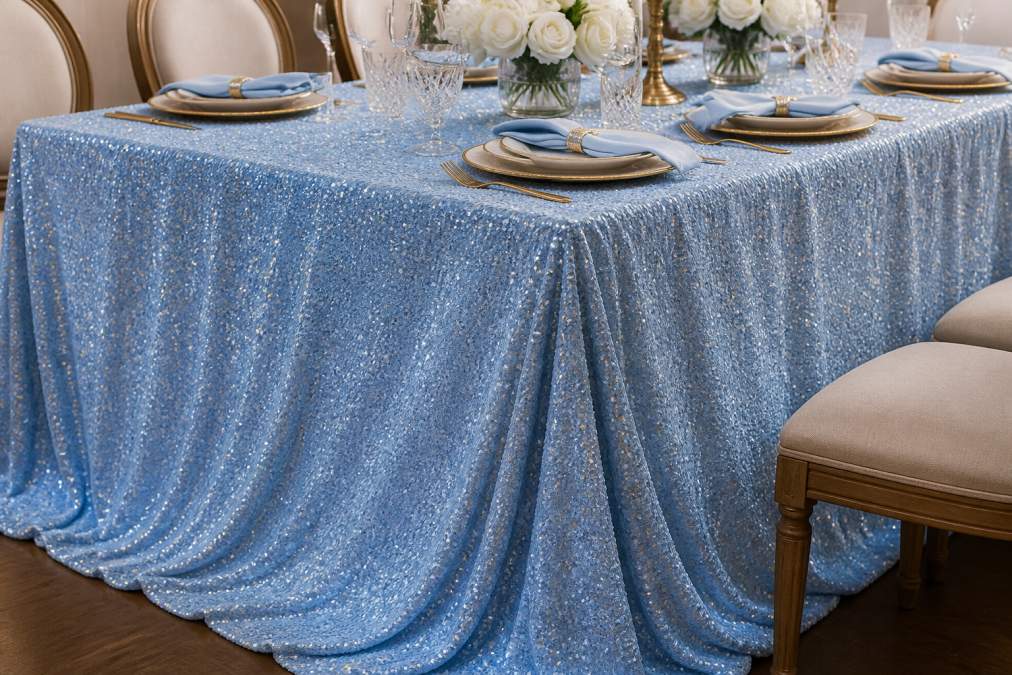
This type performs exceptionally well for banquet settings where tablecloths must fit snugly without wrinkles. The stretch prevents pulling at seams or unsightly bunching at table legs. New Creations Fabric & Foam Inc offers stretch velvet in multiple weights, with standard weight at 14.95 per yard providing the balance between drape and structure that professionals prefer.
The fabric machine washes on cold and tumble dries on low, making it more practical than delicate-only alternatives. This matters for rental companies and venues that need to refresh tablecloths between events without specialty cleaning. The 4-way stretch means the fabric recovers well from washing and maintains shape across multiple uses.
Stretch velvet's stretch is directional, a 10 percent vertical stretch doesn't mean equal stretch in all directions. Understanding grain direction becomes crucial when cutting and fitting. Measure twice, account for stretch in one direction only, and you'll avoid fitted tablecloths that shift after installation.
2. Sequin Velvet: High-Impact Glamour for Premium Events
Sequin velvet makes an unmissable visual statement. The combination of soft velvet backing with shimmering sequins creates fabric that catches light dramatically, adding sparkle and dimension to any tablescape. This is the choice when you want tables to become focal points.
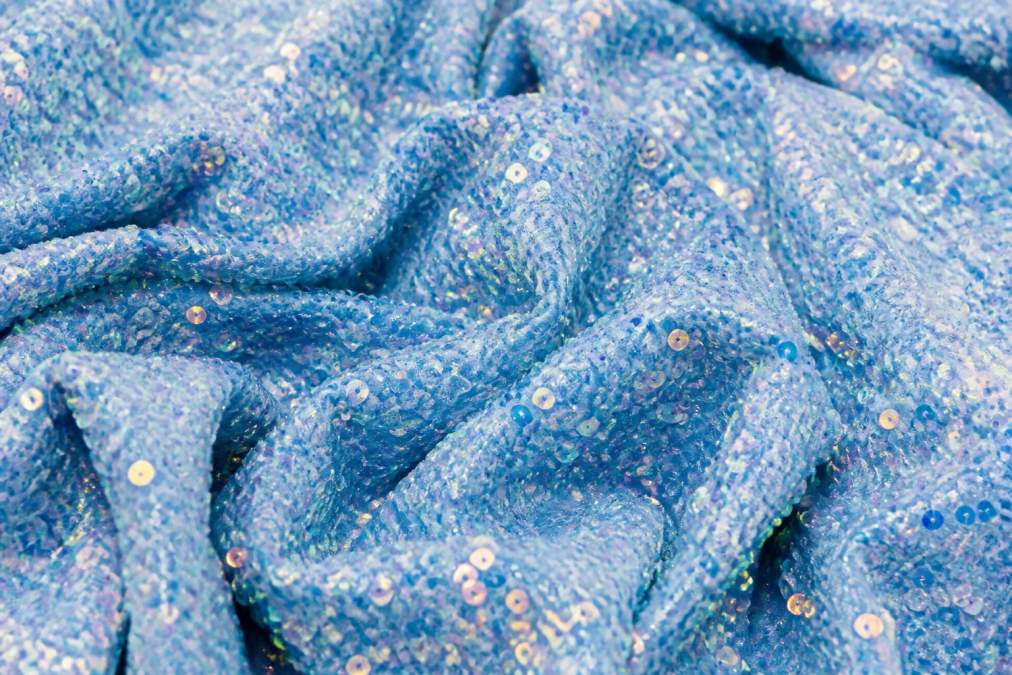
Sequin density and size affect visual impact significantly. All-over 5mm sequins create consistent shimmer, while wave or feather patterns add movement and visual interest. New Creations Fabric & Foam Inc's sequin velvet collection includes the All-Over 5mm Shiny Sequins Stretch Velvet at 24.95 per yard with medium weight (360 GSM), the Wave Sequin Stretch Velvet at 22.95 per yard offering textured visual effect, and the Feather Sequin Velvet at 32.95 per yard for maximum dimensional sparkle.

Hand washing is recommended for sequin velvet to prevent sequin loss or backing damage. Sequins are attached through special threading or adhesive, and aggressive machine washing compromises these bonds. For rental applications, factor in professional cleaning costs, which run higher than standard tablecloth cleaning.
Sequin velvet excels for weddings, galas, and award ceremonies. It struggles outdoors where wind catches sequins awkwardly, or in high-traffic venues where guests brush against tablecloths repeatedly.
3. Crushed and Panne Velvet: Texture and Dimension for Tablescape Design
Crushed velvet and panne velvet create visual complexity through pile manipulation. Crushed velvet features pile pressed randomly in multiple directions, creating mottled appearance with rich depth. Panne velvet has pile flattened in one direction, creating smooth, lustrous surface with directional sheen that appears almost liquid head-on and darker from the side.
New Creations Fabric & Foam Inc's Stretch Crushed Velvet at 14.95 per yard provides textured look with practical stretch and machine-washable care. The Crush Stretch Panne Velvet at 12.95 per yard offers directional sheen with stretch capability for both fitted tablecloths and draped overlays.
The practical advantage: crushed and panne velvet hide minor imperfections better than solid velvet. Water spots, dust, and small stains are less visible on textured surfaces. For venues handling multiple events weekly, this matters significantly.
Professional installations ensure pile direction consistency. All crushed velvet tablecloths should have pile running the same direction. All panne velvet should have directional sheen oriented the same way. Mixing directions creates jarring visual effects that undermine luxury.
How to Clean Velvet Tablecloths and Maintain Their Appearance
Velvet cleaning depends on the specific type and embellishments. Solid stretch velvet tolerates machine washing on gentle cycle with cold water. Sequin velvet requires hand washing to protect sequins. Crushed and panne velvet can handle machine washing but benefit from gentle treatment.
For fresh spills, blot immediately, never rub. Rubbing pushes liquid deeper into the pile and damages fibers. For dried stains, a soft brush can gently lift surface residue. A mixture of white vinegar and water (equal parts) applied with a soft cloth can help lift stubborn stains. Test on an inconspicuous area first.
Machine washing should use cold water, gentle cycle, and mild detergent designed for delicate fabrics. Avoid bleach and fabric softeners. Tumble dry on low heat or air dry to minimize wrinkles and heat damage.
For sequin velvet, hand wash in cool water with mild detergent, gently agitate without twisting, rinse thoroughly, and lay flat to dry. Never wring.
Pilling can occur with velvet, especially on lower-quality fabrics. A fabric shaver or soft brush can remove pills gently without damaging the pile.
Velvet Tablecloth Care Instructions and Storage Best Practices
Proper storage prevents unnecessary wrinkles and maintains appearance between uses. Fold tablecloths loosely rather than rolling tightly, which creates permanent creases. Store in a cool, dry place away from direct sunlight, UV exposure fades velvet over time.
Humidity matters significantly. Velvet absorbs moisture from air, affecting pile appearance and promoting mildew. Store in environments with relative humidity between 40 and 60 percent. Climate-controlled closets are ideal; basements and attics often have problematic humidity fluctuations.
Avoid plastic storage containers, which trap moisture. Use breathable cotton storage bags or acid-free tissue paper. If using plastic, include silica gel packets to absorb excess moisture.
For long-term storage, refold tablecloths every few months to prevent permanent creases. Gentle steam can help release creases; use a steamer rather than an iron, which can flatten pile and damage sequins.
Inspect stored tablecloths periodically for moth damage or mildew. Cedar blocks or lavender sachets deter moths naturally without chemical smell.
When removing tablecloths from storage before events, allow them to air out for several hours to release mustiness and allow pile recovery. Implement a tracking system noting which tablecloths have been used, when cleaned, and any damage requiring attention.
Choosing the Right Velvet Weight and Width for Your Event
Velvet weight determines drape, durability, and performance under different lighting. Weight is measured in GSM (grams per square meter). Light velvet (under 200 GSM) works well for overlays and chair covers, creating soft, romantic drapes but showing wrinkles more readily. Medium velvet (200-300 GSM) is the sweet spot for most tablecloth applications, offering balance between drape and substance. New Creations Fabric & Foam Inc's stretch velvet at 14.95 per yard falls into this range. Heavy velvet (over 300 GSM) creates dramatic drapes and feels luxurious but requires careful handling during installation.
Standard widths are 54 to 60 inches. For round tables under 72 inches in diameter, a single width of 60-inch fabric typically provides adequate coverage. For larger rounds or rectangular tables, you'll need to piece fabric carefully to hide seams.
Calculate yardage generously. For a 72-inch round table with 18-inch floor drop, you need approximately 8-10 yards of 60-inch width fabric. Order extra to prevent running short mid-project.
| Velvet Type | Weight (GSM) | Best For | Drape Quality | Wrinkle Resistance | Care Level |
|---|---|---|---|---|---|
| Light Stretch Velvet | 150-200 | Overlays, chair covers | Soft, flowing | Moderate | Easy |
| Medium Stretch Velvet | 200-300 | Standard tablecloths | Elegant, controlled | Good | Moderate |
| Heavy Sequin Velvet | 300-360 | Premium events | Dramatic, substantial | Excellent | Specialized |
| Crushed Velvet | 234 | Textured elegance | Full, rich | Good | Easy |
| Panne Velvet | 180-220 | Directional sheen | Smooth, lustrous | Moderate | Easy |
Selecting the best velvet fabric for tablecloths requires understanding how weight, pile type, and embellishment affect both visual result and practical demands. Stretch velvet offers flexibility and ease of care. Sequin velvet delivers glamour for premium occasions. Crushed and panne velvet add sophistication through texture and light play. New Creations Fabric & Foam Inc's collection spans from practical Stretch Velvet at 14.95 per yard to show-stopping Feather Sequin Velvet at 32.95 per yard. Start with your event's aesthetic goals, consider venue lighting and traffic patterns, then match requirements to the specific velvet type that delivers both luxury and practicality.
Frequently Asked Questions
What is the highest quality velvet fabric for tablecloths?
The highest quality velvet fabric for tablecloths combines durability, sheen, and pile consistency. Stretch velvet with a polyester and spandex blend (like our Stretch Velvet at $14.95 per yard) offers excellent durability and maintains its appearance through multiple events. Premium options include crushed panne velvet, which adds visual dimension with its directional pile. Quality velvet should have a weight of at least 234 GSM and resist fading and pilling. Look for fabrics that specify IFR fire retardant properties for event compliance.
How do you distinguish between polyester velvet and cotton velvet for table decor?
Polyester velvet, which comprises most modern event tablecloth fabrics, offers superior durability, easier cleaning, and better fade resistance than cotton velvet. Polyester velvet maintains its sheen and pile direction longer, making it ideal for high-traffic events. Cotton velvet feels softer but requires more delicate care and is prone to crushing. For tablecloths used repeatedly at events, polyester or polyester-blend velvet (like our 90% polyester, 10% spandex options) is the practical choice because it withstands regular laundering and maintains its luxe appearance.
Are velvet tablecloths practical for formal dining?
Yes, velvet tablecloths are highly practical for formal dining when you select the right type. Stretch velvet fabrics drape beautifully and resist wrinkles better than traditional cotton linens. The pile creates visual warmth and dimension that enhances formal tablescape design. However, velvet does require proper care, spills should be blotted immediately, and regular maintenance prevents staining. Sequin velvet options add high-impact glamour for premium events, while solid stretch velvet offers understated elegance. Machine-washable varieties like our Stretch Crushed Velvet simplify maintenance between events.
What fabric weight is best for floor-length velvet tablecloths?
Floor-length velvet tablecloths should use fabric weighing at least 234 GSM (grams per square meter) to prevent transparent areas and ensure proper drape. Medium to heavyweight velvet with 0.60mm thickness provides the structure needed for floor-length runners and overlays without bunching. Our Stretch Crushed Velvet (234 GSM, 0.60mm thickness) and standard Stretch Velvet (360 GR/YD) both meet these specifications. Heavier weights also resist wrinkles and maintain their appearance throughout long events, making them ideal for luxury table settings where visual impact matters.
This article was written using GrandRanker