

Table of Contents
- Understanding the Fabric Sourcing Process
- How to Find Reliable Textile Suppliers
- Best Wholesale Fabric for Fashion Brands
- Fabric Quality Control Checklist for Apparel
- Managing Minimum Order Quantities and Cost Control
- Legal Documentation and Supply Chain Transparency
- Building a Contingency Plan: Supply Chain Resilience
- Common Fabric Sourcing Mistakes to Avoid
Last Updated: August 19, 2026
Understanding the Fabric Sourcing Process
Consistent fabric sourcing is the foundation of scalable production. Without it, you'll face color variations, shrinkage issues, and quality inconsistencies that damage your brand reputation. Most brands treat fabric sourcing as transactional, find a supplier, order, receive, but this creates blind spots about replicability and scalability. The real work is understanding the three main player types in the textile supply chain.
Textile Supplier Types: Mills, Converters, and Jobbers
Fabric mills manufacture raw textiles from fiber. They own looms, dye houses, and finishing equipment, controlling the entire process from yarn to finished bolt. Sourcing directly from a mill gives you the most control over specifications and consistency.
Converters purchase greige (undyed) fabric from mills, then handle dyeing, printing, and finishing. They offer flexibility and wider color ranges than mills alone, but introduce an extra supply chain layer. Your consistency depends on the converter's quality control.
Jobbers are wholesalers who buy finished fabric and sell smaller quantities. They offer convenience and quick turnaround but have the least control over production and can't guarantee future availability in the same specifications.
For brands needing re-orderable fabrics with guaranteed specifications, prioritize mills or converters over jobbers. This sacrifices some convenience but ensures consistency.
How to Find Reliable Textile Suppliers
Finding reliable suppliers requires vetting production capabilities, not just price. Identify what you need: commodity fabrics like basic cotton jersey, or specialty materials like performance knits. New Creations Fabric & Foam Inc maintains curated high-quality fabrics for apparel, including Cotton Twill Fabric and Cotton Jersey Spandex Knit with consistent GSM specifications.

Vetting Suppliers for Production Scalability
Ask suppliers directly about production capacity and whether they can scale with your growth. Request typical lead times for standard and rush orders. Ask if they can reorder the same fabric in three months using the same dye lot or if they'll mix different dye lots.
Request references from at least two other customers. Ask specifically about dye lot variations, shrinkage performance, and deadline reliability. Visit the facility if possible, or request photos and videos. Look for quality control systems: testing equipment, documentation processes, and traceability systems.

Evaluating Lead Times and Reorder Capacity
Lead time is a hidden consistency killer. If your supplier's lead time is 12 weeks, you're locked into forecasting accuracy most small brands can't achieve. Ask about typical lead times for standard versus custom orders and rush options.
Reorder capacity matters equally. Ask: "If I order 1,000 yards today, can you supply another 1,000 yards in 30 days at the same specifications?" A supplier who says yes has the flexibility you need. Document everything in writing: lead time commitments, MOQ minimums, and pricing.
Best Wholesale Fabric for Fashion Brands
The best wholesale fabric balances consistent specifications, reliable availability, and cost efficiency. It's not the cheapest or most exotic, it's the fabric that performs reliably across production runs.
Technical Specifications That Matter
Every fabric order should include documented specifications: fiber content, GSM (grams per square meter), width, and shrinkage tolerance. Fiber content determines how the fabric behaves in washing and its durability. GSM is the fabric weight; consistency requires the same GSM across orders. Shrinkage tolerance is critical: a fabric shrinking 3% differs from one shrinking 5%, affecting pattern grading and customer fit experience.
Ask suppliers for testing data from accredited textile testing facilities. These aren't optional, they're evidence the fabric meets your requirements.
Comparing Fiber Content and GSM Standards
Cotton is the industry standard for apparel because it's breathable and predictable. Cotton blends add durability or stretch; performance synthetics add water resistance or durability for activewear.
For consistency, start with established fiber blends. New Creations Fabric & Foam Inc offers Solid 100% Cotton Fabric at $12.95 per yard and Cotton Jersey Spandex Knit at $12.95 per yard, both with documented GSM specifications and re-orderable consistency.

When comparing suppliers, standardize around the same fiber content and GSM. Don't compare a 180 GSM jersey to a 200 GSM, they're different products. Specify exactly what you need, then compare which suppliers deliver it consistently.
Fabric Quality Control Checklist for Apparel
Quality control starts before fabric arrives. Most issues, fraying, inconsistent drape, color variations, are preventable with proper inspection.
Lab Dips and Fabric Swatches: What to Request
Before placing bulk orders, request lab dips and fabric swatches. A lab dip is a small sample dyed in your exact color specification, produced in the supplier's lab before full production. This previews what the bulk order will look like and catches color issues early.
Request at least two lab dips per color. If the first isn't right, request adjustments before committing to bulk production.
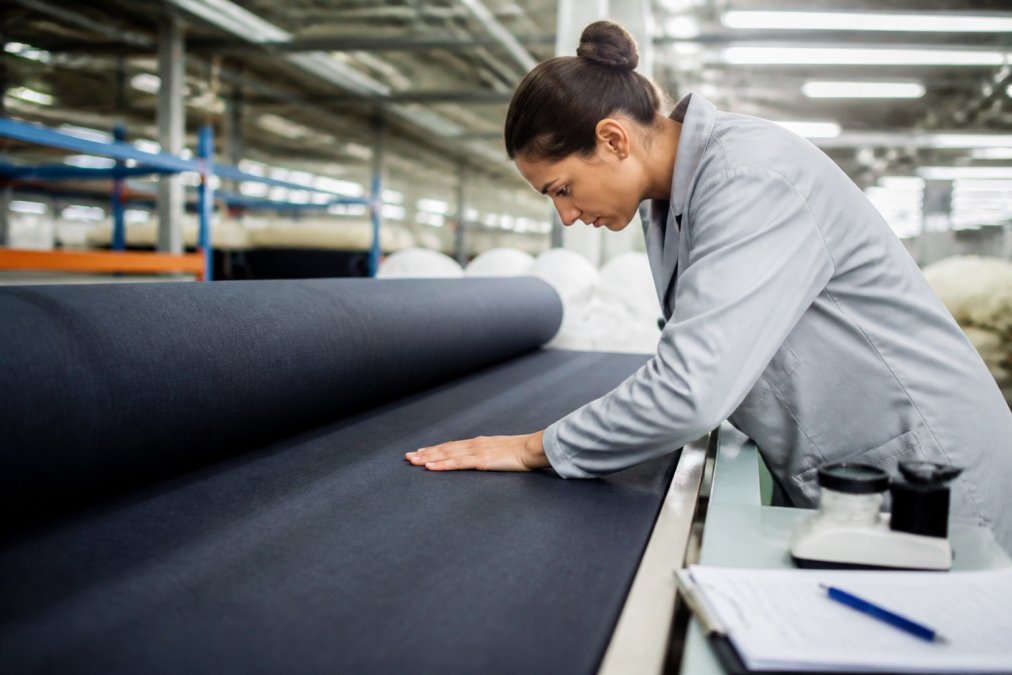
Fabric swatches (typically 12"x12" or larger) let you evaluate hand feel, drape, and texture. Wash the swatch to check for shrinkage and color bleeding. Never commit to bulk orders without testing swatches first.
Dye Lot Consistency and Shrinkage Tolerance Testing
A dye lot is a batch dyed in a single production run. Even with identical specifications, dye lot variations occur due to small variables in temperature, dye concentration, and processing time.
Suppliers should document which dye lot each shipment came from. When reordering, ask them to match the original dye lot if possible, or minimize variation by blending adjacent dye lots.
Shrinkage tolerance testing is non-negotiable. Wash swatches according to intended care instructions. Document the shrinkage percentage and require your supplier to meet that tolerance on all future orders.
Managing Minimum Order Quantities and Cost Control
MOQs (minimum order quantities) are barriers between small brands and consistent sourcing. Most mills require 1,000-5,000 yards per color. Strategies to work within constraints include asking for flexibility on established customer orders, consolidating fabric needs with fewer suppliers, or purchasing deadstock at discounts.
Cost Per Yard Strategy and Yield Efficiency
Cost per yard is straightforward, but yield efficiency matters more for your bottom line. Yield efficiency is the percentage of fabric that becomes finished garments after accounting for waste. A typical yield is 85-90% for simple cuts, 70-80% for complex patterns.
Work with suppliers to optimize yield by discussing fabric width and pattern layout recommendations. Document actual yield from each fabric type to develop realistic cost models.
Legal Documentation and Supply Chain Transparency
Compliance Requirements for Apparel Sourcing
The FTC requires accurate fiber content labeling. Request certified fiber content documentation from accredited textile testing laboratories, not supplier self-testing. The Textile Fiber Products Identification Act requires fiber percentages listed in order of predominance. Care instructions must be accurate and tested.
Sustainability Certifications and Vendor Vetting
Common certifications include GOTS (Global Organic Textile Standard), OEKO-TEX, and FSC. Request copies and verify current status on certifying organization directories. Understand your supplier's supply chain and ask about labor and environmental standards at their material sources.
Building a Contingency Plan: Supply Chain Resilience
Deadstock Inventory and Re-orderable Fabric Strategies
Maintain small deadstock inventory of core fabrics for when primary suppliers face disruptions. The trade-off is storage cost, but deadstock typically makes sense for your top 3-5 best-selling fabrics.
Re-orderable fabrics are products suppliers commit to keeping in production. New Creations Fabric & Foam Inc maintains consistent availability on core products like Cotton Twill Fabric and Ivory Muslin, ensuring confident reorders with consistent specifications.
Managing Supplier Relationships and Backup Sources
Develop relationships with at least two suppliers for each critical fabric type. Your primary supplier handles 80% of orders; your secondary handles 20% as backup. This costs more short-term but protects against single-supplier risk.
Communicate regularly with both suppliers about forecasts and capacity constraints. Document all agreements in writing, including lead times, MOQ minimums, quality standards, and pricing.
Common Fabric Sourcing Mistakes to Avoid
Avoid chasing lowest price without evaluating consistency, 20% below market rate signals hidden problems. Don't source from too many suppliers; consolidate to 3-5 core suppliers for better terms and stronger relationships.
Never skip testing fabric before bulk orders. Lab dips and swatches catch issues early. Plan sourcing around lead times, not the other way around. Treat suppliers as partners, not interchangeable vendors. Invest in relationships and reward reliability with loyalty.
Consistent fabric sourcing is non-negotiable for building brand trust. When customers receive garments that fit and perform the same every time, they return. New Creations Fabric & Foam Inc specializes in providing this consistency through curated, documented, re-orderable fabrics designed for professional production. Explore their collections like Cotton Jersey Spandex Knit and 10 Oz Fine Arts Canvas to see how documented specifications and reliable availability support scalable manufacturing.

Frequently Asked Questions
How do fashion brands maintain fabric consistency across production runs?
Fashion brands maintain consistency by establishing detailed technical specifications with suppliers, requesting lab dips before bulk production, and enforcing dye lot documentation. Specify fiber content, GSM (grams per square meter), shrinkage tolerance, and hand feel requirements upfront. Request fabric swatches from each production batch and compare against approved samples. Work with suppliers who can guarantee re-orderable fabrics and maintain inventory of approved dye lots. Building long-term relationships with reliable textile suppliers reduces variability and ensures each batch meets your standards.
What are the most common fabric sourcing mistakes for new clothing brands?
New brands often skip lab dips and jump directly to bulk orders, resulting in color or texture mismatches. Another critical mistake is underestimating lead times, which disrupts production schedules. Many brands fail to verify shrinkage tolerance and post-wash performance before committing to large quantities. Not requesting fabric swatches or comparing dye lot consistency across batches leads to quality issues. Finally, sourcing from suppliers without vetting their production scalability and reorder capacity can leave you stranded if demand increases. Always request samples, document specifications, and establish backup suppliers before scaling production.
How do you vet a wholesale fabric supplier for quality control?
Start by requesting references from other brands using the supplier. Ask about their yield efficiency, lead times, and ability to fulfill reorders. Request lab dips and fabric swatches before placing orders, and inspect them for consistency in color, texture, and hand feel. Verify their testing protocols for shrinkage tolerance and post-wash performance. Check for sustainability certifications if that matters to your brand. Ask about their MOQ (minimum order quantity) flexibility and whether they maintain deadstock inventory. Finally, review their documentation practices and compliance certifications for apparel sourcing to ensure they meet regulatory standards.
What documentation is required when sourcing fabrics for apparel?
Essential documentation includes fiber content certificates, GSM specifications, shrinkage test results, and dye lot records. Request lab dips and approved fabric swatches for color matching. Suppliers should provide technical datasheets covering tensile strength, tear strength, and post-wash performance. For compliance, verify that suppliers have documentation of testing standards they follow. If sourcing internationally, ensure they provide certificates of origin and compliance with U.S. textile labeling requirements under the Textile Fiber Products Identification Act. Maintain records of all approvals, specifications, and batch information for traceability and quality audits.
Why does fabric sourcing impact the scalability of a clothing line?
Scaling requires suppliers who can handle increasing order volumes without sacrificing quality or extending lead times. If your supplier has low production capacity or high MOQs, growth becomes bottlenecked. Suppliers must be able to maintain dye lot consistency and re-orderable fabrics as you increase batch sizes. Lead time variability can disrupt your production timeline and delay inventory. Suppliers without contingency planning or backup inventory may fail to fulfill large orders on schedule. Finally, suppliers who cannot scale their yield efficiency or quality control processes will see your costs rise and defect rates increase as you grow. Vetting supplier scalability early prevents these problems.
Where do clothing brands source high-quality fabrics at scale?
Clothing brands source from textile mills (which produce raw fabric), converters (who finish and dye fabric), and jobbers (who offer deadstock and overstock inventory). Direct relationships with mills offer the best consistency and pricing for large orders, but require higher MOQs. Converters provide finished fabrics with custom dyes and finishes, ideal for brands needing distinctive looks. Jobbers offer flexibility for smaller batches and re-orderable fabrics. Wholesale fabric platforms connect brands with multiple suppliers, reducing sourcing time. Consider your production volume, timeline, and budget when choosing. New Creations Fabric & Foam Inc offers 100% cotton and specialty fabrics like cotton twill and jersey spandex blends, starting at $9.99 per yard, suitable for apparel brands of all sizes.
How do you ensure post-wash performance meets customer expectations?
Request shrinkage tolerance testing before bulk orders. Suppliers should provide data on vertical and horizontal shrinkage percentages after washing. Test fabric hand feel and drape consistency after multiple wash cycles to ensure they match your approved samples. Verify that dyes remain colorfast and don't bleed into other fabrics. Ask suppliers about their testing protocols and which standards they follow. For knit fabrics like cotton jersey blends, confirm stretch recovery after washing. Document all post-wash performance data and compare it against your specifications before approving a supplier for production. This prevents customer complaints and returns due to garment fit or quality issues.
This article was written using GrandRanker