

Table of Contents
- Start With the Table, Then Work Backward to Fabric
- Polyester vs Cotton Tablecloths for Events: Which Holds Up Better
- Flame Retardant Fabric Standards for Events: What You Need to Know
- Matching Fabric to the Event: Trade Shows, Banquets, and Weddings
- Tablecloth Fabric Care and Maintenance That Extends Reuse
- Rental vs Purchase and How to Store Event Tablecloths
- Conclusion: Build a Fabric Kit That Works Across Events
- Frequently Asked Questions
Last Updated: October 2, 2026
Start With the Table, Then Work Backward to Fabric
Choosing event tablecloth fabric starts with the table, not the textile. Measure the table, decide the drop length, then pick a material that drapes well at that size.
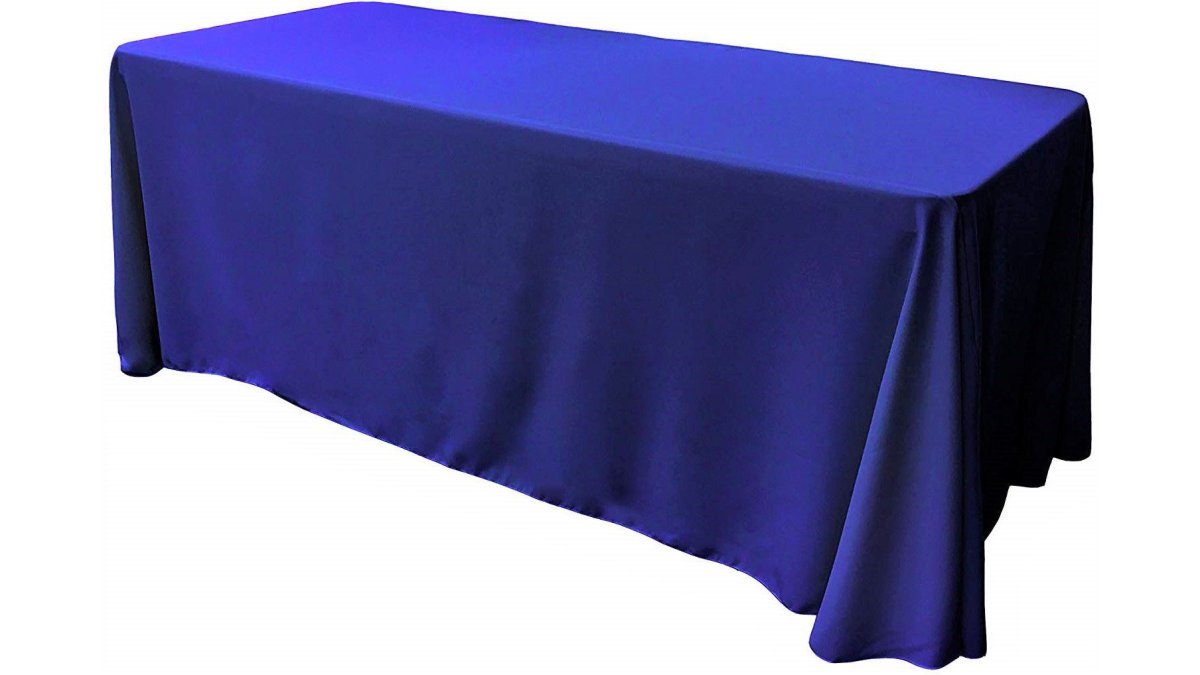
Fabric choice is downstream of geometry. A 90" x 108" rectangular polyester poplin tablecloth behaves differently on an 8-foot banquet table than on a 60-inch round. Buy fabric before you know the drop and you will end up with cloths that pool or ride up.

Measure Table Size and Drop Length Before Anything Else
Table drop is the distance from the tabletop edge to the bottom hem. It determines how much fabric you need and how formal the table reads.
Standard drop lengths fall into four categories:
- 15-inch drop: Casual, buffet, and outdoor events
- 30-inch drop: Semi-formal, most banquet and catering setups
- Full floor-length (30 inches on a 30-inch table): Weddings, galas, formal banquets
- Puddle (2-6 inches of fabric pooling on the floor): High-end weddings and photo-driven events
For a standard 8-foot banquet table (30 inches high, 30 inches wide, 96 inches long), full floor-length coverage requires a 90" x 156" cloth. A 90" x 108" size gives a 30-inch drop on the sides but leaves the ends short, so most teams order the longer size for head tables and cake tables.
Polyester vs Cotton Tablecloths for Events: Which Holds Up Better
Polyester wins for events. Cotton looks warmer in photos but wrinkles, stains, and shrinks, making it a poor fit for high-volume or multi-day use. Polyester poplin, the fabric most rental companies use, resists stains, sheds wrinkles, and comes back crisp after machine washing.
| Factor | Polyester Poplin | Cotton |
|---|---|---|
| Wrinkle resistance | High, minimal ironing | Low, requires pressing |
| Stain resistance | High, most spills wipe clean | Low, absorbs and sets stains |
| Washability | Machine wash, withstands commercial detergents | Machine wash, shrinks over time |
| Colorfastness | Strong, holds dye through repeated cycles | Fades faster with washing |
| Drape | Crisp, structured | Soft, heavier hand |
| Best for | Banquets, trade shows, rentals | Rustic, garden, and vintage themes |
For reusable tablecloths, polyester is the practical choice, a well-made poplin cloth withstands repeated commercial laundering and still holds its finish.
How Fabric Weight and GSM Change the Drape
GSM (Grams per Square Meter) measures textile weight and predicts how a tablecloth will drape, wrinkle, and hold up.
- Under 150 GSM: Lightweight, prone to transparency and flyaway edges
- 150-180 GSM: Standard event weight, good balance of drape and durability
- 180-220 GSM: Heavier poplin, excellent opacity, holds a crisp fold
- 220+ GSM: Upholstery-grade, rarely used for table linens
Most event tablecloth fabric sits between 160 and 200 GSM. Below 150 GSM, fabric turns translucent under bright lighting, a problem for white cloths over dark tables. Above 220 GSM, cloth becomes stiff and hard to fold. If a supplier does not list GSM, ask, a flimsy cloth is almost certainly under 150 GSM.
Flame Retardant Fabric Standards for Events: What You Need to Know
Many venues require flame retardant table linens, and some municipalities enforce this through fire codes. The most widely recognized U.S. standard is NFPA 701, which sets the fire-testing method for flame propagation of textiles and films.
- Ask your supplier for documentation of flame retardant treatment or inherent flame resistance
- Keep certificates on file for every cloth in your inventory
- Retest or replace treated fabrics after repeated laundering, since some treatments wash out
Not every event needs this. A backyard wedding typically does not; a hotel ballroom, convention center, or any venue with a public occupancy permit usually does. Confirm with the venue before you buy.
For the current text of the standard, refer to the National Fire Protection Association's NFPA 701 documentation.
Matching Fabric to the Event: Trade Shows, Banquets, and Weddings
Different events demand different fabrics. A trade show display needs a stain resistant, printable surface that survives three days of foot traffic. A wedding needs drape, opacity, and a finish that photographs well.
Here is how the three most common event types map to fabric choices:
| Event Type | Best Fabric | Why |
|---|---|---|
| Trade show display | Polyester poplin, dye sublimation printed | Durable, printable, easy to spot-clean |
| Banquet / catered dinner | Polyester poplin, 180+ GSM | Holds a crisp drape, resists food stains |
| Wedding reception | Satin, organza overlay, or heavy poplin | Photographs well, formal finish |
The layering rule most event designers follow: matte base, sheen overlay, sheer accent. Polyester poplin as the base, satin as the runner, organza as a chair sash.
Custom Printing and Dye Sublimation for Branded Displays
Dye sublimation bonds dye into polyester fibers at high heat, producing a permanent, washable image with no surface texture. It only works on synthetic fibers, which is why polyester is the required base for branded table covers. It prints a full-color logo, tagline, and background across the entire cloth without cracking, peeling, or fading the way screen-printed or vinyl-applied graphics can.
Custom logo table covers pair well with a U.S. Small Business Administration guide to trade show marketing for teams planning their first exhibit. The practical takeaway: order a fitted cover for the front of the table and a separate throw cloth for the sides, so you can rotate the branded piece without replacing the whole setup.
New Creations Fabric & Foam Inc produces seamless polyester poplin tablecloths in 90" x 108", 90" x 120", and 90" x 132" sizes, all made in the USA with rounded corners and serged edges for a clean, tailored drape. For teams sourcing bulk table linens, these are the workhorse sizes that cover most banquet and trade show tables.
90" Wide by 108" Long Rectangular Polyester Poplin Seamless Tablecloth →

Tablecloth Fabric Care and Maintenance That Extends Reuse
Tablecloth care comes down to three habits: wash promptly, dry low, and store folded, not crumpled. Polyester poplin handles machine washing and commercial detergents without losing its finish, but the difference between a one-season and a five-season cloth is in the details.
Stain Removal: Why Blotting Beats Rubbing
Most food and beverage spills lift cleanly from polyester if addressed within the hour. Polyester fibers are hydrophobic, so water-based spills sit on the surface rather than soaking in. Rubbing pushes liquid deeper into the weave; blotting with a clean white cloth lifts it off.
- Red wine, coffee, tea: Blot immediately, then flush with cool water. These are the stains most likely to set if left overnight.
- Grease and oil: These need a degreaser or a drop of dish soap worked in before washing. Water alone will not lift them.
- Ink and marker: Rubbing alcohol on a white cloth, blotted, not rubbed, from the outside of the stain inward.
- Set stains: A diluted oxygen bleach soak (not chlorine) is the standard recovery method for polyester. Chlorine bleach yellows polyester over time.
Washing: Temperature, Detergent, and What to Skip
- Wash in warm water. Hot water sets wrinkles and can shrink serged edges. Cold water is fine for light soil but less effective on grease.
- Skip fabric softener. It coats fibers with a waxy film that reduces stain resistance and dulls dark colors, the single most common mistake.
- Skip chlorine bleach. It weakens polyester fibers and causes yellowing. Oxygen bleach is the safe alternative.
- Separate by color on the first wash. New dark cloths can bleed dye onto lighter pieces.
- Do not overload the machine. Crowded loads crease more and rinse less thoroughly.
Drying and Ironing
Tumble dry low or hang to dry. High heat sets wrinkles, can shrink serged edges, and degrades any flame retardant treatment. For ironing, use a low to medium setting with steam. Most polyester poplin releases wrinkles on its own after a few minutes of hanging.
Flame Retardant Laundering Caveats
If your cloths carry a flame retardant treatment, laundering is a compliance issue, not just a care issue. Some treatments are topical and wash out over repeated cycles; others are inherent to the fiber. Ask your supplier which type you have and how many wash cycles it is rated for, keep the certificate on file, and replace treated cloths once the treatment is exhausted.
Storage Between Events
- Fold along the same creases each time. Repeated folding along different lines creates a patchwork of crease marks that no amount of steaming fully removes.
- Store in a breathable bag. Plastic traps moisture and encourages mildew.
- Keep out of direct sunlight. UV fades dye over months, unevenly on folded edges.
- Rotate stock. Rotate which cloth goes out first so no single piece absorbs all the wear.
Rental vs Purchase and How to Store Event Tablecloths
Buying beats renting once you host more than three or four events per year, but the decision is not just about sticker price. It is about dye-lot control, sizing consistency, and storage. Rental wins for one-off events with no storage; purchase wins for anyone building a repeatable kit.
The Real Cost Math Behind Rental vs Purchase
Rental pricing is quoted per cloth, per event, and stacks fast. A common pattern is a per-piece fee between one-fifth and one-third of the purchase price of a comparable polyester poplin cloth, plus delivery, pickup, and damage-waiver charges.
- One event per year: Rent. Storage and upfront cost are not worth it.
- Three to four events per year: Break-even territory. Factor in your storage space and whether you want matched dye lots.
- Five or more events per year: Purchase. You will recoup the cost within the first season and own the inventory afterward.
The hidden cost of rental is inconsistency. Rental inventories are pooled, so the cloth you get in June may not match October's, different dye lots, GSM, and hem finishes.
Sustainability: Rental Is Not Automatically the Greener Choice
Rental is often assumed to be more sustainable because cloths are shared, but the environmental math is more nuanced.
- Commercial laundering intensity. Rental cloths are washed after every single use, often in high-volume commercial laundries that run hot water and industrial dryers. A purchased cloth used five times a year carries a fraction of that wash load.
- Retirement rate. Rental inventory is handled by many different crews and retired faster than a well-stored personal inventory. That churn is the quiet environmental cost.
- Single-use alternatives. Disposable plastic table covers are the worst option on both cost and waste. If sustainability is a priority, reusable fabric is the answer regardless of whether you rent or buy.
The sustainability case for purchase is strongest when you store cloths correctly and reuse them for years. A polyester poplin cloth that lasts five seasons and gets washed ten times a year beats a rental cloth washed fifty times and retired in eighteen months.
Storage Rules That Prevent Yellowing, Mildew, and Crease Damage
Storage is where most purchased inventories fail: cloths get stuffed into plastic bins in a garage, come out yellowed or mildewed, and get replaced. A few rules prevent that:
- Store flat or loosely folded. Tight folds along the same line for months create permanent crease marks that no amount of steaming fully removes.
- Use breathable bags, not plastic. Cotton or non-woven fabric bags let moisture escape. Sealed plastic traps residual dampness from the last wash and encourages mildew.
- Keep away from direct sunlight. UV fades dye over months, and the fade is uneven on folded edges.
- Control temperature and humidity. A climate-controlled closet is ideal. A hot garage or a damp basement is the worst case for both yellowing and mildew.
- Label by size and color. Setup crews grab the right piece the first time, which reduces handling wear.
- Rotate stock. If you own multiple cloths in the same size, rotate which one goes out first so no single piece absorbs all the wear.
When Rental Still Wins
Rental is the right call for one-off events, unusual sizes you will never use again, teams with no climate-controlled storage, and very large events where the volume would overwhelm your storage. The mistake is renting the same standard sizes over and over when you could own them.
Conclusion: Build a Fabric Kit That Works Across Events
The real challenge is not picking one perfect fabric but building a small, flexible kit that covers every event on your calendar without a new purchase each time.
Start with a core inventory: polyester poplin in your three most common sizes, one satin overlay, and one organza accent. Add flame retardant certification for any venue that requires it, and store everything by size and color.
New Creations Fabric & Foam Inc makes this straightforward with seamless polyester poplin tablecloths in the sizes that cover standard banquet and trade show tables, all made in the USA with rounded corners and serged edges.
Explore Fabrics and build a tablecloth kit that survives every event you book this year.
Frequently Asked Questions
What is the best fabric to use for event tablecloths?
Polyester poplin is the most practical choice for most events. It resists stains, sheds wrinkles, and holds up through repeated machine washing. A 90 by 108 inch rectangular polyester poplin tablecloth covers a standard 8-foot banquet table with a full floor-length drape, and the rounded corners give a smooth, tailored fall that photographs well. Natural fibers like cotton and linen look elegant but wrinkle faster and cost more to maintain.
Do event tablecloths need to be flame retardant?
Many venues, hotels, and convention centers require flame retardant table linens as a condition of your contract. Check your venue's rules before ordering. If they require it, ask your supplier for documentation showing the fabric meets the relevant standard. Polyester can be treated for flame resistance, and some fabrics are inherently flame retardant. Always confirm the certification in writing rather than assuming.
What is the difference between polyester and cotton tablecloths for events?
Polyester resists stains and wrinkles, dries quickly, and survives professional cleaning detergents through many wash cycles, which makes it the standard for rental companies and caterers. Cotton feels softer and looks more traditional, but it absorbs spills, creases easily, and needs ironing before every use. For high-traffic events with repeated setups, polyester wins on durability and cost per use. Cotton suits smaller, formal gatherings where appearance matters more than volume.
How do I choose the right size and drop length for a tablecloth?
Measure your table's length, width, and height first. A standard 30-inch-high banquet table needs a 30-inch drop for floor-length coverage on all sides. For a typical 8-foot table, that means a 90 by 108 inch cloth. A shorter 15-inch drop gives a mid-length look for casual events.