

Table of Contents
- What You'll Need Before You Start
- Step 1: Check the Fabric Care Label on Your Event Tablecloths
- Step 2: Pre-Treat Stains and Learn How to Remove Stains From Polyester Tablecloths
- Step 3: Choose the Best Detergent for Event Linens
- Step 4: Wash on the Right Cycle and Temperature to Prevent Shrinkage
- Step 5: Dry Without Shrinking: Air Dry vs. Tumble Dry Low
- Step 6: How to Get Wrinkles Out of Tablecloths Without an Iron
- Common Mistakes That Cause Shrinking and Damage
- Frequently Asked Questions
Last Updated: September 15, 2026
What You'll Need Before You Start
Getting the right supplies assembled before you touch a single tablecloth prevents the rushed decisions that cause shrinkage. Event linens are an investment, and a rushed wash cycle is the fastest way to ruin them.
Here's what to have ready:
- Mild detergent formulated for delicate fabrics or a dedicated oxygen-based detergent
- White vinegar and baking soda for stain pre-treatment and odor removal
- A large basin or bathtub for spot cleaning and soaking oversized linens
- A front-loading or high-efficiency washing machine if available
- A drying rack or clothesline for air drying
- A handheld steamer for crease removal
- A mesh laundry bag for smaller or embellished pieces
New Creations Fabric & Foam Inc supplies event tablecloths to planners and venues who need consistent results across dozens of pieces. The steps below reflect care routines that protect fiber integrity.
Step 1: Check the Fabric Care Label on Your Event Tablecloths
The care label is the single most reliable source of truth for how to clean event tablecloths without shrinking. Before anything else, read it, then read the fiber content, because the percentage breakdown matters more than the fabric name.
Most event tablecloths fall into three categories: 100% polyester, polyester-cotton blends, and specialty fabrics like velvet, satin, or sequins. Each behaves differently in water and heat, and blends behave differently from either parent fiber.
Shrinkage risk by fiber content
| Fiber content | Shrinkage risk | Safe wash temp | Dryer guidance |
|---|---|---|---|
| 100% polyester | Very low | Cold to warm (up to 104°F) | Tumble dry low or air dry |
| 100% cotton | High (2-5% typical on first hot wash) | Cold only | Air dry or tumble low, remove damp |
| 65/35 poly-cotton | Moderate | Cold only | Tumble low, remove damp |
| 60/40 poly-cotton | Moderate to high | Cold only | Air dry preferred |
| 50/50 poly-cotton | High | Cold only | Air dry only |
| Polyester-spandex (stretch) | Low shrinkage, high heat damage | Cold only | Air dry only |
| Rayon or viscose blends | Very high | Hand wash cold or dry clean | Do not tumble |
Two mechanisms drive shrinkage, and they behave differently:
- Relaxation shrinkage happens the first time a cotton or rayon blend hits water. Fibers that were stretched during weaving snap back to their natural length. This is usually the largest single change you'll see, and it's permanent.
- Progressive shrinkage accumulates over repeated hot washes and hot dryer cycles. Polyester contributes almost nothing here; cotton and rayon do most of the moving.
That's why a 50/50 blend can lose noticeably more width than a 65/35 blend washed on the same cycle, the cotton half is doing all the contracting, and there's more of it.
Reading the label like a planner
- "Machine wash cold, tumble dry low", safe for repeated event use.
- "Machine wash warm", treat as cold anyway; warm is the upper bound, not the target.
- "Dry clean only", usually means the fabric will shrink, bleed, or distort in water. Don't gamble on a rental-priced linen.
- "Do not bleach", applies to colored and specialty fabrics; chlorine bleach yellows polyester and destroys spandex.
- No label at all, treat as a delicate: cold water, mild detergent, air dry, no dryer.
A common mistake is assuming all white tablecloths can be treated the same. They can't. A 50/50 cotton blend washed at the same temperature as 100% polyester will shrink noticeably, sometimes by several inches across the width, and once it shrinks, it does not come back.
If the label is missing or faded, treat the item as a delicate and default to cold water and air drying. When in doubt, test one tablecloth from the batch before committing the whole set.
Step 2: Pre-Treat Stains and Learn How to Remove Stains From Polyester Tablecloths
Pre-treating stains before washing is non-negotiable if you want the stain gone on the first pass. Heat sets stains permanently, so a hot wash on an untreated stain locks it in.
For how to remove stains from polyester tablecloths, match the treatment to the stain:
| Stain Type | Treatment | Wait Time |
|---|---|---|
| Red wine | Cold water + baking soda paste | 15-20 minutes |
| Grease or oil | Dish soap worked in with fingers | 10 minutes |
| Coffee or tea | White vinegar + cold water soak | 20-30 minutes |
| Ink | Rubbing alcohol on a cotton pad | 5-10 minutes |
| Food dye | Oxygen-based detergent paste | 30 minutes |
Apply treatments from the back of the fabric to push the stain out rather than deeper in. Blot, never rub, since rubbing damages fibers and spreads the stain.
Step 3: Choose the Best Detergent for Event Linens
The best detergent for event linens is a mild, pH-neutral formula or an oxygen-based detergent, not a standard heavy-duty powder. Harsh detergents strip the finish that gives polyester its sheen and drape.
What to avoid:
- Chlorine bleach on anything other than white cotton (What Is Color Safe Bleach and How To Use It)
- Fabric softener, which coats fibers and traps odors (cleaninginstitute.org)
- Overdosing detergent, which leaves residue that attracts dirt
For heavily soiled linens, oxygen-based detergents lift stains without the fiber damage of chlorine. For everyday refresh cycles, a small amount of mild detergent is enough. If you're washing a large batch, add half a cup of white vinegar to the rinse cycle to soften the fabric naturally and remove lingering detergent residue.
Step 4: Wash on the Right Cycle and Temperature to Prevent Shrinkage
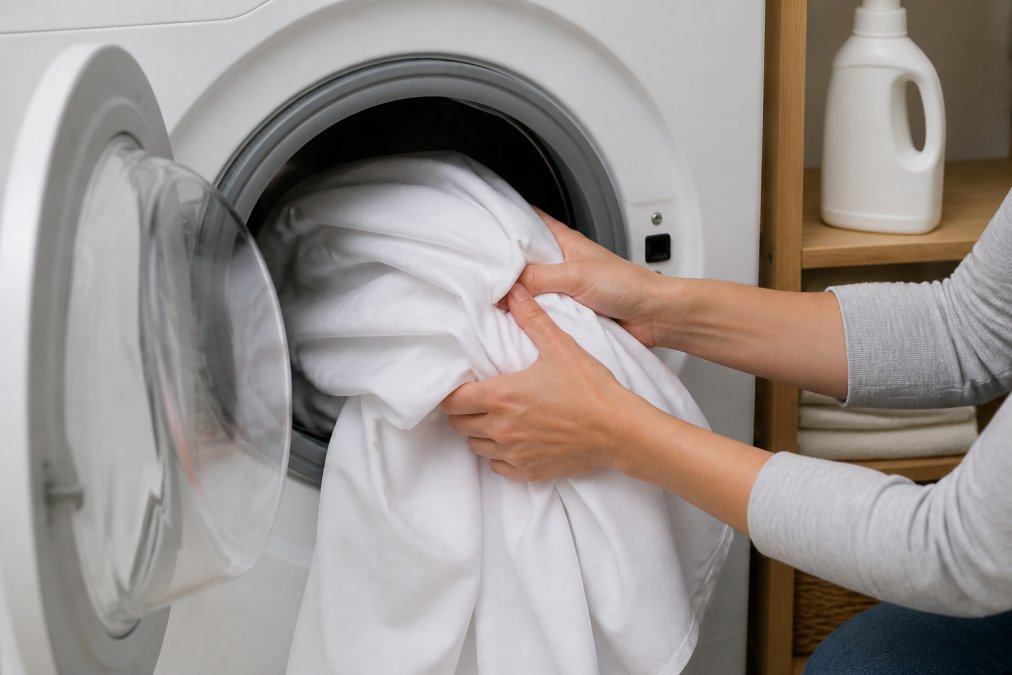
Cold water and a gentle cycle are the two settings that prevent shrinkage in event tablecloths. Heat is the enemy of fiber stability. But the harder problem for event planners isn't picking a setting, it's that commercial laundry equipment and a home washer don't behave the same way, and most guides skip that entirely.
The settings that matter
Set your machine to:
- Water temperature: Cold (below 86°F). If your machine has a "tap cold" option, use it, "cold" on some models blends in hot water.
- Cycle: Gentle or delicate
- Spin speed: Low. High spin stretches and stresses seams.
- Load size: Half-full at most, so linens move freely
Overloading the drum is one of the most common causes of creasing and uneven cleaning. Wash no more than two to three large tablecloths at a time.
For blends with any cotton content, cold water is mandatory. Cotton fibers contract under heat, and once they shrink, the change is permanent.
Commercial vs. residential equipment: what actually changes
Commercial washers at a rental house or venue typically run shorter cycles, use higher mechanical agitation, and dose detergent by weight. A home washer compensates with longer cycles and a smaller drum. That mismatch is where most home-washed event linens get damaged.
What to adjust when you're washing commercial-grade linens at home:
- Reduce load size. A commercial 60-lb machine can handle a dozen 120" rounds; a home front-loader should take two to three.
Oversized linens that won't fit
Temperature thresholds to remember
Step 5: Dry Without Shrinking: Air Dry vs. Tumble Dry Low
Step 6: How to Get Wrinkles Out of Tablecloths Without an Iron
If you don't have a steamer, try these alternatives:
Common Mistakes That Cause Shrinking and Damage
Here's what to avoid:
Frequently Asked Questions
Should I air dry or machine dry event tablecloths to prevent shrinking?
Air drying is the safest option for preventing shrinkage in event tablecloths. Hang them on a line or drape over a clean shower rod. If you need them dry quickly, use a tumble dryer on low heat and remove the linens while slightly damp. High heat is the leading cause of shrinkage in polyester and cotton blend tablecloths. A 100% polyester poplin cloth like those from New Creations Fabric & Foam Inc handles low heat well and resists shrinking better than cotton-rich blends.
What is the best detergent for event linens?
A mild, oxygen-based detergent works best for event linens. Avoid chlorine bleach, which weakens fibers over time and can yellow white fabrics. For polyester tablecloths, a gentle liquid detergent without added fabric softener keeps the fabric crisp. If stains are stubborn, add a scoop of oxygen-based booster to the wash. Fabric softener leaves a residue that attracts dirt and dulls the sheen on polyester poplin, so skip it entirely for table linens you plan to reuse.
How do I get stubborn stains out of polyester event tablecloths?
Act fast. Blot the stain with a clean cloth, then apply a mix of mild detergent and cold water directly to the spot. Let it sit for 10 to 15 minutes before washing. For grease, sprinkle baking soda on the stain first, then add a drop of dish soap. For red wine or coffee, a diluted white vinegar solution (one part vinegar to three parts water) works well on polyester. Always test on a hidden corner first, and never use hot water on protein-based stains like egg or dairy because heat sets them permanently.
How often should event tablecloths be professionally cleaned?
Send them out when you notice dullness, persistent odors, or set-in stains that home washing cannot lift. Professional cleaning is also worth it for heavily soiled linens after large events. Between professional cleanings, spot clean and air dry after each use to extend the life of your linens. Store them rolled or folded flat in a cool, dry place away from direct sunlight.