

Table of Contents
- What Makes a Sequin High Quality
- Examine Material Composition and Plastic Base
- Assess Types of Sequin Finishes
- Check Sequin Density and Hole Alignment
- Test Color Fastness and Coating Durability
- Sequin Fabric Durability Testing Methods
- How to Prevent Sequin Tarnishing and Oxidation
- Evaluate Backing Material and Shape Consistency
Last Updated: August 25, 2026
What Makes a Sequin High Quality
When sourcing sequins for apparel, event decor, or costume work, the difference between quality materials and cheap alternatives becomes obvious during production. Sequins that shed, tarnish, or lose luster within weeks damage your reputation and waste your investment. High-quality sequins share measurable characteristics: consistent plastic composition, durable coatings that resist oxidation and rubbing, precise hole alignment for embroidery, and backing materials that hold sequins securely in place.
A single production run with inferior sequins can force you to remake entire garments, delay timelines, or ship products you're not proud of. Learning to identify high-quality sequins before you buy protects your workflow, margins, and client relationships.
Examine Material Composition and Plastic Base
The foundation of every sequin is its plastic base. High-quality sequins use polyester or cellulose acetate, both offering durability, stability, and resistance to warping under heat or moisture (peer-reviewed research). Lower-quality sequins rely on cheaper plastics that become brittle, crack easily, or warp when exposed to standard sewing temperatures.
Examine the sequin under bright light and run your thumb gently across the surface. Quality sequins feel smooth and uniform; cheap ones have rough texture or visible molding imperfections. The plastic should be rigid enough that it doesn't flex easily under light pressure.
Check the sequin's edges and underside. High-quality sequins have clean, finished edges with no rough spots, flashing, or sharp burrs that would snag thread. The underside should be flat and smooth, not warped or dimpled. Density matters too, hold a sequin and feel its weight. Quality sequins have substantial weight relative to their size, not hollow or thin.
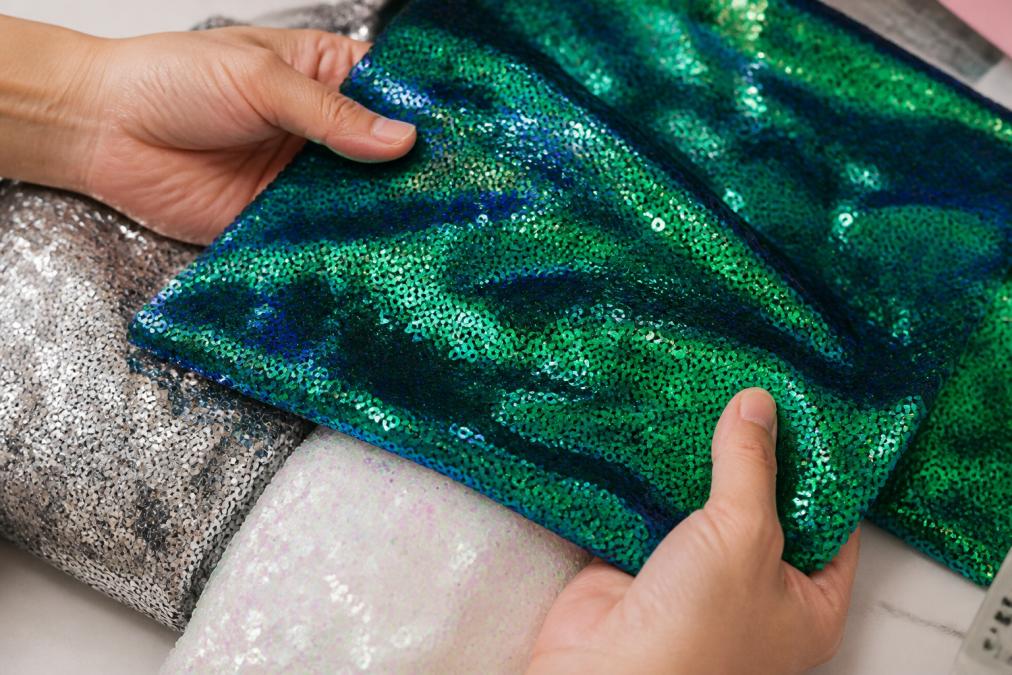
If evaluating sequin fabric, examine how densely sequins are packed on the backing. High-quality sequin fabric has overlapping sequins positioned so tightly that the backing fabric is barely visible underneath.
Assess Types of Sequin Finishes
Metallic vs. Matte vs. Iridescent
The finish applied to a sequin determines its visual appeal and durability. Understanding the three primary finish types helps you choose the right sequin for your application and identify quality within each category.
Metallic finishes create a bright, reflective, mirror-like surface. Quality metallic sequins maintain their shine through washing, storage, and normal wear. The coating should be even across the entire surface with no streaking, dull patches, or bare spots. Hold a metallic sequin to light, it should reflect uniformly without dark areas or color variations.

Matte finishes offer a sophisticated, non-reflective surface for formal wear and understated designs. A quality matte finish feels consistent across all sequins in a batch and maintains uniform appearance from every angle. Poor-quality matte finishes often have uneven texture or appear slightly sticky, indicating the coating may flake or peel during use.
Iridescent finishes shift color depending on viewing angle, creating dynamic effects. Quality iridescent sequins show clear, distinct color shifts. The color transitions should be smooth and gradual, not abrupt or muddy.
For all finish types, consistency across your entire batch is critical. Pull 10 random sequins from your sample and compare them side by side under the same lighting. Quality batches show virtually identical finish, luster, and color. Significant variation indicates poor quality control throughout the full order.
Check Sequin Density and Hole Alignment
Sequin density on fabric determines coverage, visual impact, and durability. High-quality sequin fabric has sequins overlapped tightly enough that the backing fabric is almost completely hidden when viewed from the front.
Examine the sequin fabric under bright light. Look for gaps or bare spots where backing fabric shows through. Quality fabrics show minimal to no backing visibility.
Hole alignment is critical, especially for embroidery or beading. Each sequin should have a perfectly centered hole positioned consistently relative to the sequin's edges. Misaligned holes cause problems during embroidery: needles bend or break, thread pulls unevenly, and sequins shift or rotate.
Hold the sequin fabric up to a light source and look through the holes. In quality fabric, holes should form perfectly straight rows and columns. Run a needle through several sequins in sequence, it should pass through smoothly without resistance. If the needle catches or binds, holes are misaligned, too small, or have rough edges that will snag thread.
Test Color Fastness and Coating Durability
Color fastness measures how well a sequin's finish resists fading, discoloration, and damage from light, moisture, and friction. This is where many lower-quality sequins fail.
Perform a rubbing test: take a white cotton cloth and rub it firmly across a sequin sample for 10-15 seconds using moderate pressure (astm.org). Quality sequins show no color transfer or only the faintest trace. Visible color transfer indicates the coating is too thin or not properly bonded, and it will deteriorate quickly with normal handling.
Test water resistance by placing sequin samples in lukewarm water for 5-10 minutes. Quality sequins show no change in appearance or luster. Cloudiness, discoloration, or visible changes indicate moisture is penetrating the coating.
For applications involving washing, perform a light-fastness check. Place sequin samples in direct sunlight for several hours and compare them to unexposed samples. Quality sequins show no noticeable fading or color shift.
Sequin Fabric Durability Testing Methods
Beyond visual inspection, practical tests reveal how well sequin fabric holds up to real-world use.
The pull test evaluates how securely sequins are attached to the backing. Grasp a sequin at its edge and pull gently but firmly for 3-5 seconds. Quality sequin fabric should resist your pull with no movement. If the sequin shifts, rotates, or pulls free, adhesion is inadequate.
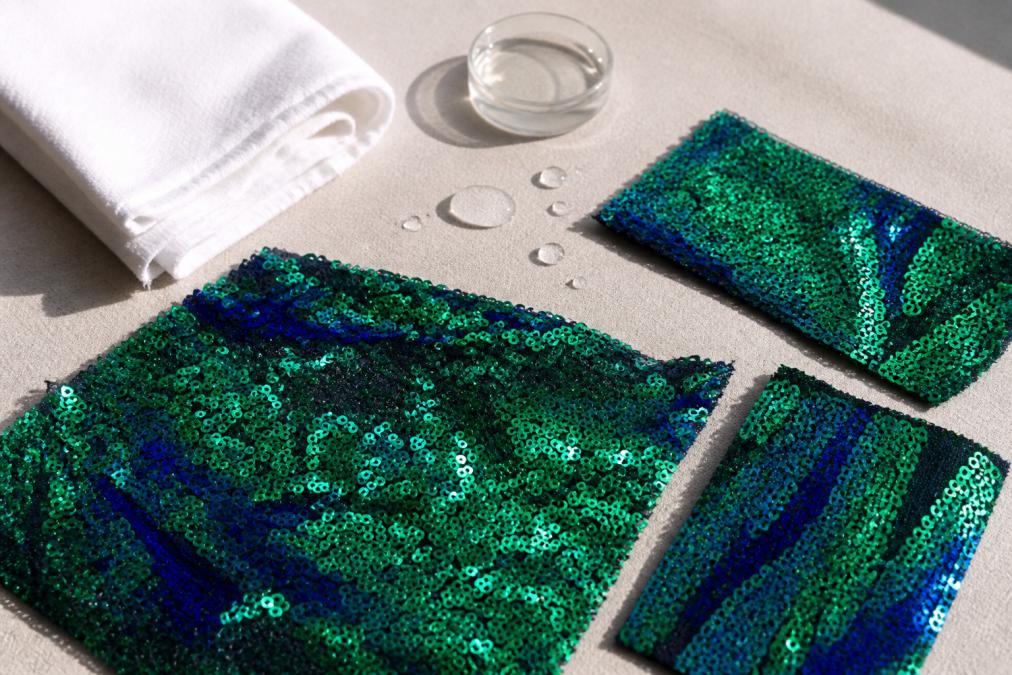
The flex test simulates stress sequins experience during wear. Fold the sequin fabric gently and flex it back and forth 10-15 times. Quality sequin fabric shows no visible damage. If sequins crack, peel, or lift from the backing, the material won't survive normal wear.
The abrasion test replicates friction sequins experience against skin or rough surfaces. Place the sequin fabric face-down on a rough surface and rub a cotton cloth across the back firmly for 20-30 seconds. Quality sequins show minimal damage. Significant scratching indicates the finish is too delicate.
The seam test matters if sewing sequin fabric. Fold the fabric with the sequined side facing inward and sew a seam through both layers using standard thread and needle. Quality fabric allows clean, secure stitching without sequins cracking or damaging the needle.
Request samples from suppliers and test them yourself before committing to large orders.
How to Prevent Sequin Tarnishing and Oxidation
Even quality sequins can tarnish if stored or handled improperly. Tarnishing occurs when the metallic coating oxidizes, creating a dull, discolored surface.
Store sequin fabrics in cool, dry conditions away from direct sunlight. Humidity accelerates oxidation, so keep storage areas well-ventilated and use silica gel packets in humid climates. Avoid plastic bags that trap moisture; use breathable fabric storage containers or acid-free tissue paper instead.
Keep sequins away from harsh chemicals, cleaning products, and strong perfumes. For cleaning, use gentle methods, hand washing in cool water with mild soap is safer than machine washing or dry cleaning.
Minimize direct sunlight exposure during storage and display. If sequin items are on display, rotate them periodically to ensure even light exposure.
For metallic sequins, avoid contact with acidic substances like vinegar or lemon juice, which can etch the coating. Similarly, avoid prolonged contact with salt water, which accelerates oxidation.
If you notice early signs of tarnishing, store items in airtight containers with acid-free tissue paper. For valuable pieces, consider storing them with anti-tarnish strips designed for jewelry.
Evaluate Backing Material and Shape Consistency
The backing material holding sequins in place is as important as the sequins themselves. Quality sequin fabric uses durable, flexible backing that keeps sequins secure without cracking or deteriorating.
Examine the backing material closely. It should feel sturdy and flexible, not stiff, brittle, or papery. Quality backing feels smooth with no rough spots, loose threads, or visible defects. Gently try to peel sequins away from the backing, in quality fabric, sequins should not lift or separate.
Shape consistency is critical for professional appearance and embroidery precision. All sequins in a batch should be identical in size, shape, and thickness. Measure several sequins using a ruler or calipers. Quality batches show consistent measurements within a very tight tolerance (typically less than 0.5mm variation) (astm.org).
Examine sequin edges for consistency. All edges should be smooth, finished, and uniform. For cup sequins, consistency in cup depth and shape is essential, all sequins should have the same cup depth and angle.
New Creations Fabric & Foam Inc offers high-quality sequin options that exemplify these standards. The Mini Glitz Disc Sequins 50" Wide features consistent mini sequin density on mesh backing, ensuring reliable coverage and secure attachment. The Sequin Spandex Fabric 54" Wide combines iridescent mini glitz sequins with 4-way stretch backing for applications requiring movement. The Stretch Metallic Sequin Lurex Fabric 58" Wide delivers metallic finish reliability with flexible mesh backing, ideal for event decor and dancewear.


Identifying high-quality sequins protects your production timeline, reduces waste, and ensures finished products meet client expectations. The testing methods outlined here require only basic materials and a few minutes of observation. Before placing large orders, request samples and evaluate them thoroughly using these criteria. Quality sequins cost more upfront, but the durability, consistency, and professional appearance they deliver justify the investment. Explore the sequin fabric options at New Creations Fabric & Foam Inc to source materials that meet these standards and support your creative vision at scale.
Frequently Asked Questions
What are the indicators of high-quality sequins versus cheap alternatives?
High-quality sequins have uniform hole alignment, consistent shape, and durable coatings that resist rubbing and color fading. Cheap sequins often show visible gaps in density, uneven holes, and thin plastic bases that tarnish or oxidize quickly. Premium sequin fabric uses synthetic polymer bases with quality metallic or iridescent finishes, while budget options use thinner plastic that loses luster after minimal wear or washing.
How does material composition affect the longevity of sequins?
The plastic base determines how long sequins maintain their appearance. High-quality sequins use durable synthetic polymers with protective coatings that resist UV exposure and oxidation. Thinner plastic bases degrade faster, causing color loss and tarnishing. The backing fabric also matters, mesh backing on quality sequin fabric prevents sequin fraying and loss during garment construction and wear. Materials like those in New Creations Fabric & Foam Inc's Mini Glitz Disc Sequins use dense mesh backing to lock sequins in place.
What is the difference between flat and cup sequins in terms of quality?
Flat sequins lie flush against fabric and offer a smooth, refined appearance ideal for formal wear and embroidery precision. Cup sequins have a dish shape that catches light differently and creates dimensional sparkle. Quality flat sequins have perfectly aligned holes and consistent thickness, while quality cup sequins maintain uniform depth. Both types should show no fraying, consistent color fastness, and durable coating. The choice depends on your project, flat sequins work better for sleek designs, while cup sequins create more dramatic visual impact.
Can I test sequins for heat and solvent resistance at home?
Yes. For heat resistance, place a small fabric sample on a low heat source (not direct flame) and check if the plastic base warps or the coating discolors. For solvent testing, dab rubbing alcohol on an inconspicuous area and observe if the finish dulls or the plastic softens. Color fastness can be tested by rubbing the sequin surface with a damp white cloth, quality sequins won't transfer color. These simple tests reveal whether the plastic and coating will hold up during manufacturing, washing, and wear.
This article was written using GrandRanker