

Table of Contents
- Why Fabric Quality Standards Matter in Mass Production
- Key Textile Testing Methods and Physical Properties
- ASTM Textile Testing Standards for Apparel
- How to Verify Fabric Drape Online Before Bulk Orders
- Fabric Inspection Checklist for Apparel Production
- Chemical Safety, Compliance, and Sustainable Sourcing
- Digital Quality Management Systems for Consistency
- Cost-Benefit Analysis: Why Quality Standards Pay Off
Last Updated: August 26, 2026
Why Fabric Quality Standards Matter in Mass Production
When fabric arrives with color mismatches or loose, inconsistent weaves, you're facing thousands in rework, delays, or scrapped inventory. Fabric quality standards establish measurable criteria that separate reliable suppliers from unreliable ones, defining "good" through precise testing methods and compliance benchmarks rather than subjective judgment.
At scale, a single defect across 50 rolls becomes a production crisis. Quality standards catch these issues before they reach your factory floor. Beyond operations, standards protect brand reputation, customers notice when seams pucker, colors fade, or fabric pills. These failures cost far more to fix through returns and reputation repair than to prevent through proper quality assurance upfront.
Key Textile Testing Methods and Physical Properties
Textile testing translates subjective impressions into objective measurements. When you say a fabric feels "durable," testing quantifies that through standardized protocols any lab can replicate.
The most critical physical properties fall into two categories: mechanical properties (how fabric behaves under stress) and dimensional stability (how fabric changes through washing and wearing).
Tensile Strength and Tear Resistance
Tensile strength measures force required to tear fabric by pulling samples along the warp (lengthwise) and weft (crosswise) until rupture, expressed in Newtons or pounds. Tear resistance measures how easily a small tear propagates once initiated. A fabric can have high tensile strength but poor tear resistance, or vice versa. For apparel, you need both.
Our 10 oz Cotton Duck Canvas demonstrates tear strength of 1000 N in the warp direction and 700 N in the weft, specifications ensuring suitability for heavy-duty applications (astm.org). These aren't arbitrary numbers; they result from testing protocols established by standards bodies to ensure consistency across suppliers.

Knowing tensile and tear specifications before committing to bulk orders is your baseline for ensuring finished garments perform as intended.
Colorfastness and Dimensional Stability
Colorfastness measures how well fabric retains color through washing, sunlight, and friction. Testing involves controlled washing cycles or light exposure, then comparing color shift to standardized scales. A fabric that fades after three washes destroys customer loyalty quickly.
Dimensional stability, how much fabric shrinks, stretches, or warps, is equally critical. A dress that fits perfectly before washing but shrinks two sizes after is a customer service nightmare. Testing measures fabric behavior through multiple wash cycles at standard temperatures.
For bulk production, both properties must be consistent across every roll. One roll shrinking 2% while another shrinks 8% means cutting patterns don't work uniformly, wasting production time or creating fit inconsistencies.
The Cotton Twill Fabric from New Creations Fabric & Foam Inc resists pilling and color fading, properties built into fiber composition and weave structure that matter when garments must withstand repeated wear and washing.
ASTM Textile Testing Standards for Apparel
ASTM International publishes standards defining how textile testing is conducted in North America, ensuring any accredited lab performs tests the same way, producing comparable results.
For apparel production, the most relevant ASTM standards include:
- ASTM D1424 measures tear strength using the trapezoid method
- ASTM D5034 measures tensile strength and elongation
- ASTM D1777 measures fabric thickness
- ASTM D1059 measures yarn count (threads per inch)
When you specify "ASTM D5034 tensile strength of 32 N warp, 25 N weft," you leave no room for interpretation. Any lab testing to this standard produces comparable results.
The 10 oz Fine Arts Unprimed Cotton Canvas from New Creations Fabric & Foam Inc meets ASTM D1424 tear strength specifications of 1000 N warp and 700 N weft, and ASTM D5034 tensile specifications of 32 N warp and 25 N weft, verifiable performance standards ensuring consistent fabric across production runs.

How to Verify Fabric Drape Online Before Bulk Orders
Drape, how fabric hangs and moves, is one of the hardest properties to evaluate through photos alone. A fabric looking fluid in still images might be stiff in reality, yet drape is fundamental to whether garments look professional or cheap when worn.
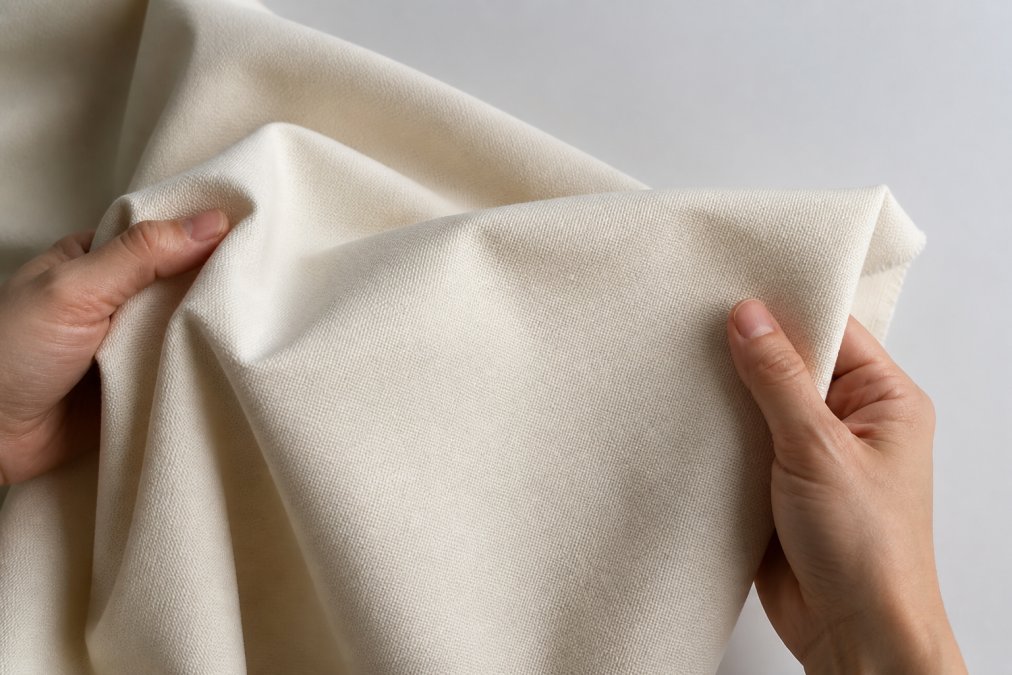
Before committing to bulk orders, request physical samples from suppliers, not just photos. When samples arrive, evaluate them against these criteria:
Hold fabric vertically and observe how it falls. Does it hang stiffly or fold into soft, natural pleats? Stiffer fabrics work for structured garments like blazers. Fluid fabrics work for dresses and flowing tops. Match drape to your design intent.
Move the sample side to side and observe responsiveness. Quick, responsive movement indicates lighter, more fluid fabric. Resistance indicates weight and structure. For mass production, consistency in drape means consistency in how every finished garment looks.
Compare samples to reference garments you already produce. If you have a dress that drapes exactly as desired, hold the new fabric sample the same way and compare directly. This removes subjectivity and provides clear visual reference.
Request multiple samples from different bolt positions. Fabric from roll edges sometimes behaves differently than fabric from centers. Significant drape variation across rolls indicates consistency problems you need to know about before ordering 1,000 yards.
Fabric Inspection Checklist for Apparel Production
When fabric arrives, systematic inspection catches defects before they reach cutting tables. This is your last line of defense against quality problems compromising entire production runs.
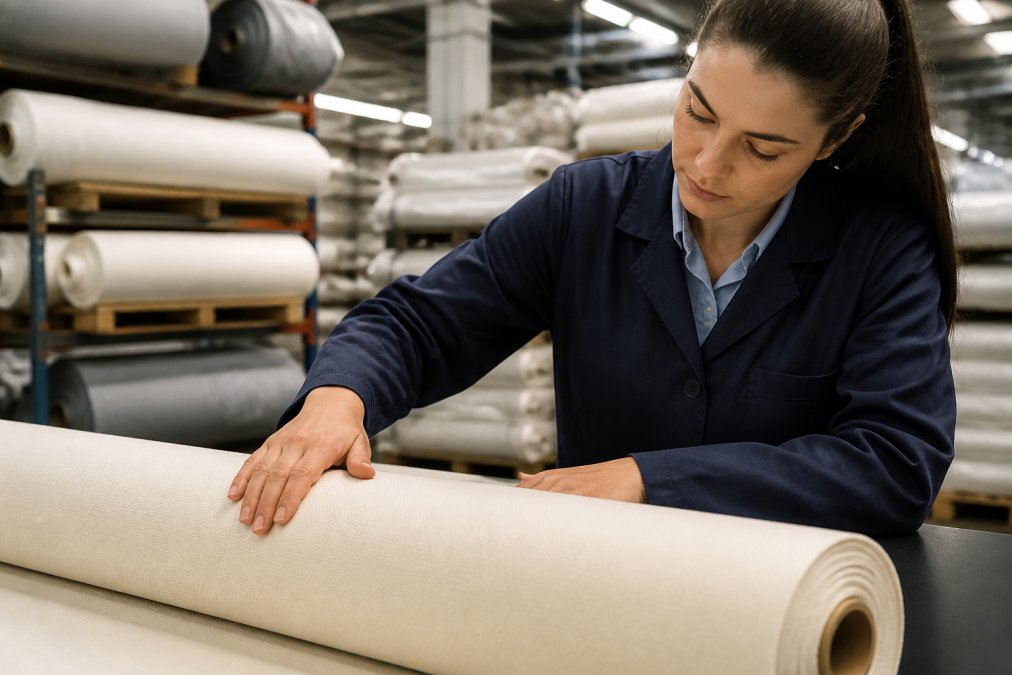
Visual Defect Assessment
Lay fabric on flat surfaces under bright, even lighting. Walk the roll length visually, looking for:
Slubs are thick yarn spots where fibers clump, creating visible bumps and weak tear points. Minor slubs might be acceptable; significant ones warrant rejection.
Holes or tears render fabric unusable. Even small holes expand during cutting and sewing, creating visible flaws.
Color variations between roll areas indicate inconsistent dyeing. If producing 500 garments from one roll, they won't all match, a critical defect where color consistency matters.
Weaving irregularities (tight or loose spots) affect appearance and durability. Tight spots cause puckering when sewn; loose spots snag and tear easily.
Stains or discoloration indicate contamination during manufacturing or storage, reducing usable yardage and increasing production costs.
Batch Consistency Verification
Consistency across entire shipments matters as much as individual roll quality. Pull samples from multiple rolls (beginning, middle, end) and compare directly.
Check color consistency by holding samples side by side under identical lighting. Noticeable color shifts between rolls force your cutting team to sort by shade, wasting time.
Measure weight and thickness on samples from different rolls using scales for GSM (grams per square meter) and calipers for thickness. Variations affect how fabric cuts, sews, and drapes, plus how garments fit and feel.
Test shrinkage consistency by measuring samples before and after standard wash cycles. If one roll shrinks 3% while another shrinks 8%, production fit issues could require rework or customer returns.
Verify batch documentation matches shipments. Cross-check lot numbers, dye batch numbers, and fiber composition against purchase orders and supplier documentation. Mismatches indicate supplier errors or quality control gaps.
Chemical Safety, Compliance, and Sustainable Sourcing
Fabric quality includes what's in the fabric and how it was made. Chemical safety compliance protects customers and your brand from regulatory and reputational risk.
Harmful substances include heavy metals (lead, cadmium, chromium), formaldehyde (used in finishing), and synthetic dyes causing allergic reactions. Regulatory bodies like the Consumer Product Safety Commission establish limits on these substances for apparel fabrics.
The Oeko-Tex Standard 100 certification indicates third-party verification that fabric is free of harmful substances above regulatory thresholds. This certification is independent of fiber type or manufacturing process.
Our 10 oz Cotton Duck Canvas carries Oeko-Tex Standard 100 certification, verified to meet strict chemical safety standards, providing documented proof the fabric is safe for apparel production without introducing compliance risks.
Sustainable sourcing standards address how and where fabric was produced. Standards like Global Organic Textile Standard (GOTS) verify fibers were grown without synthetic pesticides, manufacturing minimizes environmental impact, and labor conditions meet ethical standards. These certifications increasingly matter to consumers, particularly for brands positioning themselves as environmentally or socially conscious.
Request documentation of any certifications fabric carries. Don't accept supplier claims without third-party verification.
Digital Quality Management Systems for Consistency
Manual inspection catches defects; digital quality management systems (QMS) prevent them by creating standardized, repeatable processes reducing human error and variability.
A QMS typically includes:
- Supplier scorecards tracking defect rates, on-time delivery, and compliance metrics, revealing consistently reliable suppliers and those needing corrective action
- Standard operating procedures (SOPs) documenting exactly how each inspection step is performed, who performs it, and acceptance criteria, eliminating ambiguity
- Digital defect logging capturing photos, measurements, and notes for every issue, creating historical records revealing trends
- Traceability linking every fabric batch to testing data, certifications, and inspection results for accountability
Reducing defect rates by even 5% cuts rework costs, speeds production, and improves customer satisfaction. The system creates accountability, when every step is documented and traceable, quality issues become visible and addressable rather than hidden and repeated.
For apparel manufacturers with multiple fabric suppliers, a QMS is the difference between reactive firefighting and proactive quality management. Instead of discovering problems after cascading through production, you catch them at receiving.
Cost-Benefit Analysis: Why Quality Standards Pay Off
Quality standards require investment in testing, certifications, and potentially higher fabric prices from suppliers maintaining rigorous quality control. The ROI becomes apparent quickly.
A single production run with quality issues costs money through rework labor, scrap material, delayed shipments incurring rush fees, and customer returns requiring replacement product and brand damage. A batch of 500 garments with 10% defects means 50 units needing rework or replacement, thousands in lost revenue or additional cost at typical manufacturing margins.
Compare that to upfront quality verification costs: fabric samples ($20-50), testing for tensile strength, tear resistance, and colorfastness ($200-400 per fabric type), and inspection labor (2-4 hours per shipment). Total investment often runs under $1,000 per bulk order.
If that investment prevents even one production issue costing $5,000 or more in rework and delays, it pays for itself ten times over. Most manufacturers find rigorous quality standards prevent multiple issues yearly, making ROI undeniable.
Beyond direct cost savings, quality standards protect brand reputation. A customer receiving defective garments is unlikely to repurchase and likely to share negative experiences publicly. Preventing that single bad experience is worth thousands in marketing and customer acquisition costs.
New Creations Fabric & Foam Inc understands this equation. Our fabrics are tested to documented standards and verified for consistency because your success depends on reliable, high-quality materials. When ordering from suppliers prioritizing quality standards, you're not paying a premium, you're making a smart investment in production efficiency and brand reputation.
Frequently Asked Questions
What does GSM mean in fabric quality standards?
GSM stands for grams per square meter, a measurement of fabric weight and density. Higher GSM indicates a heavier, more durable fabric. For mass production, GSM consistency across batches ensures uniform performance, drape, and longevity. The 10 oz cotton canvas from New Creations Fabric & Foam Inc, for example, weighs 315 GSM, providing durability for apparel and decor applications. Specifying target GSM ranges in your purchase orders helps suppliers maintain batch consistency.
What are ASTM textile testing standards and why do they matter?
ASTM International develops standardized test methods for textiles, including tensile strength (ASTM D5034), tear resistance (ASTM D1424), and colorfastness (ASTM D2261). These standards ensure fabric quality is measured consistently across suppliers and batches. For mass production, ASTM compliance guarantees that every roll meets the same performance benchmarks. Requiring ASTM testing in your supplier contracts protects against defects and reduces returns from inconsistent quality.
How can I verify fabric drape online before ordering in bulk?
Request fabric samples and video demonstrations from suppliers showing how the material hangs and moves. Look for consistent drape across multiple sample pieces and compare against your design specifications. Ask suppliers for GSM, fiber composition, and yarn count data, which directly influence drape behavior. Video calls with fabric specialists can clarify how a fabric will perform in your finished garments. New Creations Fabric & Foam Inc provides detailed specifications and sample access to help you assess drape before committing to bulk orders.
What are the most common fabric defects to check during mass production?
Common defects include pilling, fraying, color variations between rolls, inconsistent weave patterns, and stains. Use a systematic fabric inspection checklist to assess each batch: examine at least 10% of rolls under bright lighting, check for abrasion resistance degradation, and verify dimensional stability hasn't shifted. Digital quality management systems can track defect rates by supplier and batch. Establishing clear defect thresholds and rejection criteria upfront prevents low-quality fabrics from entering your production line.
Why should I invest in third-party textile testing for bulk orders?
Third-party testing provides unbiased verification of fabric quality, tensile strength, colorfastness, and chemical safety. It protects your brand reputation by ensuring compliance with regulations like OEKO-TEX certification and eliminates supplier bias. For large orders, the cost of testing is minimal compared to the expense of recalls, returns, or brand damage from defective fabrics. Independent lab reports also serve as documentation for your quality assurance records and can support negotiations with suppliers on pricing and consistency guarantees.
How do I ensure batch consistency when ordering fabric from the same supplier?
Establish written quality standards with your supplier specifying GSM, yarn count, tensile strength, colorfastness, and acceptable defect rates. Request certificates of compliance for each batch before shipment. Use a digital quality management system to track performance metrics over time and flag variations early. Schedule regular audits of raw materials and finished fabric rolls. Consistent communication and supplier scorecards incentivize suppliers to maintain standards and alert you to any production changes that might affect quality.
What is OEKO-TEX certification and does it matter for my fabric orders?
OEKO-TEX Standard 100 certifies that fabrics are free from harmful substances and safe for human contact. It tests for heavy metals, pesticides, allergens, and other chemicals restricted in textile production. For apparel manufacturers, OEKO-TEX compliance is increasingly expected by retailers and consumers. Many premium fabrics, including the 10 oz cotton canvas from New Creations Fabric & Foam Inc, carry OEKO-TEX certification. Specifying OEKO-TEX requirements in your purchase orders ensures your finished garments meet safety standards and market expectations.
How much does fabric quality testing and inspection add to production costs?
Testing costs typically range from $200 to $1,000 per batch depending on the scope (basic visual inspection versus full ASTM lab testing). However, the cost-benefit analysis favors quality investment: preventing defective batches saves 5-15% in returns and rework expenses, protects brand reputation, and reduces customer complaints. For high-volume production, establishing supplier relationships with consistent quality standards reduces per-unit testing costs. Digital quality management systems also lower inspection labor by automating defect tracking and batch documentation, offsetting initial software investment within the first year.
Fabric quality standards for mass production aren't bureaucratic overhead, they're the foundation of scalable, profitable manufacturing. When you source fabrics that meet documented standards, you eliminate the guesswork, reduce defects, and build consistency that customers notice and reward with loyalty. Explore the fabric collections at New Creations Fabric & Foam Inc, where every material is tested, certified, and engineered to meet the standards that professional production demands.
This article was written using GrandRanker