

Table of Contents
- What Makes a Reliable Bulk Fabric Supplier
- How to Source Fabric for a Clothing Line
- Wholesale Fabric for Fashion Brands
- Minimum Order Quantity Fabric Suppliers
- Shipping and Logistics for Bulk Orders
- Custom Textile Printing and Finishing Services
- Sustainable and Eco-Friendly Fabric Sourcing
- Conclusion
Last Updated: August 24, 2026
Finding the right bulk fabric suppliers can make or break a fashion brand's production timeline and bottom line. Whether you're a small independent designer scaling your first collection or an established apparel manufacturer managing recurring orders, sourcing quality textiles at wholesale prices requires more than just picking the cheapest option. The best bulk fabric suppliers for designers balance consistency, reliability, and cost-effectiveness, but knowing which supplier actually delivers on those promises takes real vetting.
This guide from New Creations Fabric & Foam Inc covers everything you need to evaluate bulk fabric suppliers, understand pricing structures, and build a sourcing strategy that supports your growth. We'll walk you through the critical factors that separate reliable partners from suppliers who deliver inconsistent products and missed deadlines.
What Makes a Reliable Bulk Fabric Supplier
Not all bulk fabric suppliers operate with the same standards. A truly reliable partner maintains consistent quality across every order, communicates transparently about lead times and inventory, and stands behind their products when issues arise.
Fabric Quality Standards and Testing
Reliable suppliers enforce rigorous quality control at every stage of production and fulfillment. This means testing fabric for shrinkage, color fastness, seam strength, and dimensional stability before shipment. When you order 500 yards of a specific knit, it should perform identically to your previous order, same weight, same drape, same color consistency across dye lots.
Quality standards vary by textile type. A jersey knit needs different testing protocols than a structured satin or a delicate lace. The best suppliers document their testing procedures and can provide certificates of compliance when requested. They understand that a single defective roll doesn't just cost you money, it disrupts your entire production schedule and damages your relationship with your customers.
Consistency Across Dye Lots
One of the most common complaints from designers is color variation between orders. This happens because textiles are dyed in batches, and even minor differences in dye chemistry, water temperature, or timing can shift the final color. A reliable supplier manages dye lot consistency by maintaining detailed records of every batch and communicating when a new dye lot is unavoidable.
When you order 1,000 yards of cotton jersey in navy, you expect every yard to look identical whether it arrives in week one or week three. The best suppliers either guarantee color matching within acceptable tolerances or proactively notify you when switching to a new dye lot, giving you the choice to accept the variation or delay shipment for consistency.

How to Source Fabric for a Clothing Line
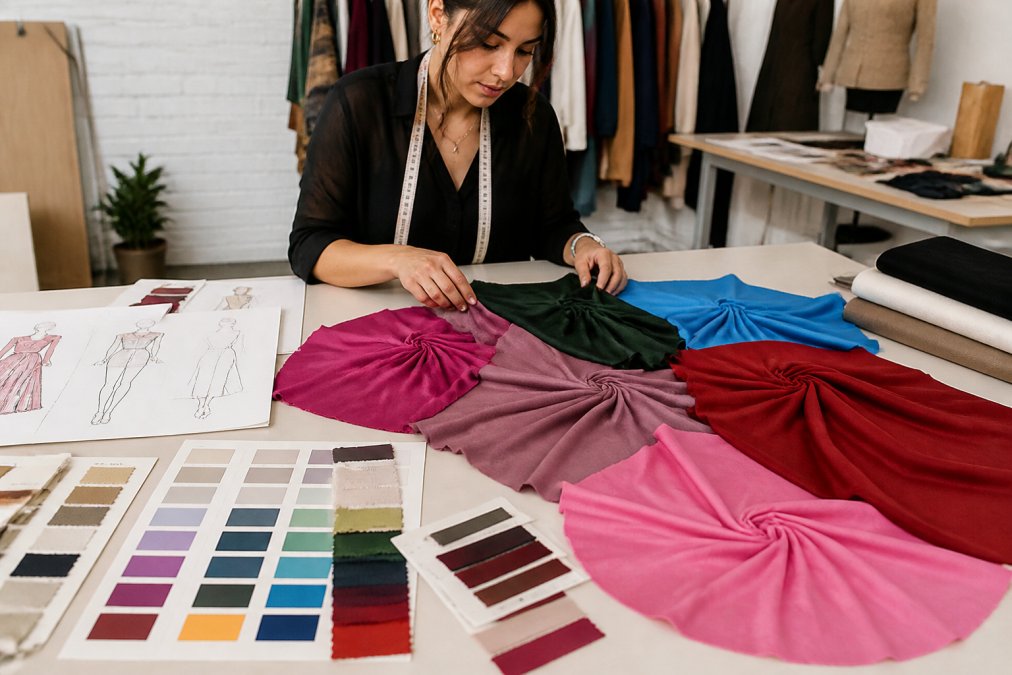
Sourcing fabric for production requires a systematic approach. You're not just buying material, you're building a relationship with a supplier who understands your brand's needs and can scale with you as you grow.
Vetting Supplier Reliability
Start by checking how long a supplier has been in business and whether they work with brands similar to yours. A supplier experienced in e-commerce apparel will understand your timeline pressures differently than one primarily serving theatrical costume designers. Ask for references from existing clients, legitimate suppliers will provide them.
Look for transparency in their communication. Do they answer emails within 24 hours? Do they provide detailed product specifications including GSM (grams per square meter), width, stretch percentages, and care instructions? Can they explain their minimum order quantity requirements and lead times upfront? A supplier who hides these details or makes you chase information is signaling that they don't prioritize customer service.
Evaluate their inventory depth. Can they consistently stock the fabrics you need, or do they special-order everything? Consistent stock availability means faster fulfillment and fewer surprises. Ask about their backup suppliers, what happens if a fabric goes out of stock unexpectedly?
Requesting Fabric Swatches and Specifications
Before placing any substantial order, request physical swatches. Photographs and color monitors lie, a fabric that looks perfect on screen might feel completely different in person. Legitimate suppliers send swatches quickly because they know that seeing and touching the material builds confidence.
When requesting swatches, ask for detailed specifications: fiber content, weight, width, thickness, stretch percentages, and care instructions. For knits, ask about vertical and horizontal stretch. For wovens, ask about shrinkage potential. These details matter because they affect how your garments will perform in production and after the customer washes them.
Pay attention to how the supplier presents this information. Do they provide it in a standardized format? Can they answer follow-up questions about how their fabric compares to alternatives? A supplier who knows their products inside-out will confidently discuss specifications and use cases.
Wholesale Fabric for Fashion Brands
Wholesale pricing and account structures vary significantly between suppliers. Understanding these models helps you negotiate better terms and avoid overpaying for small orders.
Types of Textiles Available by the Bolt
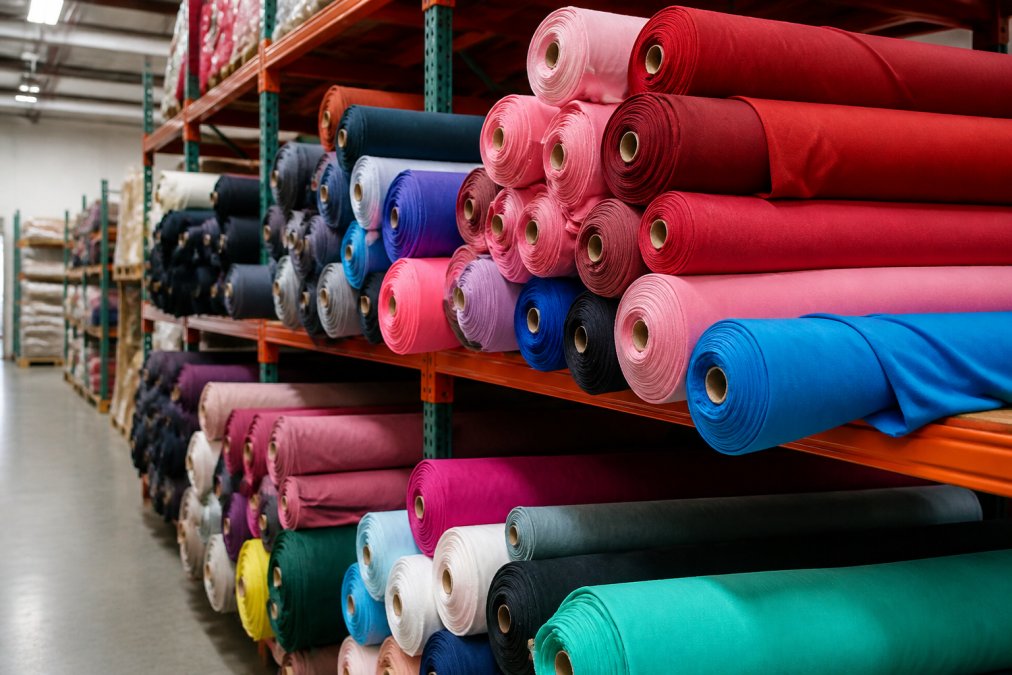
Most bulk fabric suppliers organize their inventory by textile category: knits, wovens, specialty fabrics, and sometimes foams or trim materials. Knits include jersey, ITY (interlock twist yarn), scuba, and stretch crepe options. Wovens range from muslin to satin to specialty prints. Understanding what's available helps you plan collections around what suppliers can reliably source.
New Creations Fabric & Foam Inc stocks a range of options designed specifically for fashion brands. Their Cotton Jersey Spandex Knit (95% cotton, 5% spandex) works well for activewear and comfortable basics, while their ITY Knit Jersey offers vibrant colors and excellent drape for dresses and event wear. For structured pieces, their Dull Satin and Charmeuse Satin options provide the refined finishes that separate professional garments from amateur projects. Specialty options like Stretch Velvet and Stretch Crushed Velvet serve costume designers and high-end apparel makers.

The key is having options. A supplier with limited textile variety forces you to compromise on design, either you work within their inventory or you source from multiple suppliers, which complicates your supply chain.
Wholesale Pricing Models and Account Setup
Most bulk fabric suppliers use tiered pricing based on order volume. Smaller orders (under 25 yards) typically cost more per yard than orders of 50+ yards. Many suppliers require minimum order quantity, often 25 yards per fabric, to qualify for wholesale pricing.
Some suppliers offer better pricing for account holders who commit to regular orders. If you're planning recurring purchases, ask about wholesale account setup. This often involves a simple application process and may include volume discounts or net-30 payment terms instead of upfront payment.
New Creations Fabric & Foam Inc prices most fabrics between $9.99 and $15.95 per yard when purchased by the yard. Their Cotton Jersey Spandex Knit runs $12.95, ITY Knit Jersey is $11.95, and specialty options like Neoprene Scuba Fabric are $15.95. For bulk orders of 25 yards or more, they offer wholesale pricing; contact them directly for volume discounts. This pricing structure rewards larger orders without penalizing smaller designers who are still building their brand.

Minimum Order Quantity Fabric Suppliers
Minimum order quantities (MOQs) are a major factor in supplier selection. Some designers can work with 25-yard minimums; others need more flexibility.
MOQ Comparison Matrix
| Supplier Type | Typical MOQ | Best For | Lead Time | Pricing Impact |
|---|---|---|---|---|
| Wholesale distributors | 25-50 yards per fabric | Established brands, recurring orders | 2-3 weeks | Lowest per-yard cost |
| Direct importers | 50-100 yards per fabric | Larger production runs | 3-4 weeks | Mid-range pricing |
| Specialty/premium suppliers | 10-25 yards per fabric | Designers prioritizing variety | 1-2 weeks | Higher per-yard cost |
| Print-on-demand services | 5-10 yards per fabric | Custom designs, small batches | 2-3 weeks | Premium pricing |
New Creations Fabric & Foam Inc works with designers at various scales. Their standard structure accepts orders by the yard, making them accessible to smaller designers. For wholesale accounts ordering 25 yards or more, they provide volume pricing that makes larger production runs more economical.
Cost-Benefit Analysis: Bolt vs. Yardage
Ordering by the bolt (typically 25-50 yards depending on the fabric) costs less per yard than ordering smaller quantities. However, bolts require storage space and tie up capital in inventory. For designers just starting out, ordering smaller quantities at a higher per-yard price often makes more financial sense than buying full bolts you might not use.
As your brand grows, the math shifts. If you're selling 100+ units of a particular style monthly, ordering by the bolt becomes cost-effective. You save money per yard, reduce per-order fees, and ensure consistent inventory for fulfillment. The break-even point depends on your sales velocity and storage capacity.
Consider this: if you're paying $12.95 per yard for small orders but $11.50 per yard for 50-yard bolts, the savings on a 50-yard order is about $72.50. That justifies the bolt order only if you'll use that fabric within 2-3 months. If it sits in storage for six months, you've tied up cash and warehouse space for minimal benefit.
Shipping and Logistics for Bulk Orders
Bulk fabric orders are heavy and require careful handling. Reliable suppliers understand this and have established logistics processes.
Most bulk fabric suppliers ship via freight carrier for orders over 50 pounds (fmc.gov). Shipping costs vary based on weight, destination, and carrier. Some suppliers include shipping in their wholesale pricing; others charge separately. Always clarify shipping costs upfront, they can significantly impact your per-yard cost.
Ask about packaging. Fabric should arrive wrapped securely to prevent damage and color fading. Reputable suppliers use protective wrapping and clearly label packages with fabric type, color, dye lot, and yardage. This prevents confusion when orders arrive and makes inventory management easier.
Lead times matter for production planning. Most domestic suppliers ship within 2-3 weeks of order placement. International suppliers may take 4-8 weeks. Understand the supplier's lead time and whether they can accommodate rush orders (usually at a premium cost).
Custom Textile Printing and Finishing Services
Many bulk fabric suppliers offer additional services beyond standard inventory. Custom printing allows you to add your own designs to base fabrics. Finishing services include treatments like pre-shrinking, softening, or adding water repellency.
Custom printing typically requires minimum orders of 25-50 yards and lead times of 3-4 weeks (sba.gov). Costs depend on complexity, solid color dye sublimation printing is cheaper than multi-color photographic printing. Ask about color matching capabilities and whether the supplier uses eco-friendly inks.
Finishing services add cost but can significantly improve final product quality. Pre-shrinking cotton fabrics prevents customer garments from shrinking after washing. Softening treatments improve hand feel. Water-resistant finishes suit outerwear and activewear. Discuss which finishing services align with your brand positioning and target customer expectations.
Sustainable and Eco-Friendly Fabric Sourcing
Increasingly, fashion brands and consumers care about sustainability. Many bulk fabric suppliers now offer organic cotton, recycled polyester, and other eco-friendly options.
Sustainable sourcing typically costs 10-20% more than conventional fabrics but appeals to environmentally conscious consumers (peer-reviewed research). Certifications matter, look for GOTS (Global Organic Textile Standard) for organic cotton, or GRS (Global Recycled Standard) for recycled materials. These certifications verify that fabrics meet specific environmental and social standards.
When evaluating sustainable options, ask suppliers about their supply chain transparency. Where do they source raw materials? What certifications do they hold? How do they handle waste and water usage in production? Suppliers who can answer these questions confidently are genuinely committed to sustainability rather than simply using it as marketing language.
New Creations Fabric & Foam Inc offers natural fiber options like their Ivory Muslin (100% cotton), which appeals to designers prioritizing organic materials. Their polyester and spandex blends use conventional production but deliver the performance and consistency that production-focused brands require.
Finding the right bulk fabric supplier is one of the most important decisions you'll make as a designer or brand owner. The relationship directly impacts your production costs, delivery timelines, and final product quality. Prioritize suppliers who communicate transparently, maintain consistent quality standards, and demonstrate genuine interest in supporting your brand's growth.
New Creations Fabric & Foam Inc combines quality, consistency, and refined finishes specifically designed for professional-scale manufacturing. Their range of specialty fabrics, from Cotton Jersey Spandex to Stretch Velvet to Dull Satin, supports diverse design visions while maintaining the production reliability that growing brands require. Explore Fabrics and discover how their textile sourcing strategy can support your next collection.
Frequently Asked Questions
How do I find reliable wholesale fabric suppliers for my clothing line?
Start by researching suppliers that specialize in your fabric type and verify their quality standards through certifications and customer reviews. Request fabric swatches to assess color consistency, fiber content, and finish quality before committing to bulk orders. Confirm their minimum order quantities align with your production needs, and ask about lead times and their ability to handle reorders. New Creations Fabric & Foam Inc offers wholesale accounts with consistent quality across orders and detailed fabric specifications including GSM and fiber composition to support your sourcing decisions.
What are the minimum order quantities for bulk fabric suppliers?
MOQs vary significantly by supplier and fabric type, typically ranging from 25 to 100+ yards for wholesale accounts. Some suppliers offer lower minimums for popular fabrics like cotton jersey or polyester blends, while specialty textiles like crushed velvet or neoprene scuba may require higher minimums. Suppliers like New Creations Fabric & Foam Inc provide wholesale pricing starting at 25 yards, allowing smaller designers to access bulk pricing without excessive inventory. Always clarify MOQs before placing orders to ensure they fit your production schedule and budget.
Is it cheaper to buy fabric in bulk?
Yes, bulk purchasing typically reduces per-yard costs significantly compared to retail pricing. Wholesale fabric for fashion brands often costs less per yard when ordering by the bolt versus small quantities. However, you must factor in storage costs, potential waste from color variation between dye lots, and the risk of excess inventory if designs don't sell as expected. New Creations Fabric & Foam Inc's bulk pricing starts at competitive rates like $11.95-$14.95 per yard for quality knits and satins, making bulk ordering economical for brands with consistent production needs.
What should I look for in fabric quality standards when choosing a supplier?
Examine fiber content (natural vs. synthetic blend), weight (measured in GSM), thickness, and stretch specifications to ensure the fabric meets your garment requirements. Request samples to check for consistent color across the bolt, proper edge finishing to prevent fraying, and color fastness ratings for durability through washing and wear. Verify that the supplier tests for shrinkage, pilling, and dimensional stability. Quality certifications and transparent documentation of material composition help protect your brand reputation and reduce production delays from defective batches.
This article was written using GrandRanker