

Table of Contents
- How Waterproof Breathable Fabric Actually Works
- Moisture Vapor Transmission Rate (MVTR) Explained
- DWR Coating vs Waterproof Membrane: What's the Difference?
- Hydrostatic Head Ratings and What They Tell You
- Waterproof vs Water-Resistant Fabric: A Comparison Table
- How to Maintain Breathability in Waterproof Clothing
- Real-World Testing vs Lab Ratings: What Actually Holds Up
- Frequently Asked Questions
Last Updated: September 27, 2026
How Waterproof Breathable Fabric Actually Works
Waterproof fabric can be breathable because moisture moves from high pressure to low pressure. At New Creations Fabric & Foam Inc, designers and production teams sourcing outerwear fabrics ask this constantly. A waterproof fabric breathable enough for clothing relies on a membrane or coating that blocks liquid water while letting vapor escape.
Your body produces sweat vapor when you move, creating high humidity inside the garment; drier outside air creates a vapor pressure difference that pushes moisture molecules through tiny openings, while surface tension keeps liquid rain droplets out. This is why waterproof fabric breathable for clothing works: the openings are large enough for vapor, too small for liquid.
The Vapor Pressure Gradient That Drives Moisture Out
The vapor pressure gradient moves sweat vapor from inside your jacket to the outside air. Exercise raises humidity inside, creating a high-pressure zone; drier outside air creates a low-pressure zone, and vapor flows toward it.
If that gradient disappears, breathability stops.
Moisture Vapor Transmission Rate (MVTR) Explained
Moisture Vapor Transmission Rate (MVTR) measures how much water vapor passes through a fabric over a set period, typically in grams per square meter per 24 hours. Higher MVTR means more breathability.
Reading MVTR Numbers Without Getting Fooled
MVTR ratings vary by test method. The upright and inverted cup methods are the two common standards; the inverted method produces higher numbers because liquid water sits directly against the fabric. A fabric rated 20,000 g/m²/24h inverted might score closer to 8,000 upright.
DWR Coating vs Waterproof Membrane: What's the Difference?
A DWR (durable water repellent) coating is a surface treatment that makes water bead and roll off. A waterproof membrane is a thin film laminated inside the fabric that blocks liquid water while allowing vapor through. They do different jobs and usually work together.
Microporous vs Monolithic Membranes Compared
Microporous membranes, such as expanded PTFE (ePTFE), contain billions of tiny pores small enough to block liquid water but large enough for vapor. Monolithic membranes, often polyurethane, have no pores; hydrophilic chains attract and pass water molecules along.
| Feature | Microporous Membrane | Monolithic Membrane |
|---|---|---|
| Pore structure | Physical pores | No pores, chemical transport |
| Breathability | High in dry conditions | More consistent in humid conditions |
| Contamination risk | Pores can clog with oils | Resistant to clogging |
| Typical material | ePTFE | Polyurethane |
| Best for | High-output activities | Wet, humid climates |
How the Two Membrane Families Actually Move Vapor
A microporous membrane relies on physical diffusion: vapor molecules pass through the pores while liquid droplets are held back by surface tension. This works well when outside air is dry and the gradient is strong, but in a humid downpour the gradient weakens and diffusion slows, so the membrane feels less breathable.
Which Membrane Tier Fits Which Buyer
- High-output, cold, dry conditions (winter hiking, ski touring, alpine climbing): microporous ePTFE wins because the vapor pressure gradient is strong and raw breathability matters most.
- Wet, humid, moderate-output conditions (Pacific Northwest hiking, tropical travel, commuting in steady rain): monolithic polyurethane often feels better because it keeps moving vapor when the gradient collapses.
- Mixed conditions and everyday wear: a hybrid or PU-based membrane with a good DWR is usually the most forgiving choice, even if it tops no single category.
Where Coatings Fit Instead of Membranes
Not every waterproof breathable garment uses a membrane. Some use a direct or printed coating on the back of the face fabric. Coatings are lighter and cheaper than laminated membranes but deliver lower, less durable breathability, and are common in light jackets, packable shells, and budget outerwear. If a garment lists no membrane, a coating is usually doing the work.
DWR Chemistry Has Changed
Traditional DWR treatments relied on long-chain fluorochemicals that persist in the environment. Many manufacturers have shifted to shorter-chain or fluorine-free alternatives, which perform well in light rain but need more frequent reapplication. When comparing garments with similar membrane specs, DWR chemistry and reapplication interval are often the real differentiator in long-term performance.
Hydrostatic Head Ratings and What They Tell You
Hydrostatic head measures how much water pressure a fabric resists before water penetrates, expressed in millimeters, tested with a water column sitting on the fabric until leakage occurs.
Waterproof vs Water-Resistant Fabric: A Comparison Table
Waterproof fabric blocks liquid water completely under pressure. Water-resistant fabric repels light moisture but lets water through under sustained rain or pressure. The distinction matters for construction and customer expectations.
Wool Dobby Chiffon Fabric 58” Wide by →
| Property | Waterproof | Water-Resistant |
|---|---|---|
| Hydrostatic head | 1,500 mm and above | Below 1,500 mm |
| Seam sealing | Required | Optional |
| Breathability | Varies by membrane | Generally higher |
| Weight | Heavier | Lighter |
| Best for | Sustained rain, outer shell | Light rain, daily wear |
| Cost | Higher | Lower |
Pros and Cons of Each Category
Waterproof
- Pros: Reliable in heavy rain, protects in sustained exposure, works with seam sealing for full coverage
- Cons: Heavier, less breathable, higher cost, requires maintenance
Water-Resistant
- Pros: Lighter, more breathable, lower cost, comfortable for everyday wear
- Cons: Fails in prolonged rain, needs frequent DWR reapplication, not suitable for extreme conditions
How to Maintain Breathability in Waterproof Clothing
Breathability degrades over time, mainly from a dirty or worn DWR coating. When the outer fabric wets out, vapor cannot escape and the garment feels like a plastic bag regardless of membrane rating.
DWR Reapplication and Fabric Degradation Over Time
DWR coatings wear off from abrasion, oils, and washing; expect to reapply every 20 to 30 washes. Spray-on treatments apply more evenly, but wash-in treatments last longer on high-abrasion areas.
How to Tell When a Garment Has Lost Its Breathability
The harder question is whether the garment is recoverable or the membrane itself is done. Here is a practical diagnostic sequence.
When to Repair and When to Replace
A garment with a spent DWR is worth repairing: reapply a spray-on or wash-in treatment and it usually performs close to new for another season.
Storage and Handling That Extend Membrane Life
- Store clean and dry. Residual sweat and oils accelerate membrane degradation during storage.
- Avoid long-term compression. Storing a laminated garment compressed for months can stress the bond between membrane and face fabric.
- Keep it away from heat. Car trunks, dryers on high, and radiators are common causes of delamination.
- Hang rather than fold for long-term storage when space allows.
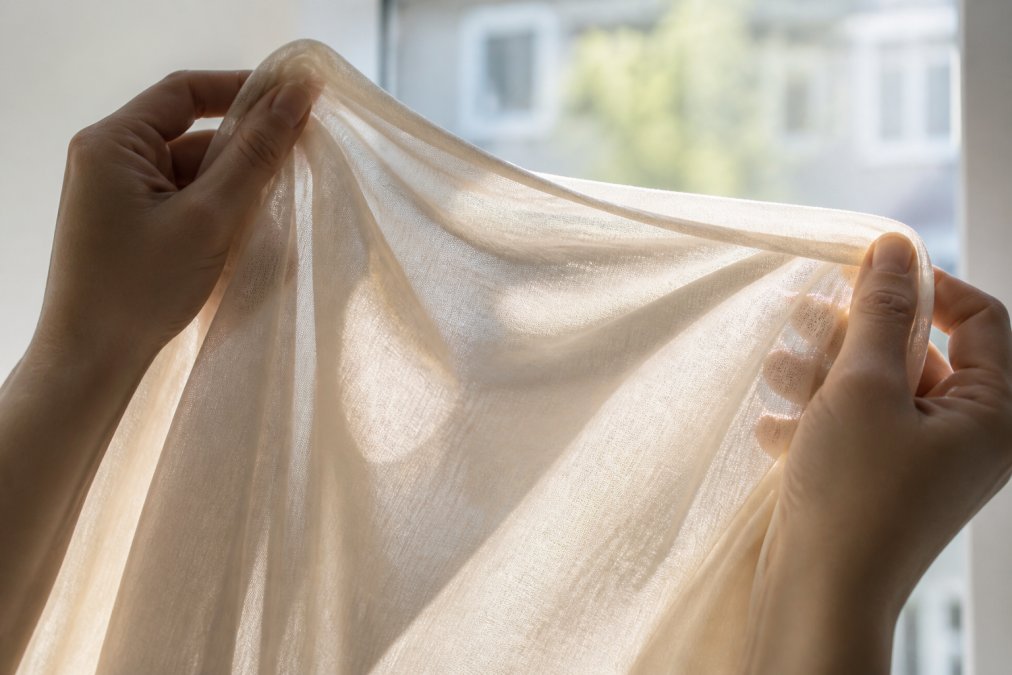
For designers sourcing breathable fabrics, New Creations Fabric & Foam Inc offers a range of lightweight, breathable options suited to layering and garment construction. Our wool dobby chiffon is a textured, breathable chiffon that works well for dresses, draping, and elegant overlays where airflow matters.

Real-World Testing vs Lab Ratings: What Actually Holds Up
Lab ratings give a baseline, but real-world performance often differs. A fabric scoring 15,000 g/m²/24h on an upright cup test may feel far less breathable under a backpack in humid conditions, because the vapor pressure gradient collapses.
Frequently Asked Questions
How does waterproof breathable fabric work?
Waterproof breathable fabric uses a membrane or coating with pores smaller than water droplets but larger than water vapor molecules. This lets sweat vapor escape while blocking liquid rain. The vapor pressure gradient between your warm body and the cooler outside air drives moisture through. Materials like ePTFE and polyurethane membranes achieve this, and laminate construction bonds them to the outer shell.
What is the difference between waterproof and water-resistant fabric?
Waterproof fabric keeps liquid out under sustained pressure, typically rated by hydrostatic head. Water-resistant fabric repels light rain briefly but saturates under pressure or after extended exposure. A DWR coating provides water resistance, while a membrane or sealed laminate delivers true waterproofing. For clothing worn in heavy rain, you need both a waterproof membrane and sealed seams.
Can you make waterproof fabric breathable?
Yes. Breathability comes from the membrane or coating structure, not the outer fabric. Microporous membranes allow moisture vapor transmission while blocking liquid water. Monolithic membranes use hydrophilic polyurethane to move vapor through chemical diffusion. You can also add ventilation features like pit zips to supplement the fabric's natural MVTR performance.
What is the MVTR rating for breathable fabrics?
MVTR, or moisture vapor transmission rate, measures how many grams of water vapor pass through a square meter of fabric in 24 hours. Values range from around 5,000 g/m²/24h for basic fabrics to over 20,000 for high-performance membranes. Higher numbers mean more breathability, but real-world performance also depends on temperature, humidity, and activity level.
How do you maintain breathability in waterproof clothing?
Wash your garment with a technical fabric cleaner to remove oils and dirt that clog pores. Avoid fabric softener and bleach. Reapply a durable water repellent (DWR) treatment when water stops beading on the surface. Store garments clean and dry. Over time, fabric degradation and DWR wear reduce performance, so periodic maintenance keeps breathability and weatherproofing working together.