

Table of Contents
- Quick Comparison: 10 Durable Fabrics at a Glance
- How We Evaluated These Durable Fabrics
- 1. Polyester Poplin: The Workhorse of Durable Fabrics
- 2. Cotton Polyester Broadcloth: Balanced Durability and Breathability
- 3. Neoprene Scuba: Structured, Thick, and Built to Hold Shape
- 4. Dull Stretch Crepe: Wrinkle-Resistant and Drape-Friendly
- 5. Royal Velvet: Heavy, Soft, and Long-Wearing
- 6. Broken Glass Sequin Velvet: Decorative Durability for Statement Pieces
- The Specs That Actually Decide Durability
- How to Source High-Quality Fabrics for Fashion Brands
- Technical Sewing Challenges to Plan For
- Which Durable Fabric Should You Choose?
- Frequently Asked Questions
Last Updated: September 28, 2026
Quick Comparison: 10 Durable Fabrics at a Glance
Choosing durable fabrics for professional fashion design starts with one hard question: will this material survive real wear, repeated cleaning, and the pressure of production deadlines? At New Creations Fabric & Foam Inc, we supply designers and manufacturers who need consistency across every roll, and fabric durability is the first thing we test for. This guide ranks 10 durable fabrics by structure, weight, and practical performance.
Durable fabrics are textiles engineered to resist abrasion, tearing, and shape loss through repeated use and cleaning. The strongest options combine tight weave density with stable fiber composition.
Here is the quick verdict before the detail:
| Fabric | Composition | Weight | Best For |
|---|---|---|---|
| Polyester Poplin | 100% spun polyester | 7 oz | Uniforms, high-wear apparel |
| Cotton Polyester Broadcloth | 80% poly, 20% cotton | 100 GSM | Shirting, uniforms, linens |
| Neoprene Scuba | 90% poly, 10% spandex | 350 GSM | Structured dresses, jackets |
| Dull Stretch Crepe | 95% poly, 5% spandex | Mid-weight | Bridal, draped garments |
| Royal Velvet | 100% polyester | Heavy | Upholstery, statement wear |
| Broken Glass Sequin Velvet | Stretch velvet, sequin | Mid-heavy | Eveningwear, costume |
What separates a garment that lasts five seasons from one that fails after three washes comes down to fiber composition, weave density, and how the finished cloth handles stress at the seam.

How We Evaluated These Durable Fabrics
Each fabric earned its place through measurable performance factors rather than marketing claims. We weighed abrasion resistance, tensile strength, wrinkle resistance, and how well each material holds color and shape after repeated laundering.
The framework below is the same one we use when sourcing for production clients.
- Fiber composition: Natural fibers, synthetic polymers, and blends each behave differently under stress. Blends often outperform single-fiber cloth.
- Weave density and GSM: Grams per square meter tells you how much material you are actually buying. Higher GSM generally means better tear resistance.
- Warp and weft integrity: A tight, balanced weave resists distortion better than a loose one.
- Finishing treatment: Textile finishing affects colorfastness, shrinkage, and wrinkle resistance.
- Seam strength: Even great cloth fails at weak seams, so garment construction matters as much as the fabric itself.
1. Polyester Poplin: The Workhorse of Durable Fabrics
Polyester poplin is the most reliable everyday choice for high-wear garments because its spun weave and tight structure resist pilling, staining, and repeated washing. Our Polyester Poplin is a 100% spun weave polyester, color-fastened, and rated at 7 ounces, which makes it one of the most durable fabrics we stock.
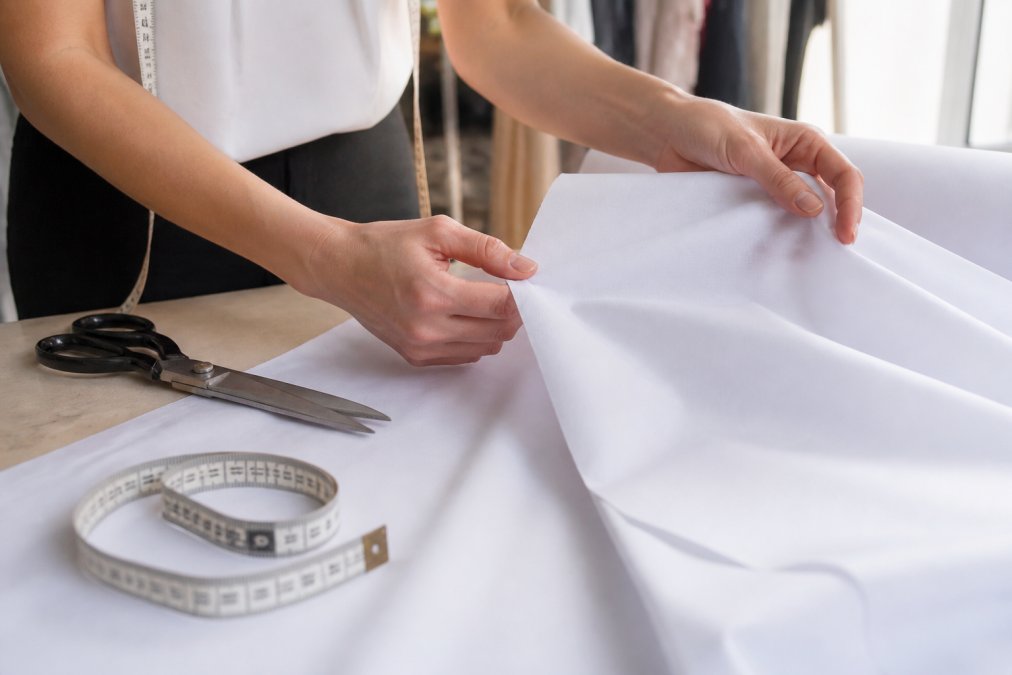
The specification matters more than the label. This poplin is engineered to be stain and wrinkle resistant and to hold its elegant look through more than 75 wash cycles while withstanding commercial cleaning chemicals. That makes it a natural fit for uniforms, workwear, and any garment that sees constant rotation.
Where it falls short: poplin has a crisp, flat hand-feel, so it will not give you the drape of a crepe or the softness of velvet. For structured, hard-wearing apparel, nothing at this price point comes close. It starts at $7.95 per yard.
2. Cotton Polyester Broadcloth: Balanced Durability and Breathability
Cotton polyester broadcloth solves the trade-off most designers face: 100% cotton wears out and wrinkles, while 100% polyester traps heat. This plain-woven blend balances both, and it is more affordable and durable than pure cotton.

Our Cotton Polyester Broadcloth runs 80% polyester and 20% cotton at 58 inches wide, 100 GSM, and 0.20 mm thick. It weighs roughly 4 ounces per linear yard.
The practical result is a smooth, crisp cloth that is easy to sew and breathable enough for everyday wear. It suits shirts, blouses, dresses, uniforms, and children's clothing, plus home décor like quilts, pillowcases, and table covers. Machine wash warm, tumble dry low, and skip the bleach to protect the color.
3. Neoprene Scuba: Structured, Thick, and Built to Hold Shape
Neoprene scuba holds architectural shape better than almost any other knit, which is why it dominates structured dresses, jackets, and costume work. Our Neoprene Scuba is 90% polyester and 10% spandex at 58 inches wide, and approximately 2 mm thick.
Sheer Liquid Chiffon Fabric 58” Wide by →
4. Dull Stretch Crepe: Wrinkle-Resistant and Drape-Friendly
Dull stretch crepe earns its place through wrinkle resistance and a dense, soft structure that drapes without clinging. Our Dull Stretch Crepe is 95% polyester and 5% spandex with 4-way stretch at 58 inches wide, and it resists creasing far better than woven alternatives.

5. Royal Velvet: Heavy, Soft, and Long-Wearing
Sewing takes a little care. Pre-wash the fabric, use a ballpoint or stretch needle to prevent skipped stitches, and stretch-stitch your seams so the thread moves with the fabric instead of snapping. It starts at $14.95 per yard.
6. Broken Glass Sequin Velvet: Decorative Durability for Statement Pieces
Broken Glass Sequin Velvet proves that decorative fabric can still be tough. The iridescent sequins sit on a stretch velvet backing that is ultra-soft and genuinely durable, so the sparkle survives movement and wear.
The Specs That Actually Decide Durability
Sustainable sourcing and lifecycle analysis increasingly shape buying decisions. Fabrics that hold their color and structure longer stay in use longer, which reduces waste across a garment's life. Durable blends support that goal without sacrificing performance.
How to Source High-Quality Fabrics for Fashion Brands
Sourcing reliable fabric is a supply chain problem as much as a design problem. The right supplier delivers consistent dye lots, continuous yardage, and stock you can count on across repeat orders.
A practical checklist for evaluating any fabric supplier:
- Confirm fiber composition and GSM in writing, not just verbally
- Ask how the mill tests for tensile strength, abrasion resistance, and colorfastness
- Request a physical swatch and wash-test it before ordering in bulk
- Verify that multi-yard orders ship as one continuous piece
- Ask about dye lot consistency across repeat orders
- Confirm stock depth for recurring production runs
- Check the return policy before committing to volume
Technical Sewing Challenges to Plan For
Every fabric on this list demands a specific approach at the machine, and ignoring those differences costs you finished garments. Matching needle, stitch, and presser foot to the material is what separates clean production from rework.
Which Durable Fabric Should You Choose?
Match the fabric to the job. Polyester poplin and cotton polyester broadcloth handle high-volume, high-wear apparel at the lowest cost per yard. Neoprene scuba and dull stretch crepe serve structured and draped designs that need shape retention. Royal velvet and broken glass sequin velvet deliver luxury and decoration without sacrificing longevity.
Frequently Asked Questions
What are the most durable fabrics for clothing?
Polyester poplin, cotton-polyester broadcloth, neoprene scuba, and stretch crepe rank among the most durable fabrics for clothing. Polyester poplin is colorfast and holds its look through more than 75 wash cycles. Cotton-polyester broadcloth at 100 GSM resists shrinking and fading better than 100% cotton. Neoprene scuba holds structure under repeated wear. Dull stretch crepe resists wrinkling and maintains its dense weave over time, making it a reliable choice for bridal and evening wear.
How do professional fashion designers evaluate fabric durability?
Designers check GSM (grams per square meter), fiber composition, weave density, and abrasion resistance before committing to a fabric. They also test seam strength, tear resistance, and colorfastness after repeated washing. Requesting swatch samples and wash-testing them in-house is standard practice before placing bulk orders for production runs.
Are synthetic or natural fibers better for long-lasting professional apparel?
Synthetic fibers like polyester and spandex often outperform natural fibers in abrasion resistance, wrinkle resistance, and colorfastness. Polyester poplin, for example, withstands repeated commercial laundering without fading. Blends like cotton-polyester broadcloth combine the breathability of cotton with the tensile strength of synthetic polymers. For luxury garments where drape and hand-feel matter most, natural fibers or high-quality blends still lead. The right choice depends on the garment's end use, not fiber origin alone.
Which fabrics offer the best balance of durability and drape for professional design?
Dull stretch crepe and wool dobby chiffon offer strong durability with elegant drape. Stretch crepe's dense weave resists wrinkles while its 4-way stretch lets it follow body contours in bridal and evening wear. Wool dobby chiffon adds textured depth. For structured pieces, neoprene scuba holds shape. For flowing designs, liquid chiffon flows beautifully. Matching drape to silhouette is the deciding factor.
How do I source high-quality fabrics for fashion brands without risking quality issues?
Start by requesting swatch samples and verifying GSM, fiber composition, and width before placing bulk orders. Ask about dye lot consistency, since colors ordered at different times may not match exactly. Confirm that multiple yards ship in one continuous piece to avoid seams in production. Work with suppliers who provide clear care instructions and consistent specifications. Building a relationship with a single trusted supplier reduces the risk of fraying, inconsistent drape, or color variation between rolls.
Sourcing fabric that performs identically across every roll is the challenge that decides whether a collection ships on schedule. New Creations Fabric & Foam Inc supplies fashion brands with fabrics built for consistency and refined finishes at production scale, from 7-ounce polyester poplin to 350 GSM neoprene scuba and broken glass sequin velvet. Explore Fabrics at New Creations Fabric & Foam Inc and get the yardage your next collection needs.