

Table of Contents
- What to Look for in a Fabric Sourcing Platform
- Polyester Poplin: The Workhorse of Bulk Fabric Suppliers for Fashion Brands
- Crystal Organza: Event Decor and Bridal Sourcing
- Cotton Canvas and Muslin: Durable Options for Structured Projects
- How to Vet Fabric Manufacturers Before You Commit
- Best Practices for Textile Procurement and Order Management
- Pricing, MOQs, and Logistics: What to Expect
- Conclusion
- Frequently Asked Questions
Last Updated: September 22, 2026
What to Look for in a Fabric Sourcing Platform
A review of best fabric sourcing platforms starts with one hard truth: the platform matters less than the verification behind it. The right sourcing partner gives you documented specs, real swatches, and consistent dye lots, not just a pretty product photo.
Three criteria separate serious platforms from storefronts:
- Quality control, published specs like GSM, fiber content, and width
- Material transparency, clear composition and care data
- Vendor verification, traceable mill relationships, not anonymous resellers
Quality Control, Material Transparency, and Vendor Verification
Quality control means testing each production run against written specifications, not eyeballing a photo. Ask for GSM, thread count, and shrinkage data before you commit.
Polyester Poplin: The Workhorse of Bulk Fabric Suppliers for Fashion Brands
Polyester poplin is the fabric most fashion brands order first: durable, affordable, and holds up to repeated washing.

Crystal Organza: Event Decor and Bridal Sourcing
Organza is the fabric event planners and bridal designers reach for when structure and shine both matter. Crystal organza holds its shape better than standard organza because of its nylon-polyester blend.

Cotton Canvas and Muslin: Durable Options for Structured Projects
Cotton canvas and muslin cover the two ends of the cotton spectrum: heavyweight structure and lightweight versatility.
| Fabric | Price/Yard | Weight | Best For |
|---|---|---|---|
| Polyester Poplin 60" | $7.95 | 7 oz | Uniforms, linings, volume apparel |
| Crystal Organza 60" | $8.95 | 40 GSM | Backdrops, bridal, table overlays |
| Crushed Organza 45" | $14.95 | Sheer | Layered decor, costumes, runners |
| Cotton Duck Canvas 58" | $12.95 | 315 GSM | Totes, upholstery, banners |
| Unbleached Muslin | $6.99 | Medium | Quilting, pattern making, crafts |
How to Vet Fabric Manufacturers Before You Commit
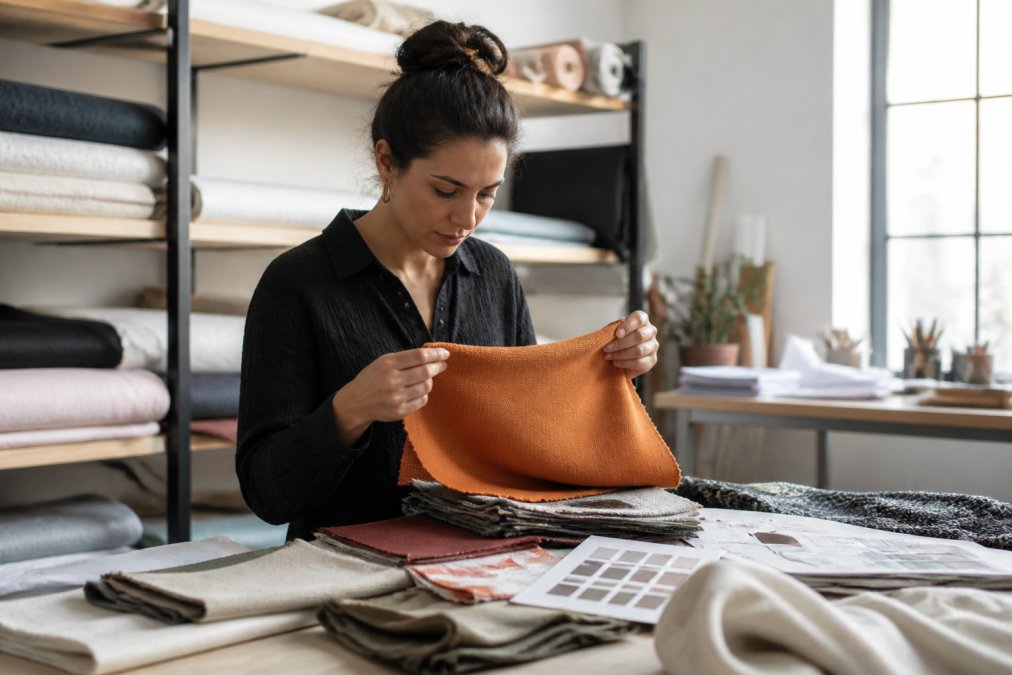
Vetting a fabric manufacturer comes down to three checks: documented specs, sample procurement, and traceable shipping origin, plus, for B2B buyers, a paper trail you can enforce if the order fails.

Certification and Compliance Verification
Certifications are the fastest way to shortcut supplier vetting, but only if you verify them at the source rather than trusting a logo on a listing.
- OEKO-TEX Standard 100 tests finished textiles for harmful substances. The certificate has a number you can look up in the OEKO-TEX buying guide to confirm the mill, the product class, and the expiry date.
- GOTS (Global Organic Textile Standard) covers organic fiber content plus social and environmental criteria across the supply chain. A GOTS claim requires a transaction certificate for the specific shipment, not just a company-level certificate.
- REACH is the European Union's chemical regulation, but it matters for U.S. importers because many mills ship to both markets. Ask for a REACH compliance statement or SVHC (Substances of Very High Concern) declaration if your product touches skin.
- CPSIA governs children's apparel sold in the United States, including lead and phthalate limits. If you source fabric for kids' wear, request CPSIA test reports from a CPSC-accepted lab.
Post-Purchase Dispute Resolution
This is the step most sourcing guides skip, and where B2B buyers lose the most money. Before you place a bulk order, know what happens when the fabric arrives off-spec.
-
Define "off-spec" in the purchase order. State the acceptable tolerance for GSM, width, shade, and shrinkage. Without a written tolerance, a mill can argue that a 6% weight variance is "within normal range."
-
Agree on the remedy up front. Standard options are replacement, credit, or refund. Replacement is common for shade and weight issues; credit is common for minor width shortfalls.
-
Use a third-party inspection for large orders. Firms like SGS, Bureau Veritas, and Intertek perform pre-shipment inspections and issue reports you can use in a dispute.
-
Pay through a method with recourse. Credit card chargebacks and letters of credit give you leverage that a wire transfer does not. For first orders with a new mill, a letter of credit or escrow service is worth the fee.
-
Document everything. Photos of the shipment, the packing list, the inspection report, and the original spec sheet are the evidence file if the dispute escalates.
-
Request physical swatches, not just photos
-
Confirm fiber content and GSM in writing on the PO
-
Verify certifications at the issuing body, not the listing
-
Match certificate scope to the specific fabric and dye lot
-
Define off-spec tolerances and remedies in the PO
-
Verify the shipping origin and facility location
-
Ask about dye lot consistency across reorders
-
Test a small production run before scaling
Best Practices for Textile Procurement and Order Management
Inventory management matters too. Keep a running count of what's on hand versus committed to production; scalability depends on knowing your fabric position at all times, not guessing.
Pricing, MOQs, and Logistics: What to Expect
Pricing on fabric sourcing platforms is usually quoted per yard, with volume breaks at defined quantity tiers. What matters for your P&L is landed cost, not the quoted per-yard price.
MOQ Tiers by Production Scale
Minimum order quantities are not one number, they scale with the production model you're running. Most platforms fall into three tiers:
- Sample and small-batch (1-50 yards). Online retailers sell by the yard with no minimum. This is the right tier for sampling, small-batch drops, and made-to-order brands. Per-yard price is highest here.
- Boutique production (50-500 yards). Some domestic mills and converters will quote at this tier, often with a 10-20% discount off the cut-yard price. MOQs are usually stated in rolls, not yards.
- Mass production (500+ yards, often 1,000+). Direct mill relationships kick in. MOQs are typically expressed in meters or in full dye lots, and pricing is negotiated per order. Custom development (lab dips, strike-offs, bulk lot approval) becomes available at this tier.
Landed Cost: The Real Price
The quoted per-yard price is only the first line of your landed cost. Add:
- Freight. Domestic ground shipping is fast and predictable. Ocean freight is cheaper per unit but adds 20-40 days of transit plus port and drayage fees.
- Import duties. Rates depend on the fiber content and the HTS code. The U.S. Customs and Border Protection import guidance outlines duties and documentation for imported textiles. Cotton and synthetic rates differ, and finished goods can carry a different rate than greige fabric.
- Customs brokerage and paperwork. A broker typically charges a flat fee per entry plus a bond. Missing documentation can trigger storage fees that dwarf the brokerage cost.
- Inspection and testing. Third-party inspection and any required CPSIA or flammability testing are line items, not afterthoughts.
- Shrinkage and waste. If a fabric shrinks 5% in finishing, you need to buy 5% more to hit your cut yield. Build that into the order quantity.
Logistics and Lead Time Planning
Domestic suppliers ship faster and avoid customs delays, which matters when a deadline is tight. International sourcing can lower unit cost but adds lead time and paperwork; for a first order with a new overseas mill, plan on 60-90 days from PO to delivery and buffer for port congestion and customs holds.
For most brands, the real cost of sourcing isn't the per-yard price. It's the delay cost of a missed shipment, and the write-off when an off-spec roll can't be used.
PLM Integration: Where Sourcing Meets Your Workflow
Most sourcing guides stop at the purchase order. Professional design teams run sourcing through a Product Lifecycle Management (PLM) system so fabric specs, supplier records, and cost data live alongside the tech pack.
- Pull live fabric specs into a tech pack without retyping them
- Track landed cost per style as fabric prices change
- Flag a supplier whose certificate has expired before the next PO goes out
- Compare quotes across suppliers on a normalized spec sheet
Conclusion
Consistent fabric supply is the difference between a brand that scales and one that stalls. The Small Business Administration's supplier management resources recommend treating supplier relationships as long-term partnerships, not one-off transactions.
Frequently Asked Questions
What should designers look for when choosing a fabric sourcing partner?
Start with material transparency: request exact fiber content, fabric weight (GSM), and width before ordering. Check whether the supplier provides swatches and ships multiple yards as one continuous piece. Look for certifications like Oeko-Tex Standard 100, which confirms the fabric has been tested for harmful substances. Also confirm minimum order quantities, lead times, and whether the supplier can handle recurring bulk orders. A partner that communicates clearly about dye lot variations and stock availability will save you production headaches.
How do I verify the quality of fabric from online sourcing platforms?
Order swatches first. Reputable platforms let you buy small cuts so you can check drape, weight, and color in person before committing to bulk. Compare the swatch against the listed specifications: a fabric advertised as 315 GSM canvas should feel substantially heavier than a 40 GSM organza. Ask about the supplier's quality control process and whether they inspect for fraying, inconsistent dye, or pilling. For critical orders, request a sample from the same dye lot you plan to purchase.
What are the most reliable fabric sourcing platforms for bulk orders?
Reliability comes down to consistent stock, clear pricing, and the ability to ship continuous yardage. Platforms that sell by the yard or by the roll, publish exact specifications, and offer wholesale pricing for larger volumes tend to work best for production. New Creations Fabric & Foam Inc, for example, ships multiple yards in one continuous piece and stocks fabrics like 10 oz cotton duck canvas at $12.95 per yard, which suits bulk procurement. Always confirm current stock levels before placing a large order.
How do sourcing platforms compare to traditional fabric wholesalers?
Traditional wholesalers often require high minimums and operate through sales reps, which slows down sampling. Online sourcing platforms typically offer lower or no minimums, instant pricing, and faster sample procurement. The trade-off is that you cannot inspect fabric in person before buying, so swatch ordering becomes essential. For small-batch and independent designers, online platforms remove the barrier of large upfront commitments while still offering wholesale rates on bulk orders.