

Table of Contents
- Linen vs Linen Blend for Apparel: The Core Differences
- Linen Cotton Blend Benefits for Summer Apparel
- Wrinkle Resistance of Linen Blends and Garment Care
- How to Identify High-Quality Linen Fabric Before You Buy
- Durability, Dye Retention, and Long-Term Performance
- Cost Comparison and Best Use Cases for Apparel
- Frequently Asked Questions
Last Updated: September 23, 2026
Linen vs Linen Blend for Apparel: The Core Differences
Walk through any fabric showroom and you will spot the split fast. Pure linen has a look all its own, while linen blend fabric trades some of that texture for easier care. The choice between linen vs linen blend for apparel comes down to four things: fiber content, breathability, wrinkle behavior, and price. New Creations Fabric & Foam Inc provides a diverse range of high-quality fabrics tailored to meet the creative and production demands of modern fashion brands.
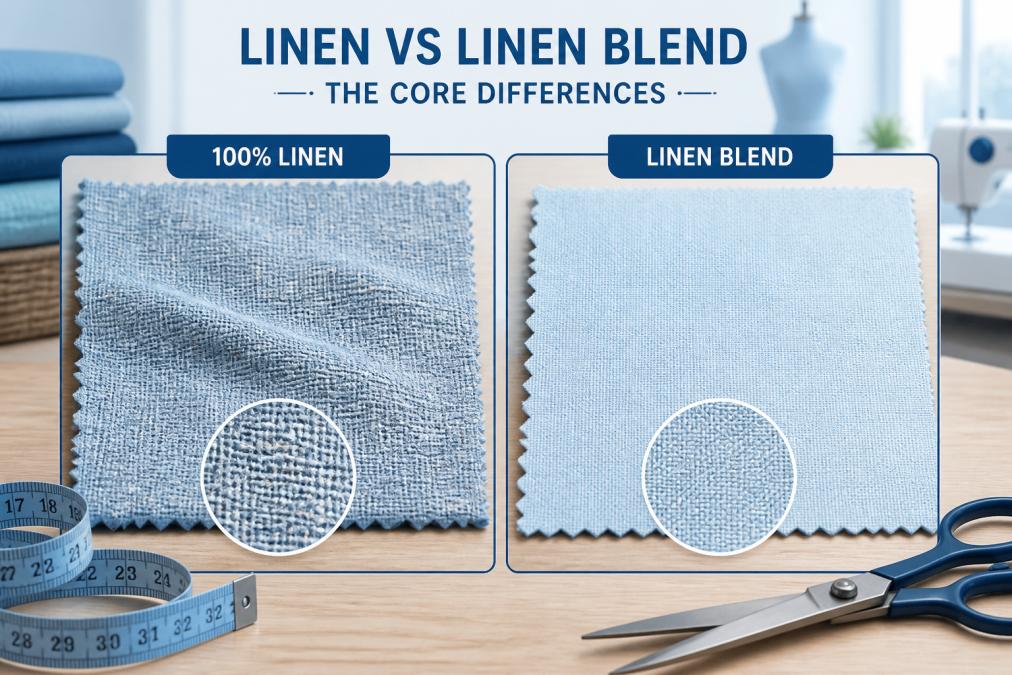
100% linen is a woven fabric made entirely from fibers of the flax plant.
What Is 100% Linen?
Pure linen comes from flax, a plant grown for its long, strong fibers. Those fibers form natural fibers that breathe well and pull heat away from the skin. The weave leaves small gaps that let air move through, which is why linen has a cool, dry feel in warm weather. It also absorbs water quickly and releases it fast. The trade-off is wrinkles.
What Is a Linen Blend?
A linen blend pairs flax with a second fiber to fix what pure linen lacks. Cotton-linen softens the hand-feel and cuts cost. Rayon adds drape and a smoother surface. Polyester boosts crease resistance and helps the fabric hold its shape after washing. Each blend shifts the balance. A blend with more flax keeps the linen look. A blend with more cotton or rayon reads softer and more casual.
Linen Cotton Blend Benefits for Summer Apparel
The linen cotton blend benefits show up most in summer clothing. Cotton softens the crisp edge of flax, so the fabric feels gentler against skin. It also costs less than pure linen, which matters when you scale a summer line. Breathability stays high because both fibers are plant-based and absorb moisture. The blend resists shrinking better than pure cotton and wrinkles less than pure linen.
Breathability and Moisture-Wicking Compared
Pure linen wins on airflow. Its loose weave and hollow flax fibers move air and wick sweat faster than most fabrics. A cotton-linen blend comes close, with slightly less airflow but a softer feel. Add polyester and breathability drops, though crease resistance climbs. For hot, humid climates, lean toward a blend with more flax. For mild summers and everyday wear, a cotton-heavy blend works well.
Wrinkle Resistance of Linen Blends and Garment Care
Wrinkle resistance in a linen blend is not just about which fiber you add, it is about how that fiber interacts with moisture, and how the fabric is constructed. Understanding the mechanism helps you predict performance before you cut a single yard.
How each blend fiber changes the equation.
- Polyester is thermoplastic with high elastic recovery. It springs back to its original shape after bending, so a poly-linen blend resists creasing the most. The trade-off is lower breathability and a slightly slicker hand.
- Rayon (viscose) is also cellulose, so it creases, but its longer, smoother filaments drape and recover differently than flax. A rayon-linen blend creases less sharply than pure linen and hangs softer.
- Cotton is cellulose too, with moderate resiliency. A cotton-linen blend wrinkles a bit less than pure linen but still creases; the gain is softness, not crease resistance.
Ironing Requirements and Crease Resistance
Pure linen needs ironing if you want a flat finish. Iron it damp on a medium setting (around 300°F / 150°C), the moisture helps the cellulose chains relax and re-form flat. Or skip the iron entirely and keep the natural wrinkled texture, which many designers treat as a feature.
| Fabric Type | Ironing Need | Crease Resistance | Best Care Move |
|---|---|---|---|
| 100% linen | High, iron damp | Low, wrinkles fast | Hang dry, embrace texture |
| Cotton-linen | Medium | Medium | Machine wash cool, light iron |
| Rayon-linen | Low | Medium-high | Hang dry, skip iron |
| Poly-linen | Low | High | Machine wash, minimal iron |
How to Identify High-Quality Linen Fabric Before You Buy
Knowing how to identify high-quality linen fabric saves you from bad batches. Start with the fiber content tag. A high flax percentage means more linen character. Next, feel the cloth. Good linen feels cool and dry, with a slight roughness that softens after washing. Hold it to the light. A tight, even weave signals better weave density and fewer weak spots.
Rayon Natural Linen Fabric 50" Wide →
Fabric Weight, GSM, and Weave Density
Fabric weight tells you how a linen will behave, and most spec sheets list it in grams per square meter (GSM). Lightweight linen under about 150 GSM suits summer shirts and dresses. Medium weight around 150 to 250 GSM works for pants, skirts, and structured tops. Heavyweight linen above 250 GSM fits jackets and home decor. Weave density matters just as much. A tighter weave blocks light and resists fraying.
Durability, Dye Retention, and Long-Term Performance
Linen is one of the strongest natural fibers, and it gets softer with every wash. That tensile strength is why linen garments often outlast cotton ones. Blends vary. A cotton-linen blend holds up well but may pill over time. A poly-linen blend resists abrasion but can feel less breathable. Dye retention is the quiet factor most buyers miss. Flax takes dye well, but it can fade with harsh detergents and direct sun.
Cost Comparison and Best Use Cases for Apparel
Cost in linen vs linen blend comes down to fiber processing, not just fiber type. Flax requires retting, scutching, and hackling, labor-intensive steps that separate the long fibers from the woody stalk. That processing is why pure linen typically costs more per yard than cotton, rayon, or polyester. A blend dilutes that cost because the second fiber is cheaper to produce and process.
What drives the price gap.
- Fiber origin and processing. Long-line flax for fine linen costs more than short-staple cotton or mass-produced polyester. European flax (grown largely in France, Belgium, and the Netherlands) carries a premium because of fiber quality and traceability.
- Yarn count. Finer yarns (higher yarn count) cost more to spin and weave. A 100% linen in a fine count for shirting will cost more than a heavier linen in a coarse count for home decor.
- Blend ratio. A 55% linen / 45% cotton blend costs less than a 70% linen / 30% cotton blend because less flax is used. If you need the linen look at a lower price point, a lower flax percentage is the lever.
- Finish and pre-treatment. Pre-shrunk, garment-washed, or enzyme-softened fabrics cost more than greige goods because of the extra processing.
Use cases by scenario, not just garment type.
- Hot, humid climates (e.g., Gulf Coast summers): 100% linen or a high-flax cotton-linen blend. Maximum airflow and moisture wicking matter more than crease resistance.
- Travel and business travel: Poly-linen or rayon-linen. Crease resistance and easy wash-and-hang care beat the premium look of pure linen when you are living out of a carry-on.
- Formal and occasion wear: 100% linen in a heavier weight (200-250 GSM) with a tight weave. The crisp hand and structured drape read more premium than a soft blend.
- Everyday casual and kids' wear: Cotton-linen. Soft, breathable, machine-washable, and forgiving on price.
- Resort and flowy dresses: Rayon-linen. The drape and smooth hand-feel suit silhouettes that need movement.
| Use Case | Best Fabric | Why |
|---|---|---|
| Summer shirts | Cotton-linen | Breathable, soft, low cost |
| Flowy dresses | Rayon-linen | Drape, smooth hand-feel |
| Travel wear | Poly-linen | Crease resistance, easy care |
| Formal wear | 100% linen | Crisp look, premium feel |
| Humid climate | 100% linen or high-flax blend | Max airflow and wicking |
| Kids' clothing | Cotton-linen | Soft, washable, affordable |
Frequently Asked Questions
Which is better, 100% linen or a linen blend?
Neither is universally better; it depends on your priority. Pure linen offers maximum breathability and a natural texture that many buyers seek. A linen blend, such as a cotton-linen or rayon-linen mix, reduces wrinkling and often costs less. For summer apparel where airflow matters most, pure linen excels. For professional wear or travel pieces where crease resistance is key, a linen blend is the practical choice.
Is a linen blend still as breathable as pure linen?
A linen blend retains much of linen's breathability, but the exact level depends on the fiber content. A blend with 55% linen and 45% cotton still allows strong airflow and moisture-wicking. Blends with a higher percentage of synthetic fibers like polyester reduce breathability noticeably. Check the fiber content label: the higher the linen percentage, the closer the fabric performs to pure linen in thermal regulation and comfort.
How do linen blends affect garment durability and wrinkle resistance?
Blending linen with fibers like cotton, viscose, or polyester improves wrinkle resistance because those fibers help the fabric spring back after creasing. Durability also improves in some blends, particularly cotton-linen, which has strong tensile strength. However, blends with weak fibers can reduce longevity. A well-constructed cotton-linen blend often outlasts pure linen in frequent-wear garments because it resists abrasion and holds its shape better over time.
Does a linen blend require different care than 100% linen?
Yes, care requirements differ. Pure linen typically needs gentle machine washing, hanging to dry, and either accepting its natural wrinkles or ironing while damp. Linen blends may be more forgiving: some can tolerate a standard wash cycle and require less ironing. Always check the care label. For the Rayon Natural Linen Fabric from New Creations Fabric & Foam Inc., machine wash normally, medium temperature. Wash with similar colors. Do not bleach. Hang to dry. Do not iron to maintain a beautiful wrinkled texture and natural look. If you prefer a smooth look - iron damp.