

Last Updated: November 18, 2026
Quick Summary
Luxury fabric trends for corporate events center on tactile textures like velvet, chenille and bouclé, metallic and sequined accents, and draping fabrics chosen for weight, drape and finish. Planners increasingly treat textiles as a strategic part of the experience, since fabric shapes how a room feels before anyone speaks.
- Tactile fabrics such as chenille, plush velvet and bouclé are increasingly used in shared commercial spaces.
- Sequin mesh adds controlled sparkle; the Feather Damask Sequin Stretch Mesh is priced at $29.95 per yard.
- Backdrops for projection need matte, light-colored, tightly woven fabric with no sheen.
- Compare total cost per use, including cleaning, storage and repair, rather than unit price alone.
- Confirm the certificate names the venue's fire standard and test method before buying flame-retardant fabric.
Table of Contents
- The Luxury Fabric Trends Defining Corporate Events Right Now
- Luxury Event Draping Fabric: Choosing Weight, Drape and Finish
- Fabric for Corporate Event Backdrops: Projection, Lighting and Visual Impact
- Event Tablecloth Fabric: Matching Durability to Use
- Performance Fabrics for Events: Fire Safety, Reuse and Total Cost
- Building Your Corporate Event Fabric Plan with New Creations
- Frequently Asked Questions
Corporate events have stopped being a place where fabric is an afterthought. Planners and brand teams increasingly treat textiles as a core part of the experience, because the material on the walls, tables and stage shapes how a room feels before anyone speaks. Choosing the right luxury fabric is now a strategic decision, and the luxury fabric trends shaping events make that choice matter even more.
Below, we walk through the nine trends shaping corporate event fabric right now, and what each one means for choosing a material you can actually produce with.
The Luxury Fabric Trends Defining Corporate Events Right Now
Luxury in event fabric is no longer just about shine. Buyers look for texture that rewards close inspection, color that reads well under stage lighting, and materials that can be reused across several events. Those priorities drive the trends below.
Tactile fabrics such as chenille, plush velvet and bouclé are increasingly used in shared commercial spaces.
Tactile Upholstery Textures: Velvet, Chenille and Bouclé
Velvet, chenille and bouclé give a room depth that flat fabrics cannot. Guests notice them at the seat, the table and the wall, which makes them useful for lounge areas and VIP zones at corporate functions. For a deeper side-by-side look at these choices, see our satin vs velvet comparison.
Pros: strong visual richness, a sense of comfort and quality, and a texture that photographs well. Cons: heavier pile can show wear, dust and crushing, and it needs careful handling between events.
For event decor, velvet pairs well with sheen in adjacent elements, which keeps the palette from feeling heavy.
Metallic and Sequined Accents
Sequin mesh adds controlled sparkle without covering a whole room. Our Feather Damask Sequin Stretch Mesh Fabric by the Yard 54" Wide, priced at $29.95, is a clear example: its iridescent sequins add a shimmering finish that suits evening receptions and gala-style dinners.
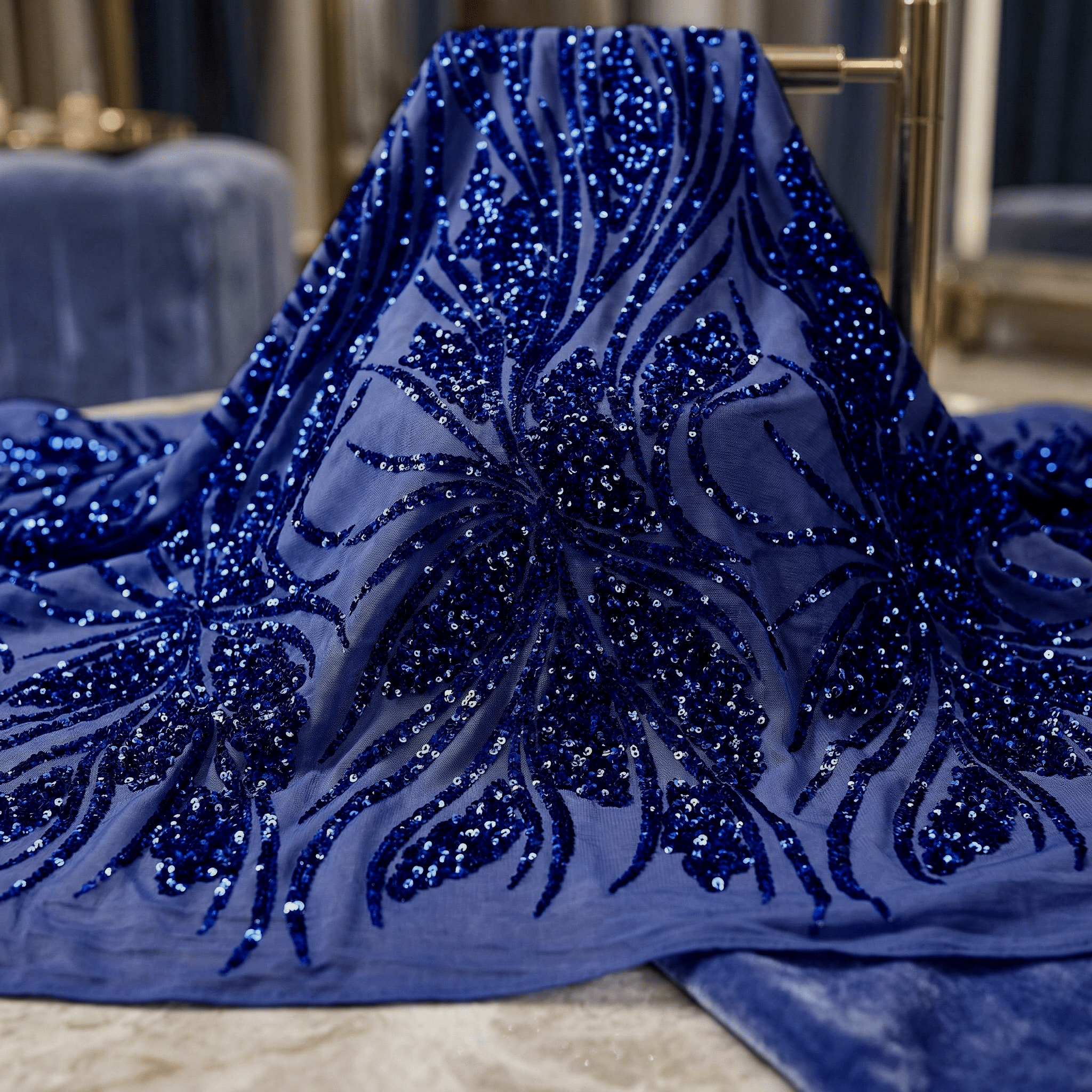
Pros: dramatic light response, strong brand-moment potential, and flexibility when stretch mesh is used. Cons: sequins shed, so the fabric needs gentle handling and is better used as an accent than as full-room coverage.
Our King Damask Sequin Stretch Mesh Fabric, at $22.95, offers a bolder royal pattern for buyers who want a more pronounced statement.
Luxury Event Draping Fabric: Choosing Weight, Drape and Finish
Draping is where many events succeed or fail. A fabric that hangs well creates clean lines, while a stiff one looks like it was pinned up in a hurry. Weight determines how the fabric falls, and finish determines how it catches light.
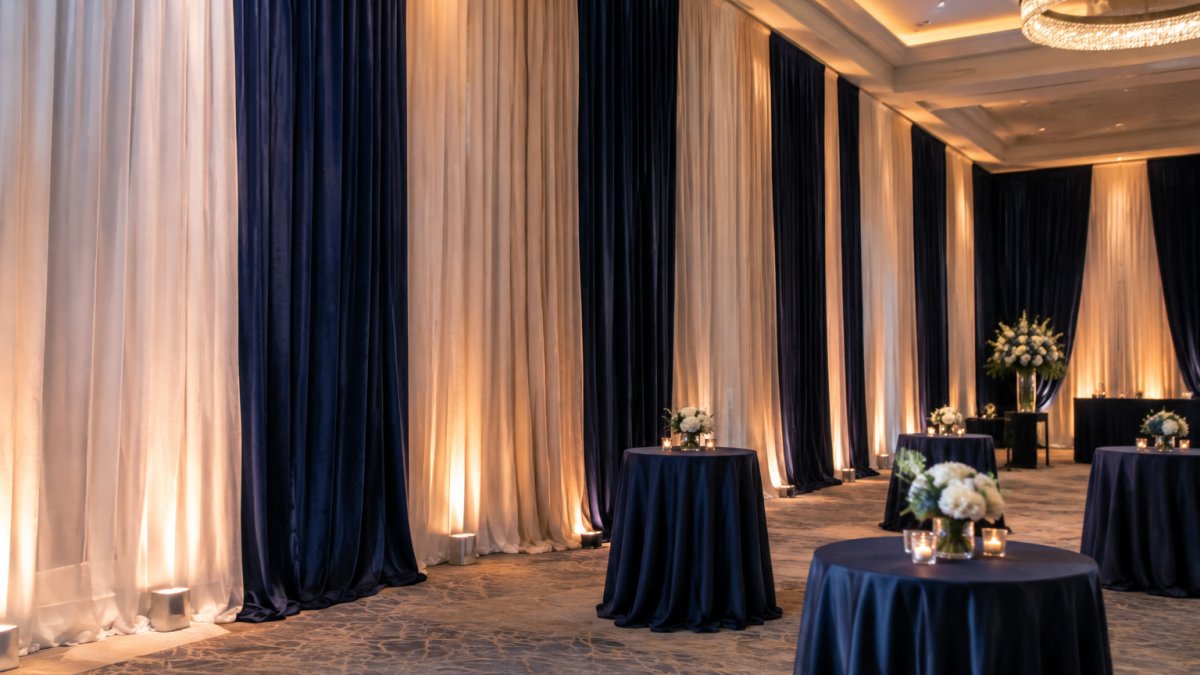
Our Cheesecloth Cotton Gauze Table Runner, 5 yards by 48" wide at $39.95, shows how a lightweight, reusable gauze can create a flowing, layered look across long tables.
Fabric for Corporate Event Backdrops: Projection, Lighting and Visual Impact
A backdrop is the one fabric surface that has to perform for three audiences at once: the people in the room, the cameras recording the general session, and the projector throwing content onto it. Those three audiences want different things from the same material, which is why backdrop fabric selection is a production decision, not a décor decision.
Match the Fabric to the Backdrop Job
There are four common backdrop jobs, and each points to a different fabric family:
- Projection surface. A front-projection backdrop needs a matte, light-colored, tightly woven fabric with high diffuse reflectance and no sheen. Spandex and stretch polyester in white or light gray are common because they stretch taut, resist wrinkles, and read evenly. Avoid velvet, sequin, and satin here, their pile or sheen creates hot spots and uneven gain.
- Branded printed backdrop. A dye-sublimation print on a matte poly-knit or stretch fabric gives the most color-accurate result under stage lighting. Ask for a printed sample under the venue's actual color temperature before approving a large run.
- Dimensional or textured backdrop. Velvet, chenille, and bouclé create depth and absorb light, which is flattering for photography but can look muddy on camera if the stage is underlit. Use them as side panels or layered accents rather than the primary camera background.
- Sheer or layered backdrop. Sheers and gauze layered over a solid backing give softness and depth and hide rigging. They also diffuse light, which can help if the stage has harsh sources.
Lighting, Color Rendering, and Camera Performance
Stage lighting is rarely neutral. Tungsten, LED, and daylight-balanced sources render the same fabric differently, and a color that looks rich to the eye can shift green or gray on camera. Two practical rules: test a swatch under the venue's actual fixtures and camera white balance, and avoid highly saturated colors next to skin tones on camera. Matte finishes reduce glare and specular highlights; shimmer and metallic fabrics add motion but can blow out highlights on video. If the event is being streamed or recorded, prioritize matte, mid-tone fabrics for the primary background and reserve shine for accents outside the camera frame.
Sound, Rigging, and Installation
Heavy velour and commando cloth absorb sound and reduce stage echo, which matters for panel discussions and awards programs. Lightweight sheers do little acoustically. On the rigging side, backdrop fabric weight drives hardware: a floor-to-ceiling velvet drape may need truss and counterweight that a stretch-fabric backdrop does not. Confirm the venue's rigging rules and weight limits before specifying a heavy fabric, and order 10-15% extra yardage for seams, hems, and repairs.
Event Tablecloth Fabric: Matching Durability to Use
Tablecloths face spills, repeated laundering and frequent handling. For a single evening, a delicate sheer may be enough. For a recurring series of events, choose a fabric that survives reuse. Our guide to selecting event tablecloth fabric walks through the options. The cheesecloth runner above is well suited to layering over a base cloth on long tables, while sequin mesh works best as a centerpiece accent rather than full table coverage.
The article's guidance on tablecloth fabric comes down to matching the material to how often it will be used and handled.
| Fabric | Best for | Key difference |
|---|---|---|
| Cheesecloth cotton gauze runner | Layering over a base cloth on long tables | Lightweight, reusable gauze |
| Sequin stretch mesh | Centerpiece accent | Sheds sequins, not for full coverage |
| Delicate sheer | Single evening events | Enough for one-off use only |
| Fabric for recurring series | Multiple events over time | Must survive laundering and reuse |
Performance Fabrics for Events: Fire Safety, Reuse and Total Cost
Performance fabric for corporate events is judged on three things: whether it can legally hang in the venue, whether it survives the run of the event series, and whether the total cost per use beats a cheaper alternative. Most planners focus on the third and discover the first two the week of the event.
Fire Safety and Venue Compliance
Watch out: a fabric labeled "flame retardant" is not automatically compliant with the venue's specific standard, the certificate must name the standard and the test method, and some venues reject certificates older than a set period or issued to a different fabric lot. Read what flame retardant fabric offers to understand these benefits.
Reuse, Cleaning, and Storage
Reuse is where performance fabric earns its premium. Ask your supplier for care instructions and expected wash cycles before you commit to a multi-event purchase. Our guide to choosing durable fabrics explains how to weigh these factors.
Total Cost of Ownership
Unit price is the least useful number in the decision. Build a cost-per-use model: (purchase price + cleaning + storage + repair + disposal) ÷ realistic number of events served. A $30-per-yard sequin mesh used once as an accent may cost more per use than a $60-per-yard IFR velvet that serves eight events. Rental is a legitimate alternative for one-off galas, compare the rental quote against purchase-plus-storage for the number of events you actually have booked, not the number you hope to book. Factor in labor: heavier fabrics need more installers and rigging, and that labor is part of the true cost.
A common pattern is that the fabric line item is 10-20% of the décor budget while install labor, rigging, and cleaning are the rest, so a slightly more expensive fabric that installs faster and cleans more easily often wins on total cost.
Building Your Corporate Event Fabric Plan with New Creations
A good plan starts with the venue, then moves to lighting, then to budget. Sample each candidate under real conditions, order a little extra for repairs, and plan reuse from the start.
Frequently Asked Questions
What are the new fabric trends for 2026?
Tactile upholstery-style textures lead current interest: chenille, plush velvet and bouclé are gaining momentum in commercial interiors, . Event trend commentary also points to velvet, satin and layered linens for weddings and corporate events. Metallic and iridescent sequin finishes are showing up across both luxury event decor and fashion. Trend pages rarely publish verified adoption figures, so treat them as direction rather than measured demand, and confirm any trend with a sample swatch before committing a large order.
Which fabrics work best for corporate event backdrops and draping?
For backdrops and draping, choose fabrics that balance weight, opacity and finish.
What is the best fabric for elegant event tablecloths?
Elegant event tablecloths usually work best in a fabric with a soft drape and a finish that hides wear. The New Creations Cheesecloth Cotton Gauze Table Runner, at $39.95 for 5 yards at 48 inches wide, is an example of a layering piece that adds length and softness to head tables.
How do you choose durable luxury fabric for a corporate event?
Start with how often the fabric will be handled, cleaned and reused. Plan for at least one full setup and teardown per event, and ask for samples to test shedding and fraying. Sequin fabrics such as the New Creations Feather Damask Sequin Stretch Mesh, $29.95 per yard at 54 inches wide, should be handled carefully, as minimal sequin shedding is normal and care instructions call for hand washing or gentle cold washing and laying flat to dry.
