

Table of Contents
- Understanding the Fabric Supply Chain for Design Production
- How to Find Reliable Fabric Suppliers
- Best Wholesale Fabric for Fashion Brands
- Managing Fabric Lead Times and Inventory
- Material Procurement and Sourcing Strategies
- Quality Assurance and Lab Testing Standards
- Technology and Supply Chain Visibility
- Crisis Management and Contingency Planning
- Frequently Asked Questions
Last Updated: September 1, 2026
Understanding the Fabric Supply Chain for Design Production
Managing fabric supply chain for designers is the foundation of every successful brand. Without it, you face lead time uncertainty, quality inconsistencies, and production delays that can collapse a season's plans.
The fabric supply chain spans from raw material sourcing through finished inventory, with dozens of decision points along the way. Each step compounds either your efficiency or your problems. A delay in procurement cascades into production bottlenecks. A quality issue discovered mid-production becomes a crisis. The brands that win have built systems to move fabric reliably from supplier to production to customer.
At New Creations Fabric & Foam Inc, we work with designers across every production scale. Managing fabric supply chain for designers requires sourcing strategies built for your actual production volume, visibility into lead times before committing to deadlines, and relationships with suppliers who understand that a missed delivery is a business threat.
This guide covers the full cycle: finding reliable suppliers, evaluating quality standards, managing inventory against demand forecasts, and building contingency plans for when things go wrong. The goal is predictability.
How to Find Reliable Fabric Suppliers
Finding the right fabric supplier is where most designers stumble. They chase the lowest price, discover the fabric arrived nothing like the swatch, and then spend months rebuilding trust with a new vendor.
Start by defining what "reliable" means for your business. Are you ordering 100 yards per style or 10,000? Do you need specialty fabrics or standard cottons? Will you reorder the same fabric repeatedly or source different materials each season? Your answer determines which suppliers are viable.
Evaluating supplier credentials and certifications
Credentials tell you a supplier has been vetted, passed audits, maintains quality standards, and is unlikely to disappear overnight. Look for OEKO-TEX or GOTS certifications if sustainability matters to your brand (oeko-tex.com). If manufacturing for retail, verify they meet your retailers' compliance standards.
But credentials don't guarantee they'll work well with you specifically. A supplier with perfect credentials might have minimum order quantities that don't fit your model or lead times that conflict with your calendar.
Ask suppliers directly: What's the minimum order? What's the typical lead time? Do they offer lab testing reports? Can they provide color-matched reorders six months later? Can they handle rush orders, and at what cost? Their answers reveal whether they actually serve designers like you.
Building long-term supplier partnerships
One-off purchases are expensive. You'll pay higher per-yard prices, wait longer for delivery, and have less recourse when problems occur. Suppliers invest in relationships they expect to repeat.
Start by placing a small order to test quality, delivery speed, and communication. Pay on time and give clear feedback. If they perform, signal interest in a longer relationship. Share your production calendar and typical order volumes. Ask about volume discounts or faster lead times for repeat customers.
The best partnerships are built on transparency. Let your supplier know about planned growth so they can reserve inventory. Tell them about production bottlenecks so they understand rush order needs. When you have options, choose the supplier who asks questions about your business.

Best Wholesale Fabric for Fashion Brands
"Best wholesale fabric" means different things depending on your use case. The framework is the same: match the fabric to the garment, match the supplier to your volume, and verify quality before committing production.
Quality standards for apparel production
Quality in fabric is measurable. Before ordering in production volume, establish what you're actually buying.
Weight and hand are the first checks. Order a sample large enough to make a test garment. Wash it the way your customers will. Does it shrink? Does the color shift? Does the hand change? If yes and you didn't expect it, you'll face that problem at scale.
Seam slippage is common with looser weaves. Test whether threads slide under stress if your fabric will be sewn with tight seams. Color fastness matters if your fabric will see water, sun, or friction. Lab testing prevents expensive recuts later.
New Creations Fabric & Foam Inc's Ivory Muslin natural 100% cotton fabric at $9.99 per yard works well for pattern makers and sample development. For production-ready materials, the Solid 100% Cotton Fabric 58" Wide at $12.95 per yard delivers consistency across yardage, critical when cutting multiple sizes from the same bolt.


Specialty fabrics for custom collections
Custom collections demand fabrics that stand apart. Sequins, velvet, and faux fur require longer lead times and exact specifications. Order samples in the exact specifications you'll use in production, not similar alternatives. Have your production team test sewing speed, needle size, and thread tension. Specialty fabrics often require adjusted production parameters.
Managing Fabric Lead Times and Inventory
Lead times vary wildly. Standard domestic fabrics arrive in 2-4 weeks. Imported materials take 8-12 weeks. Specialty fabrics made to order take 16+ weeks (peer-reviewed research). During peak seasons, every supplier's lead time stretches.
Forecasting demand and planning orders
Build a simple model: How many units of each style will you sell? How much fabric does each unit require, accounting for waste? When do you need finished goods ready? Work backward from that date, subtract production time, and subtract lead time. That's when you order fabric.
Add buffer. If your supplier typically delivers in 6 weeks, plan for 7. If production takes 4 weeks, add a week. These buffers are insurance against late suppliers, quality issues, or unexpected rush orders.
Handling production bottlenecks and delays
Keep a small safety stock of core fabrics, enough to cover 1-2 weeks of production. When a bottleneck hits, that buffer buys time to source replacement fabric or accelerate delayed delivery.
Communicate early with suppliers about delays. Contact them immediately if a delivery might slip. Ask if they can expedite, offer to pay rush charges, or explore alternatives. Suppliers are more willing to find solutions when you give notice.
Material Procurement and Sourcing Strategies
Sourcing strategies depend on your production model. If manufacturing the same styles repeatedly, build long-term relationships with suppliers who guarantee consistent inventory and pricing. Negotiate volume discounts based on annual commitments. Lock in pricing for core fabrics to plan margins confidently.
If doing seasonal collections with new fabrics each season, sample more widely, work with multiple suppliers, and accept higher per-yard costs for flexibility and trend-chasing ability.
Trim sourcing is often overlooked but critical. Buttons, zippers, thread, and labels need to coordinate with fabric and arrive on the same production schedule. Build trim sourcing into your material procurement timeline, as it often has longer lead times than fabric.
Quality Assurance and Lab Testing Standards
Quality issues discovered after production are catastrophically expensive. Discovered during production, they're manageable. Discovered before production starts, they're preventable.
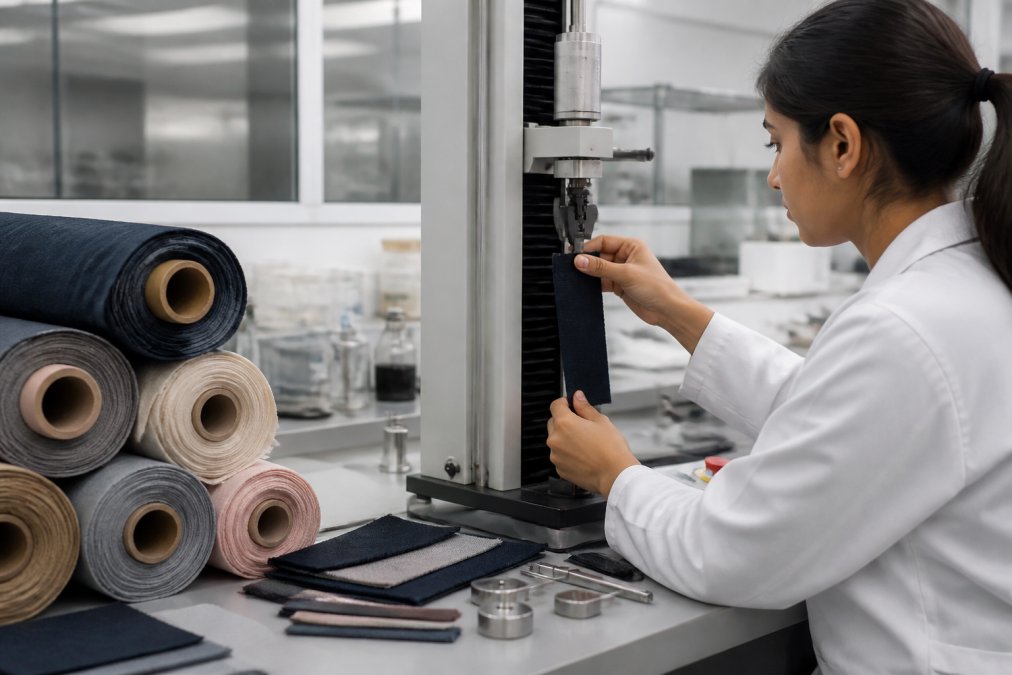
Lab testing typically covers color fastness, shrinkage, pilling, and seam slippage (astm.org). These tests cost money per sample but prevent far larger losses. Work with suppliers who provide test reports. Most reputable suppliers run these tests as standard. If a supplier resists providing lab data, find a different one.
Your quality assurance should include physical inspection of delivered fabric for defects, color consistency, and protective packaging. Inspect the first production units before committing the full run.
Technology and Supply Chain Visibility
Digital tools for supply chain visibility have become essential as production scales. You don't need enterprise software, just systems that show where fabric is in the pipeline.
Maintain a spreadsheet tracking each fabric order: supplier, order date, expected delivery, actual delivery, quantity, price per yard, and quality notes. This becomes your historical record, revealing which suppliers consistently deliver early and which require buffer time.
Many suppliers offer order tracking through their websites. Some integrate with production planning software. The more visibility you have into delivery dates, the better you can plan production and inventory. Digital pattern creation and 3D visualization tools also help by reducing sampling iterations before committing to production.
Crisis Management and Contingency Planning
Supply chain disruptions happen. A supplier closes unexpectedly. A shipment is lost. A natural disaster affects manufacturing. The brands that survive are those with contingency plans in place before crisis hits.
Identify your critical fabrics and for each, identify at least two suppliers. You don't need to order from both regularly, but test both and know their lead times and pricing. When a primary supplier fails, you can switch without losing weeks to evaluation.
Build relationships with backup suppliers through occasional small orders. Keep documentation of all supplier agreements, pricing, and terms. If a supplier fails, you need to know exactly what you were buying: weight, color, finish, minimum order. That documentation lets you find a substitute quickly.
Consider geographic diversification in your supplier base. Spreading suppliers across regions creates redundancy against concentrated risk.
Managing fabric supply chain for designers is fundamentally about reducing uncertainty. You can't eliminate delays or quality issues entirely, but you can forecast them, build buffers, and have contingency plans. The systems you build now, supplier relationships, quality checks, inventory buffers, backup suppliers, separate brands that scale smoothly from ones that fracture under growth.
New Creations Fabric & Foam Inc helps designers build these systems by offering consistent, high-quality fabrics with transparent sourcing and reliable delivery. Our 45" and 60" wide unbleached muslin options start at $6.99 per yard, making them accessible for sampling and small production runs. Explore our full fabric collections to find materials matching your production needs and build the supply chain visibility that lets you scale with confidence.

Frequently Asked Questions
Q: How do I ensure fabric quality consistency across multiple production batches?
A: Establish clear quality standards with your supplier before placing orders, including specifications for weight, thread count, color matching, and shrinkage rates. Request lab testing reports for each batch and conduct your own spot checks when materials arrive. Work with suppliers who provide batch-to-batch documentation and are willing to stand behind their products with quality guarantees. Many reliable suppliers maintain consistent processes specifically to reduce variations between orders.
Q: What should I look for when evaluating a wholesale fabric supplier?
A: Assess suppliers based on their ability to meet your lead time requirements, consistency in product quality, minimum order quantities that fit your production scale, and responsiveness to communication. Request references from other designers or brands they work with, review their certifications, and ask about their inventory management practices. A good wholesale fabric supplier should provide detailed product specifications, be transparent about sourcing, and offer support for both small independent orders and larger production runs.
Q: How can I manage fabric lead times without disrupting my production schedule?
A: Plan orders at least 8-12 weeks in advance of when you need materials, accounting for sourcing time, production lead times, and shipping delays. Maintain a demand forecast based on historical sales and upcoming collections, then communicate these projections to your supplier to secure inventory. Build buffer stock for core fabrics you use regularly, and establish backup suppliers for critical materials. Use inventory management software to track stock levels and trigger reorders automatically before supplies run low.
Q: What makes a fabric suitable for professional fashion brand production?
A: Production-grade fabrics must meet specific standards: consistent weight and weave, excellent color fastness, minimal shrinkage, and durability through repeated washing and wearing. The fabric should maintain its intended drape, texture, and appearance after garment construction and care. Look for fabrics that have been lab tested for colorfastness, pilling resistance, and tensile strength. Wholesale suppliers like New Creations Fabric & Foam Inc offer fabrics specifically selected for apparel manufacturing, with documentation of their performance characteristics.
Q: What happens if a fabric supplier runs out of stock or misses a deadline?
A: Establish contingency plans by identifying secondary suppliers for your critical fabrics before you need them. Include force majeure clauses in supplier agreements that outline communication protocols and timeline extensions. Maintain strategic inventory buffers for essential materials, and consider diversifying your sourcing across multiple suppliers to reduce dependency on any single source. If a supplier fails to deliver, have a documented process to quickly source replacement materials from your backup suppliers while notifying production teams of potential timeline impacts.
Q: How do I find wholesale fabric suppliers that work with independent designers?
A: Search for suppliers that explicitly serve small to mid-sized brands and independent designers, not just enterprise manufacturers. Many quality suppliers, including New Creations Fabric & Foam Inc, work with designers of all scales and offer flexible minimum order quantities. Check industry directories, attend textile trade shows, and ask for referrals from other independent designers in your network. Request information about their typical order minimums and pricing structure for smaller volumes before committing.
Q: What role does supply chain transparency play in managing fabric sourcing?
A: Transparency allows you to track materials from raw fiber through production and delivery, identify bottlenecks early, and verify quality at each stage. Work with suppliers who provide detailed documentation of their sourcing practices, material origins, and testing results. This visibility helps you make informed decisions about lead times, anticipate potential delays, and ensure ethical sourcing practices. Transparency also builds trust with your customers, particularly if you market your products based on quality or sustainability standards.
This article was written using GrandRanker