

Last Updated: November 9, 2026
Quick Summary
Choosing the right thread for sequin projects starts with matching fiber to fiber: cotton for natural fabric, polyester or nylon for synthetic. Polyester wins for most sequin work because it is strong, abrasion-resistant, and holds color, while monofilament is best saved for hidden basting or temporary holds.
- Match thread color to the sequin, not the base fabric, since the sequin catches the eye first.
- Use a size 70/10 or 80/12 sharp or microtex needle on woven sequin fabric.
- Set stitch length to roughly 2.5 to 3.0 mm so the needle passes through fewer sequins.
- Keep hand-sewing thread no longer than your forearm and wax it to reduce fraying.
- Use 50-weight polyester for cup sequins and 40-weight for overlapping rows.
Table of Contents
- Start with Fiber: Why Thread Choice Makes or Breaks Sequin Work
- Monofilament vs Polyester Thread for Sequins
- How to Sew Sequins Without Visible Thread
- Sewing Machine Needles for Sequin Fabric
- Hand Sewing vs Machine Sewing: Matching Thread to Method
- Thread Strength, Thickness, and Color for Durable Sequin Projects
- Troubleshooting Thread Problems on Sequin and Stretch Fabrics
- Sourcing Thread and Sequin Fabrics for Your Next Project
- Frequently Asked Questions
Start with Fiber: Why Thread Choice Makes or Breaks Sequin Work
Choosing the right thread for sequin projects starts with fiber, because sequins cut thread. The wrong fiber snaps under sharp edges. The right one holds.
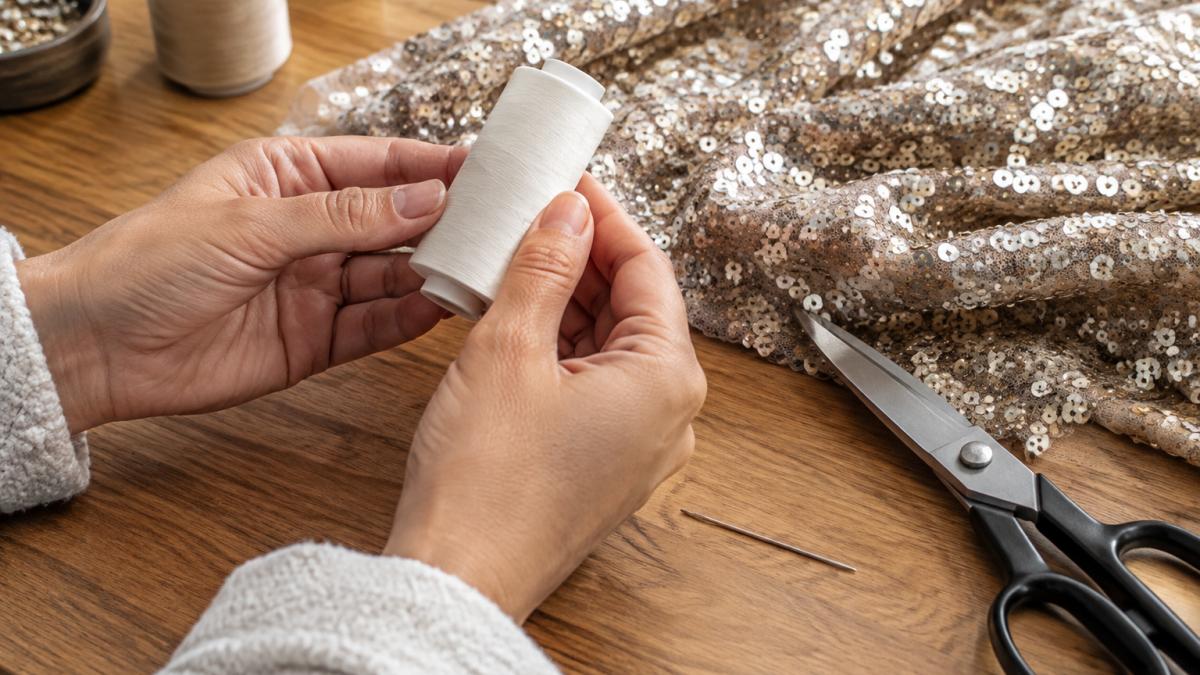
A designer sources beautiful sequin fabric, then pairs it with the cheapest thread on the shelf. Two weeks later, seams can fail.
Sequin fabric is abrasive by nature. Each plastic disc has a hard rim. As you stitch, that rim saws against the thread with every pass. Weak fibers fray fast. Strong ones survive.
Here is the core rule: match fiber to fiber. Natural fabric calls for cotton. Synthetic fabric calls for polyester or nylon. Skip that match and you get tension problems, broken stitches, and puckering.
That single match solves most failures before they start. The rest of this guide builds on it.
Monofilament vs Polyester Thread for Sequins
Monofilament thread is a clear, single-strand nylon line. Polyester thread is a colored, twisted strand. For sequins, polyester wins most of the time.
Why? Monofilament is invisible, which sounds ideal. But it is stiff, it kinks, and it melts under a hot iron. It also ages poorly and can yellow over time.
Polyester brings real advantages:
- It is strong and abrasion-resistant
- It holds color through washing
- It has slight stretch, which suits knits and stretch fabrics
- It handles the sharp edges of sequins well
Use monofilament in narrow cases. It works for a hidden basting stitch or a temporary hold. For permanent seams on sequin fabric, reach for polyester.
One honest caveat: polyester can be too shiny for matte finishes. In that case, a fine silk thread is a better match.
How to Sew Sequins Without Visible Thread
The best way to sew sequins without visible thread is to match thread color to the sequin, then hide the stitch under overlapping discs. The goal is a seam the eye reads as fabric, not thread.
Follow these steps:
- Match the thread to the sequin color, not the base fabric. The sequin sits on top and catches the eye first.
- Slide the needle under the sequin, not over it. Catch only the backing fabric.
- Overlap each disc by about a third so the stitch disappears.
- Use a fine thread for a flatter finish on dense rows.
- Keep tension light so the sequin does not pucker.
A common mistake is stitching over the top of a sequin. That leaves a visible sewing line and a weak hold. Go under, not over.
For applique and embroidery work, the same logic applies. Hide the thread path beneath the design.
Sewing Machine Needles for Sequin Fabric
A sharp needle is the right needle for sequin fabric, but needle choice is only one part of a machine setup that has to survive hard plastic edges. Use a size 70/10 or 80/12 sharp or microtex needle for woven sequin fabric. These pierce cleanly instead of pushing the sequins aside.
Needle choice matters as much as thread. A dull or wrong needle snags sequins and cracks them. It also creates skipped stitches.
Quick guide:
- Sharp or microtex (70/10 to 80/12): best for woven sequin fabric
- Stretch needle: use on stretch fabrics with sequins
- Heavy-duty (90/14): only for dense, heavy layers
Change the needle every few hours of sewing. Sequins dull it fast.
If you want a deeper look at needle options for synthetic materials, see our guide to choosing the right needle for synthetic fabrics.
Watch out: sewing over a thick sequin cluster without slowing down can snap the needle and damage the fabric. Reduce speed on dense areas.
Machine Setup Beyond the Needle
The machine itself also needs adjustment before the first stitch on sequin fabric.
Stitch length. Set a longer stitch length, roughly 2.5 to 3.0 mm, so the needle passes through fewer sequins per inch. Shorter stitches punch more holes and crack more discs. For basting or temporary holds, a 4.0 mm stitch is easier to remove without tearing the backing.
Tension. Start with the upper tension slightly lower than you would use on the same backing fabric without sequins. The sequin layer adds bulk and drag, and normal tension can pucker the backing. Test on a scrap that includes the same sequin density as your project.
Needle and Thread Pairing on the Machine
Watch out: a needle that is too large for the sequin spacing pushes discs aside instead of piercing between them, which widens holes and loosens the sequin row.
Hand Sewing vs Machine Sewing: Matching Thread to Method
Hand sewing and machine sewing call for different threads. Hand work favors a shorter, waxed thread. Machine work needs a smooth, strong cone.
For hand sewing:
- Use a length no longer than your forearm
- Wax the thread to reduce fraying
- Choose polyester or silk for strength
For machine sewing:
- Use polyester thread on a cone
- Set a longer stitch length to skip fewer sequins
- Test on a scrap piece first
Hand sewing gives you control. You can place each stitch exactly. Machine sewing gives you speed, but it risks cracking sequins.
Many makers combine both. Machine-sew the structural seams, then hand-attach decorative sequins. That split gives you durability and finish.
Thread Strength, Thickness, and Color for Durable Sequin Projects
Durability comes down to three things: strength, thickness, and color. Get all three right and your sequin projects hold up through wear and washing. The missing piece in most guides is matching those three to the sequin type and the way you attach it.
Strength: Choose a strong thread with good tensile ratings. Polyester and nylon lead here. Cotton is weaker and frays faster against sequin edges.
Thickness: Use a fine thread for dense, delicate work. Use a heavier thread for structural seams and beads. Thread weight numbers work in reverse: a higher number means a finer thread.
Color: Match thread to the sequin, not the backing. When in doubt, go one shade darker. Darker thread hides better in shadow.
Sequin quality also shapes durability. Poorly made sequins shed and snag thread. Learn to spot good ones with our guide on how to identify high quality sequins.
Thread by Sequin Type
Flat sequins. These sit close to the backing and have a smooth rim. A standard all-purpose polyester in a 40-weight works well for both hand and machine attachment. The flat profile leaves little room for thread to hide, so color match matters more than thickness.
Cup sequins. The raised cup shape creates a gap between the disc and the fabric. That gap catches thread and abrades it on every wear. Use a smooth, abrasion-resistant polyester and avoid cotton, which fuzzes and wears through at the cup edge. A 50-weight polyester gives strength without bulk under the cup.
Specialty sequins. Holographic, iridescent, and coated sequins often have a sharper rim or a finish that snags thread. A bonded polyester or a fine nylon thread resists fraying at those edges. Test a short row before committing, because some coatings dull needles faster than plain plastic.
Thread by Attachment Method
Individual stitches. When you sew one sequin at a time, the thread passes through the same hole repeatedly. Use a fine polyester, 50-weight or lighter, so the hole does not fill and the sequin lies flat. Wax the thread for hand work to reduce fraying.
Overlapping rows. Overlapping sequins create many thread-to-edge contact points. A slightly heavier polyester, 40-weight, holds up better because it resists abrasion across multiple discs. Keep tension light so the overlap does not pucker.
Bead-secured sequins. When a bead anchors the sequin, the thread must pass through both the sequin hole and the bead. Use a strong, smooth polyester or nylon that fits the bead hole without doubling.
Watch out: matching thread to the backing fabric instead of the sequin is the most common color mistake. Securing these delicate embellishments requires careful tension management, a task that becomes significantly more manageable when you pair your chosen thread with the appropriate Common Sewing needle for your specific fabric base.
Troubleshooting Thread Problems on Sequin and Stretch Fabrics
Thread problems on sequin fabric usually trace back to four causes. Fix the cause, not the symptom.
| Problem | Likely Cause | Fix |
|---|---|---|
| Thread fraying | Wrong fiber or dull needle | Switch to polyester, change needle |
| Skipped stitches | Needle too fine or blunt | Use a sharp 80/12 needle |
| Puckering | Tension too tight | Loosen tension, test on scrap |
| Broken thread | Sharp sequin edge | Slow down, use stronger thread |
Stretch fabrics add their own challenges. Thread with slight stretch, like polyester, moves with the fabric. A stiff thread fights it and pops.
Repair tip: if a seam fails, do not just restitch. Back the area with a small fabric patch, then stitch through all layers. That spreads the stress.
Sourcing Thread and Sequin Fabrics for Your Next Project
Good supplies make good projects. Source thread and sequin fabric together so colors and weights match from the start.
New Creations Fabric & Foam Inc offers a wide variety of fabric types, including sequins, velvet, and faux fur. Our collections are designed for consistency and refined finishes at scale. That matters when you need the same fabric across a full production run.
When you source, keep these in mind:
- Buy thread and fabric from the same supplier when possible
- Order a swatch before a bulk order
- Check dye lots to avoid color shifts between rolls
Once your fabric arrives, protect it. Our guide on how to store sequin fabric to prevent damage covers the basics. If you are weighing suppliers, read our domestic vs international fabric sourcing guide. Ready to buy? See our review of the best fabric sourcing platforms.
Sourcing consistent sequin fabric and thread should not be a gamble. New Creations Fabric & Foam Inc offers fabrics designed for fashion brands, with the consistency and refined finishes that scale with your production. Explore our sequin, velvet, and specialty collections, and build your next project on materials you can trust.
Frequently Asked Questions
What type of thread is best for sewing sequins?
Polyester thread is the most reliable choice for most sequin projects. It has enough strength to hold sequins securely without breaking under the abrasion of the sequin edges, and it comes in fine weights that keep stitches discreet. For invisible attachment on clear or metallic sequins, monofilament thread works well. Silk thread is a premium option for delicate fabrics where a soft hand is critical, but polyester handles the wear and tear of sequin work better for most applications.
Can I use regular polyester thread for sequin projects?
Yes, regular polyester thread works for most sequin projects, but pay attention to weight. A 50-weight polyester is a good all-purpose choice for hand and machine sewing. For heavier sequin fabric or dense beadwork, step up to a 40-weight for extra strength. Avoid heavy quilting or carpet thread, which creates large holes and visible stitches. Always test on a scrap of your sequin fabric first to check tension and stitch appearance.
How do I prevent thread from breaking when sewing through sequins?
Thread breakage usually comes from three causes: a dull or wrong-sized needle, too-high tension, or sewing directly through the sequin rather than between them. Use a sharp needle sized for the fabric weight, such as a 70/10 or 80/12 for lightweight sequin fabric. Lower your machine tension slightly and sew slowly. When hand sewing, pass the needle between sequins or through the fabric base rather than piercing the sequin itself, which creates a sharp edge that cuts thread.
Does thread color matter when sewing clear sequins?
Thread color matters less with clear sequins because the sequin reflects light and disguises the stitch. A fine monofilament thread or a thread matched to the fabric base color works best. For opaque or metallic sequins, match the thread to the sequin color or the fabric underneath, depending on whether you want the stitch to disappear or become a design element. Always test a short row of stitches under your actual lighting before committing to a full project.
