

Last Updated: November 16, 2026
Quick Summary
The most useful questions to ask about fabric stretch cover the exact fibre blend, the stretch percentage in each direction, how the fabric recovers after repeated stretching and washing, and whether the supplier can provide a written test report. Fibre blend determines how far a fabric will stretch and how well it springs back, so ask for percentages rather than vague descriptions.
- Ask for the exact fibre percentages, such as 80% nylon and 20% spandex.
- Request stretch percentage in each direction and the test method used.
- Ask for recovery after 10 stretch cycles and after one wash.
- Require a technical data sheet and test report before ordering.
- Treat specs without stated direction, method or tolerance as unverified.
Table of Contents
- Questions to Ask a Fabric Supplier Before You Order
- Two-Way vs. Four-Way Stretch: Which One Your Project Needs
- How to Run a Fabric Stretch and Recovery Test at Home
- Fabric Sample Evaluation Checklist
- Glossary of Fibre Blends and Stretch Terms
- Choosing a Stretch Fabric for Your Next Order from New Creations
- Frequently Asked Questions
Fabric stretch is one of the first things a buyer notices and one of the last things a supplier explains.
Fibre composition is the mix of fibres in a fabric, usually listed as percentages such as 80% nylon and 20% spandex (the FTC).
The blend matters because each fibre does a different job. A small amount of spandex can produce a lot of stretch, but too little will leave the fabric limp, and too much can make it feel tight and unforgiving. Here is a simple way to read a label:
- High spandex (10% or more): strong recovery, good for fitted garments
- Low spandex (under 5%): mostly woven or stable, with light give
- Nylon-heavy blends: smooth, resilient, and quick to recover
- Cotton-heavy blends: soft and breathable, but they stretch less and can sag
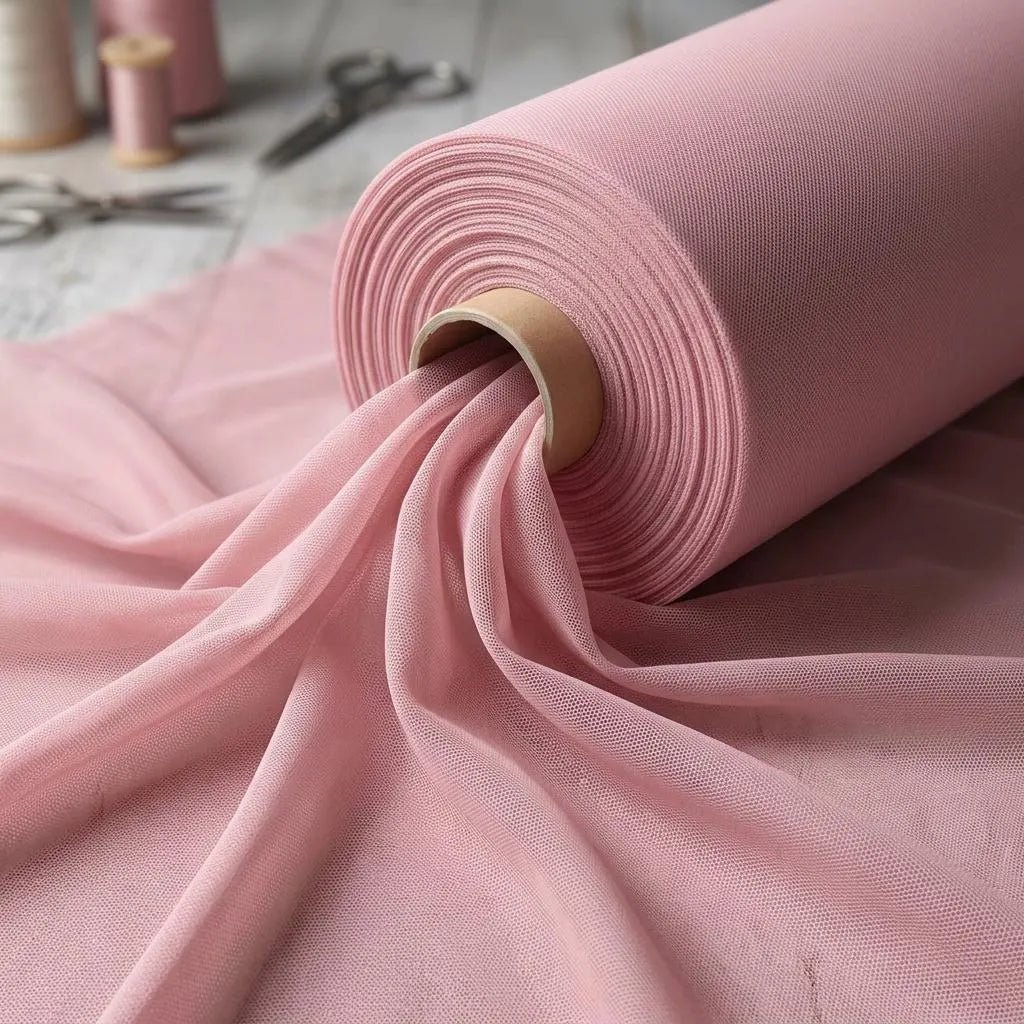
Our Shiny Milliskin Nylon Spandex fabric is listed as 80% nylon and 20% spandex, with 4-way stretch and a 200 GSM weight. You can also browse our stretch power mesh to compare stretch characteristics before ordering.
Many buyers assume a higher stretch number always means a better fabric. It does not. The right blend depends on the garment, and a fabric that stretches the most may lose shape the fastest.
Questions to Ask a Fabric Supplier Before You Order
A supplier's answers are only useful if you can check them. The questions below go beyond the basics and ask for the documentation and tolerances that let you compare a spec sheet against the fabric that arrives. Ask for answers in writing, and treat vague or verbal-only responses as a reason to look elsewhere.
Composition and Construction
- What is the exact fibre blend, by percentage, and does that include any recycled or recovered content?
- What is the knit or weave construction, and what yarn structure is used?
- Is the stretch built into the yarn, the construction, or both?
- What is the fabric weight in GSM, and what is the usable width?
Stretch and Recovery
- What is the stretch percentage in each direction, and how was it measured?
- What is the recovery percentage after repeated stretching, and after how many cycles?
- How does stretch and recovery change after washing and drying?
- What tolerances do you apply to stretch, recovery, GSM, and width?
Performance and Durability
- What are the pilling and abrasion results, and what test method was used?
- What is the shrinkage after one wash cycle, and in which direction?
- How does the fabric perform for colourfastness to washing, light, and rubbing?
- What are the recommended care instructions, and do they match the test results?
Documentation and Verification
- Can you provide a technical data sheet with test methods and tolerances for each claim?
- Which third-party lab or standard was used for stretch, recovery, and colourfastness testing?
- Can you supply a certificate of compliance or test report for the production lot?
- What is the dye-lot variation policy, and how do you handle shade matching across rolls?
- How long do you keep this fabric in stock, and what is the reorder lead time?
How to Verify the Answers
Ask for the technical data sheet and the test report before you order. Compare the stated stretch and recovery against your own bench test on the sample. If the supplier reports 50% stretch and your test shows 35%, ask which direction and which method were used.
Watch out: a spec sheet that lists stretch without stating direction, test method, or tolerance cannot be compared against your sample, so request those details before treating the number as meaningful.
Red Flags in Supplier Answers
- Fibre content given only as a range with no percentages
- Stretch described as "good" or "high" with no number or direction
- No test method named for stretch, recovery, or colourfastness
- Refusal to provide a written spec sheet or test report
Put the answers in writing and keep them with your sample records. Before you contact suppliers, a guide to bulk fabric suppliers for designers can help you compare your options. That written record is what you compare against the fabric when it arrives, and it is what protects you if a roll does not match the approved sample.
The questions below turn the supplier conversation into a checklist you can verify against the fabric that arrives.
| Question area | What to ask for | Why it matters |
|---|---|---|
| Composition | Exact fibre percentages | Shows how far the fabric will stretch |
| Stretch and recovery | Percentage, direction and test method | Lets you compare claims with your sample |
| Recovery after cycles | Recovery after repeated stretching | Shows whether the fabric keeps its shape |
| Washing | Shrinkage after one wash cycle | Flags garments that may lose fit |
| Documentation | Technical data sheet and test report | Gives you a written basis for comparison |
| Tolerances | Limits for stretch, GSM, width and shade | Defines what counts as an acceptable roll |
Two-Way vs. Four-Way Stretch: Which One Your Project Needs
Two-way stretch gives give in one direction, usually across the width of the fabric. Four-way stretch gives give in both the width and the length.
Two-way stretch works well for fitted pieces where the fit only needs to flex in one direction, such as some skirts or sleeves.
A common mistake is choosing four-way stretch for a design that only needs two-way.
Matching Stretch Direction to Garment Construction
Stretch direction also depends on how you cut the pattern. Lay the fabric so the direction with the most stretch runs around the body, where the garment needs to flex. Choosing the right stretch direction is only part of preventing sagging, since the fabric’s ability to hold its shape also matters, and LFC DESIGNS ONE's durability checks can help you assess that quality.
How to Run a Fabric Stretch and Recovery Test at Home
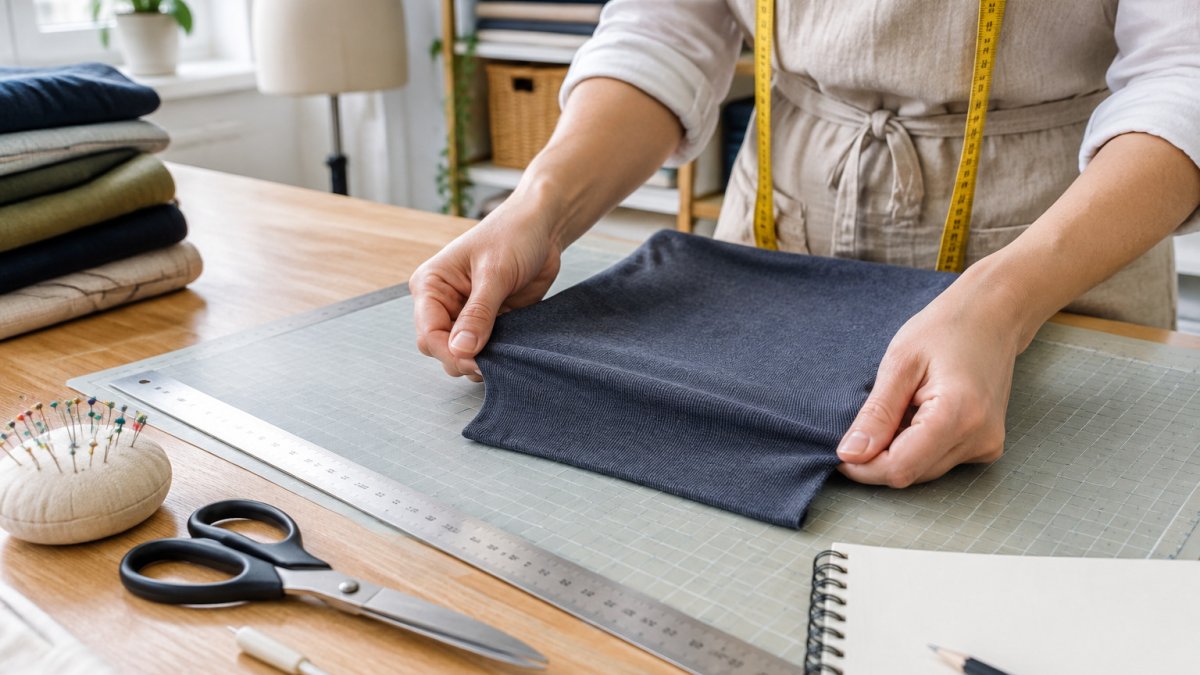
A spec sheet tells you what a supplier claims. A bench test tells you what the fabric actually does. A simple cut-and-measure test, repeated in both directions and again after washing, can catch problems that a single feel test misses. You do not need a lab, but you do need consistent measurements and a record you can compare across rolls.
What You Need
- A ruler or measuring tape marked in inches
- A fabric pen or chalk marker
- A flat surface
- A timer or phone stopwatch
Step-by-Step Stretch Test
- Cut a strip of fabric at least 2 inches wide and 12 inches long, aligned with the direction you want to test. Cut one strip along the length (warp or wale direction) and one across the width (weft or course direction).
- Lay the strip flat and mark two points exactly 10 inches apart with the fabric pen.
- Anchor one end and stretch the strip gently along its length until you feel firm resistance. Do not yank or overstretch past the point where the fabric starts to distort.
- Measure the distance between the two marks at that comfortable limit and record it.
- Calculate stretch percentage: (stretched length minus 10) divided by 10, times 100. A strip that reaches 13 inches has 30% stretch; one that reaches 15 inches has 50% stretch.
- Release the strip, lay it flat, and wait 60 seconds. Measure the distance between the marks again.
- Calculate recovery: (10 minus the recovered length) divided by 10, times 100. If the marks return to 10 inches, recovery is 100%. If they sit at 10.5 inches, recovery is 95%.
- Repeat the stretch-and-release cycle 10 times, then measure again. Record the final length.
How to Read the Numbers
Fabrics with high stretch and poor recovery can grow progressively longer with each cycle. If the marks drift past 10.25 inches after 10 cycles, the fabric is losing shape under repeated use.
Watch out: stretching a strip past its comfortable limit gives an inflated stretch number and a false recovery reading, so stop at the first sign of firm resistance rather than pulling until the fabric distorts.
Test Again After Washing
Stretch performance often changes after the first wash. Run the same test on a second strip, then wash and dry it according to the care instructions and repeat the measurements. Record stretch and recovery before and after. A fabric that loses more than a few percentage points of recovery after one wash cycle is a risk for garments that need to hold their shape.
Record and Compare
Keep a simple table with columns for fabric name, direction, initial stretch, initial recovery, stretch after 10 cycles, recovery after 10 cycles, and post-wash results. Compare each new roll against the first approved sample. This record is what turns a one-time test into a repeatable quality check.
Fabric Sample Evaluation Checklist
Before committing to a large order, test a sample against this checklist:
- Fibre blend matches the supplier's written spec
- Stretch percentage is in the range you need
- Recovery holds after 10 stretch cycles
- GSM and width match the order
Ask yourself whether the fabric suits the final garment, not just whether it looks good on the roll. If you are testing samples for embellished work, read how to choose the right thread for sequin projects.
Glossary of Fibre Blends and Stretch Terms
Spandex (elastane): A synthetic fibre that stretches far beyond its length and springs back.
Nylon: A strong synthetic fibre that is smooth, resilient and wrinkle resistant.
Polyester: A durable synthetic fibre that holds colour well and resists shrinking.
GSM (grams per square meter): A measure of fabric weight.
Recovery: How well a fabric returns to its original length after stretching.
Four-way stretch: Stretch in both width and length.
Two-way stretch: Stretch in one direction only.
Choosing a Stretch Fabric for Your Next Order from New Creations
The right stretch fabric depends on the garment, the fit and how the piece will be worn and washed. Our Shiny Milliskin Nylon Spandex is a strong pick for dancewear and costumes that need four-way stretch and good recovery, listed at $14.95.
Use the questions and tests in this guide before you order, and ask for the fibre spec and stretch numbers in writing. That is how you get the fabric your project needs, with fewer surprises on the cutting table.
Frequently Asked Questions
How do I determine a fabric's fibre composition?
Start with the care label and the supplier's specification sheet, which should list fibre content by percentage, such as 80% nylon and 20% spandex. If the information is missing, ask the supplier for a fibre content certificate. A burn test on a small thread sample can also help identify natural fibres like cotton, which burn to ash, versus synthetics like polyester or nylon, which melt. Confirm the blend before ordering, because elastane content strongly affects stretch and recovery.
What is the difference between two-way and four-way stretch?
Two-way stretch fabric stretches across the width or along the length, but not both. Four-way stretch stretches in both directions, which gives more freedom of movement for activewear, dancewear and fitted garments. Two-way fabric is often suitable for structured pieces where you want stability in one direction. Test both directions before deciding, since many knits stretch far more in one direction than the other.
How much stretch should I look for in apparel fabric?
The right amount depends on the garment. Fitted activewear and dancewear usually need high stretch and strong recovery, while dresses and tops may work with moderate stretch. For example, the Cotton Jersey Spandex Knit from New Creations lists 50% vertical and 25% horizontal stretch, so check the stretch against your pattern's ease allowance. Always compare the stated stretch percentage with your pattern's ease allowance and test a sample on the body.
What should I check in a fabric sample before approving it for production?
Check fibre content against the specification, stretch in both directions, recovery after repeated stretching, colour consistency across the sample, and how the fabric drapes. Wash the sample using the care instructions to see whether it shrinks, pills or loses shape. Confirm the fabric weight in GSM matches your design, and check that the edges and fabric width are consistent. Approve production only after the sample meets all of these requirements.
